 Trusted Since 2001





Quick Summary
Key points
- A double cylinder deadbolt takes a key on both sides. A single cylinder deadbolt takes a key outside and a thumbturn inside.
- The reason people fit them is glass. If a pane next to the door can be broken, a thumbturn can be reached through it.
- The reason codes restrict them is egress. A door that needs a key to get out is a problem in a fire, and on most commercial exits that rules them out.
- Schlage numbering tells you which you have. In the B series, the double cylinder versions carry a different model number from the single cylinder versions.
- The cylinder you order depends on door thickness, so measure the door before ordering a replacement.
| Type | Outside | Inside | Typical use |
|---|---|---|---|
| Single cylinder | Key | Thumbturn | Most doors, where free egress matters |
| Double cylinder | Key | Key | Doors with glass beside or within them, where egress is not the issue |
| Classroom | Key | No operation, or key only | Rooms where occupants should not be able to unlock the door |
In This Guide
- What Is a Double Cylinder Deadbolt?
- Why Would Anybody Fit a Double Cylinder Deadbolt?
- Where Are Double Cylinder Deadbolts Restricted?
- What Should You Use Instead on an Exit Door?
- Does the Grade of the Deadbolt Change the Single Versus Double Decision?
- What Goes Wrong With a Deadbolt?
- How Do You Tell Which One Is Fitted?
- Can You Convert a Single Cylinder Deadbolt to a Double?
- Keying a Double Cylinder Deadbolt Into the Building
- What to Confirm Before Ordering
- About the Author
The double cylinder deadbolt is the most argued about piece of hardware in a commercial building. It solves one real problem and creates a different one, and which of those matters more depends entirely on the door it is going on.
This guide covers how it differs mechanically, where it is genuinely appropriate, where it is restricted, and what you need to know before ordering parts. For the components of the lock itself, see our deadbolt parts guide.
What Is a Double Cylinder Deadbolt?
A deadbolt is a bolt with no spring in it. It does not retract when the door closes against the frame, and it cannot be pushed back by pressure on the end. The only way it moves is because something turns it. That is what makes it a deadbolt rather than a latch.
What varies is what does the turning. On a single cylinder deadbolt there is a keyed cylinder on the outside and a thumbturn on the inside. On a double cylinder deadbolt there is a keyed cylinder on both sides, so the bolt cannot be operated from either face without a key.
Everything else about the lock is the same. The bolt, the strike, the backset and the door prep do not change. What changes is the inside trim and therefore the behaviour of the door from the inside.
Why Would Anybody Fit a Double Cylinder Deadbolt?
One reason dominates: adjacent glass.
If there is a glazed panel in the door or a sidelight next to it, a thumbturn on the inside is reachable. Break the glass, put an arm through, turn the thumbturn, open the door. The lock has been defeated without any attack on the lock at all.
A double cylinder deadbolt removes that route, because reaching the inside face achieves nothing without a key. That is a genuine security improvement on storefront doors, rear doors with glazed panels, and any opening where the glazing was designed before anybody thought about the lock.
Secondary reasons come up too. Doors that lead to a secured area from inside the building, where you want the door controlled in both directions. Store rooms inside a public space. Doors where the occupant should not be able to unlock the way out casually.
Where Are Double Cylinder Deadbolts Restricted?
The objection is simple and it is about getting out, not getting in.
If the only way to unlock a door from the inside is with a key, then anyone inside without the key is held in. In an ordinary day that is an inconvenience. In a fire, with smoke and no light, somebody hunting for a key at a door they need to be through is a serious problem.
That is why free egress is a principle that runs through commercial door hardware. A person should be able to leave through an exit with one motion, without a key, without special knowledge and without tools. A double cylinder deadbolt is in direct conflict with that on any door used for egress.
The practical rules vary by jurisdiction and by occupancy, and your authority having jurisdiction is the one that settles it for a given building. What is consistent is the direction of travel: the more a door is relied on as a way out, the less acceptable a key operated inside becomes.
The Compromise Nobody Should Use
A habit exists of fitting a double cylinder deadbolt and leaving a key permanently in the inside cylinder during occupied hours. It defeats the purpose in both directions. During the day the lock is a single cylinder with a key sticking out of it, and the glass attack it was fitted to prevent now works again. At night, if the key is removed and somebody is still inside, you have the egress problem in full.
If egress is required, the answer is different hardware for that opening, not a procedure that depends on somebody remembering.
What Should You Use Instead on an Exit Door?
| Option | How it solves the glass problem | Egress from inside |
|---|---|---|
| Exit device with a cylinder dogging or trim | Nothing reachable through glass releases it | One push on the bar |
| Single cylinder deadbolt with laminated or security glazing | Addresses the glass rather than the lock | Thumbturn, free |
| Classroom function lock | No inside unlock to reach at all | Lever always retracts the latch |
| Interlocking or secondary mechanical security after hours | Removes the reliance on the deadbolt alone | Depends on arrangement, must be checked |
Classroom function is worth understanding properly, because it answers a different question from the deadbolt. Our classroom deadbolt guide covers the function and the cylinder options, and our exit device parts section covers the panic hardware route.
Does the Grade of the Deadbolt Change the Single Versus Double Decision?
No, but it changes how much the decision is worth.
Deadbolts are graded, and the grade describes how much abuse the lock will take before it fails. Within the Schlage B range, the B600 series is the Grade 1 family and the B500 series sits below it. Both are available in single and double cylinder versions, so grade and cylinder count are two separate choices made at the same time.
The point worth making on a glazed door is that upgrading the grade does nothing about the glass. A Grade 1 deadbolt with a thumbturn inside is defeated through a broken pane exactly as fast as a Grade 2 one.
Grade protects against force applied to the lock. Cylinder count protects against somebody reaching the inside. They answer different attacks, so the right choice depends on which attack the door is actually exposed to.
The Bolt and the Strike Have to Match the Ambition
A heavy deadbolt in a light frame moves the weak point rather than removing it. If the bolt is strong and well thrown but the strike is screwed into a thin jamb with short screws, the frame fails first. On an exterior door where the deadbolt is doing real work, the strike and its fixings deserve the same attention as the lock.
What Goes Wrong With a Deadbolt?
Deadbolts have very few moving parts, so the failure list is short and most of it is alignment rather than the lock.
| Symptom | Likely cause | Check first |
|---|---|---|
| Key turns but the bolt does not move | Tailpiece or cam not engaging the lock case | Whether the cylinder is the right length for the door thickness |
| Bolt will not throw fully | Strike misaligned, or the door has dropped | Whether the bolt throws freely with the door open |
| Bolt throws but the door still rattles | Gap between door and frame has grown | Hinges, weatherseal and the strike position |
| Stiff on one side only | One cylinder worn, or the wrong cylinder fitted on that face | Each cylinder independently, with the door open |
| Key sticks or will not withdraw | Worn key or worn pins in the cylinder | Try a different key cut to the same code before condemning the cylinder |
| Bolt works, lock body loose in the door | Through fixings slackened | The mounting screws and whether the prep has worn oval |
The pattern worth remembering is that a bolt which throws freely with the door open and binds with it closed is an alignment problem, not a lock problem. Replacing the deadbolt will not fix it. Our commercial door hardware troubleshooting guide covers the strike and frame side of the same complaint.
How Do You Tell Which One Is Fitted?
Look at the inside face. A thumbturn is a single cylinder. A keyway is a double cylinder. That is the whole test and it takes a second.
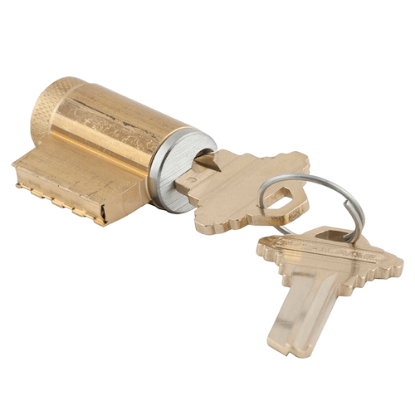
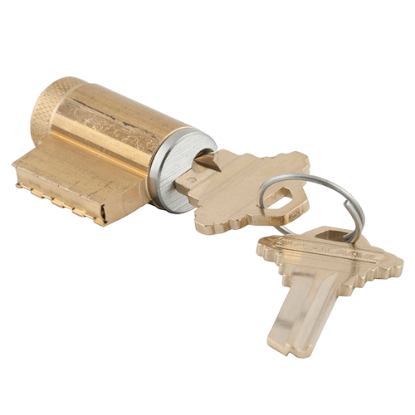
For ordering, you need more than that. In the Schlage B series, the single cylinder and double cylinder versions carry different model numbers, and the replacement cylinders are listed against those models. A cylinder listed for a B562 is not the same order line as one listed for a B662, even though both are deadbolt cylinders, because they belong to different grades within the range.
Each cylinder is also listed against a door thickness range. The same model will have one cylinder for doors from roughly one and three eighths to one and three quarters inches, and a longer one for thicker doors. Ordering without measuring is the fastest way to get a cylinder that will not reach or will not tighten.
Can You Convert a Single Cylinder Deadbolt to a Double?
Often yes, because the change is at the inside trim rather than in the door prep. The bolt, the case and the hole through the door are usually common to both.
What you are replacing is the thumbturn with a keyed cylinder, which means a cylinder of the correct length for the door and, if the building is keyed, one that matches the existing key system. Conversion and adapter kits exist for exactly this.
Before doing it, answer the egress question for that specific door. A conversion that is mechanically straightforward can still be the wrong decision, and it is far easier to decide that before the thumbturn comes off than after an inspection.
Keying a Double Cylinder Deadbolt Into the Building
Two cylinders means two cylinders to key, and on a building with an existing key system that is not a detail to leave to the installer on the day.
Both sides should normally be keyed alike to each other, so one key works from either face. Beyond that, the deadbolt has to sit correctly in the building hierarchy so the right master keys operate it. Our master key system design guide covers the levels of keying, and the Schlage key systems guide covers the keyways and cylinder formats.
What to Confirm Before Ordering
- Single or double, confirmed by looking at the inside face.
- The model number from the lock, because grades within a range take different cylinders.
- Door thickness, measured rather than assumed.
- The keyway and key system, so the new cylinder works with the existing keys.
- The finish, matched to the rest of the hardware on the opening.
- Whether the door is an exit, which may rule the double cylinder out entirely.
Browse deadbolt parts and diagrams for the exploded views, or the full products and parts index if you have a part number. Our Schlage B series deadbolt parts guide covers the range in detail, and the labelled deadbolt diagram names every component.
About the Author
Security Parts has supplied repair parts for commercial door hardware since 2001, covering Von Duprin, LCN, Schlage, Falcon, Detex and Adams Rite at the component level. Our diagram based lookup exists so a technician can confirm a part before ordering it. This guide was written by the Security Parts team from supplier documentation and the questions our customers bring us.
For related reading, see our comparison of a mortise cylinder and a rim cylinder and the thumbturn cylinder guide.