 Trusted Since 2001


Quick Summary
Key points
- A concealed vertical rod exit device latches at the head and the sill of the opening, with the rods running inside the door rather than across its face.
- The appeal is a clean door and protected rods. The cost is service access, because reaching the rods usually means taking the device apart rather than unscrewing a cover.
- Nearly every CVR complaint is a latching complaint, and nearly every latching complaint comes back to rod adjustment or to a strike that has moved.
- Less bottom rod, written LBR, removes the bottom rod and latch so the device only latches at the head. It is common on fire doors where floor dirt is a problem.
- CVR preparation is normally done when the door is made. Converting an existing door to concealed rods is rarely practical, which is why surface rod conversion kits exist.
| Configuration | Where it latches | Visible on the door |
|---|---|---|
| Rim | One latch into a strike on the frame or mullion | Device only |
| Surface vertical rod | Head and sill | Device plus rods on the door face |
| Concealed vertical rod | Head and sill | Device only, rods are inside the door |
| Mortise | One latch in a case in the door edge | Device only |
In This Guide
- What Is a Concealed Vertical Rod Exit Device?
- How Does a CVR Device Latch the Door?
- CVR vs SVR vs Rim vs Mortise: Which Device Type Is on Your Door?
- Why Would You Specify Concealed Vertical Rod?
- What Are the Drawbacks of CVR?
- What Does LBR Mean and When Is It Used?
- What Fails on a Concealed Vertical Rod Device?
- How Do You Adjust Vertical Rods?
- What Changes on a Fire Rated CVR Device?
- Which Parts Do You Order and What Do You Need to Know First?
- About the Author
Concealed vertical rod devices look like the obvious choice right up until the first service call. They give you a clean pair of doors with nothing running up the face, and then eighteen months later the top latch stops engaging and nobody can work out how to get at the rod.
This guide explains what the device is actually doing, where it is the right answer, where it is not, and how to work through the latching problems that make up most of the service work on these openings.
What Is a Concealed Vertical Rod Exit Device?
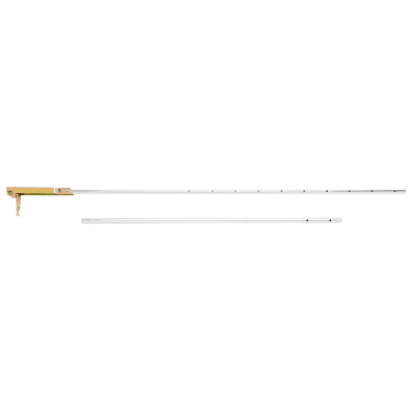
A concealed vertical rod exit device, usually shortened to CVR, is an exit device that latches the door at two points: a latch at the top that engages a strike in the frame head, and a latch at the bottom that engages a strike in the threshold or floor.
The two latches are driven by rods that run from the device up and down inside the door. Pushing the touchpad pulls both rods at once, retracting both latches, and the door is free.
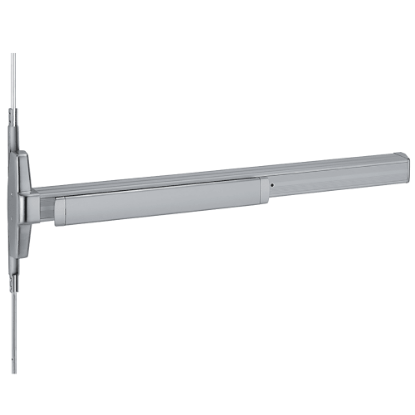
The word that does the work is concealed. On a surface vertical rod device, the same mechanism exists but the rods are visible on the face of the door, held in place by brackets. On a CVR device the rods live inside the door and nothing shows.
How Does a CVR Device Latch the Door?
Three parts have to agree for the door to latch: the latch itself, the rod that drives it, and the strike it engages. If any one of those three is out of position the door will not stay shut, and all three are adjustable.
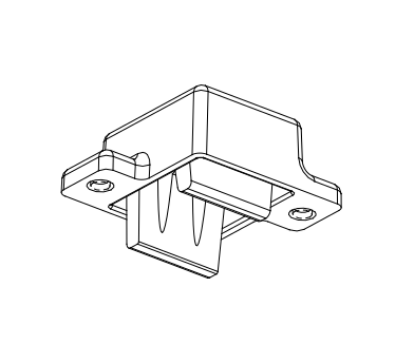
The top latch engages a strike mounted in the frame head. The bottom latch engages a strike set into the threshold, or in some configurations drops into a floor socket.
Why two latching points changes the behaviour
A rim device has one latch. If it engages, the door is shut. A CVR device has two, and the door can appear shut while only one of them is doing anything.
That is the source of most CVR confusion. Somebody pulls the door and it holds, so the device is assumed to be working, when in fact only the top latch is engaging and the bottom latch has been missing its strike for months.
CVR vs SVR vs Rim vs Mortise: Which Device Type Is on Your Door?
Identification takes about ten seconds once you know what to look at, and it has to be settled before any part is ordered because the latching components differ completely between configurations.
| What you see | Configuration | Where the parts live |
|---|---|---|
| No rods, a strike on the frame or on a mullion | Rim | Single latch in the device chassis |
| Rods visible on the door face, top and bottom | Surface vertical rod | Exposed rods, latches top and bottom |
| No visible rods, latches at head and sill | Concealed vertical rod | Rods inside the leaf |
| No rods, latch emerges from the door edge | Mortise | Mortise case in the door edge |
Pairs of doors are the usual home for vertical rod devices, because without a mullion between the leaves there is nothing in the middle for a rim latch to engage. Our mullion guide covers the alternative approach to the same problem.
If you have established that the device is rim rather than vertical rod, our rim exit device guide is the better starting point.
Why Would You Specify Concealed Vertical Rod?
Three reasons come up repeatedly, and they are all good ones.
Appearance is the first. On a glazed entrance or a prestigious opening, rods running up and down the face of the leaf are the visual element nobody wants. Concealing them leaves a clean door.
Protection is the second. Exposed rods get knocked by trolleys, caught by luggage and bent by people pushing on them. Rods inside the door cannot be reached, so they cannot be damaged by ordinary traffic.
Security is the third. There is nothing on the surface to interfere with, which matters on doors that are accessible to the public outside staffed hours.
What Are the Drawbacks of CVR?
The drawbacks are all versions of the same thing: the parts you most need to reach are the ones you cannot see.
| Drawback | What it means in practice |
|---|---|
| Service access | Reaching a rod usually means removing the device and working inside the leaf |
| Diagnosis | You cannot watch the rods move, so faults are inferred rather than observed |
| Bottom latch environment | The sill collects dirt, grit and water, and the bottom latch sits in it |
| Door preparation | The leaf has to be prepared for concealed rods, normally when it is made |
| Retrofit | Converting an existing unprepared door to CVR is rarely practical |
That last point is the one that catches specifiers. Surface rod conversion kits exist precisely because moving in the other direction, towards exposed rods, is something you can do on site.
What Does LBR Mean and When Is It Used?
LBR stands for less bottom rod. The device is supplied without the bottom rod and bottom latch, so it latches only at the head.
The reason is the environment at the sill. A bottom latch sits where mop water, grit and floor dirt accumulate, and on a busy opening it is the component that stops working first. Removing it removes the problem.
LBR is common on fire rated openings, where the device still has to latch positively, but the designers would rather put all of that responsibility on the top latch than risk a bottom latch that is fouled with dirt. Where a bottom rod is removed, the configuration has to be the one the manufacturer intends, not simply the original device with parts left off.
Identifying an LBR device
Look at the bottom of the door. If there is no latch emerging from the bottom edge and no strike in the threshold, the device is either LBR or the bottom components have been removed by someone. Those are very different situations, and the door schedule is the way to tell them apart.
What Fails on a Concealed Vertical Rod Device?
The failures are consistent across manufacturers because the mechanism is the same shape everywhere.
| Symptom | Most likely cause | Check before ordering parts |
|---|---|---|
| Door will not stay shut | Rod out of adjustment, or a strike that has moved | Watch both latches with the door slowly closing |
| Top latches, bottom does not | Bottom rod length, or debris in the sill strike | Clear the strike, then check rod adjustment |
| Device feels stiff on the touchpad | Binding rod, or a latch not returning fully | Operate with the door open and listen at both ends |
| Door latches only when slammed | Closer is not delivering enough force at the latch | Latch speed on the closer before touching the device |
| Rattling when closed | Latch engaging, but with excess clearance at the strike | Strike position rather than the device |
| Rod disconnected inside the leaf | Fixing worked loose over time | Requires opening up, but it is a fixing not a device failure |
How Do You Adjust Vertical Rods?
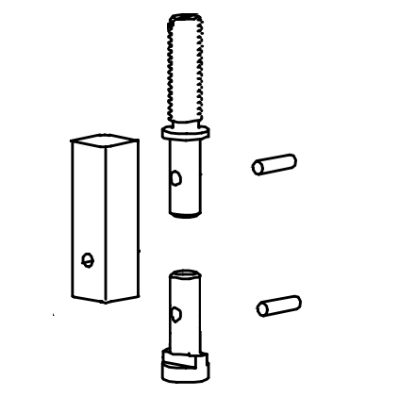
Adjustment is about travel, not about tension. The rod has to retract the latch far enough to clear the strike when the touchpad is pressed, and it has to let the latch return fully when the touchpad is released.
Work with the door open first so you can see what the latches are doing without the frame in the way. Press the touchpad, confirm that both latches retract fully, then release and confirm both return fully. A latch that returns sluggishly will not engage a strike reliably.
Then close the door slowly and watch where each latch meets its strike. If a latch is arriving high, low or off to one side, the strike is the thing to move, not the rod.
Why the door closer gets blamed and sometimes deserves it
A CVR device needs a positive push at the very end of the swing to drive both latches home. If the closer has lost its latch speed, the door drifts into the frame and the latches do not engage.
That presents as a device fault and is not one. Before stripping the device, check the closer. Our guide to adjusting a commercial door closer covers the latch valve, which is the adjustment that matters here.
What Changes on a Fire Rated CVR Device?
Fire rated configurations behave differently in two ways that matter every day.
Dogging is not available. A fire exit device may not be held in the retracted position, because the door has to latch every time it closes. If a device on a fire door has a dogging keyhole, something is wrong with how the opening was specified.
Latching has to be positive. The door has to actively latch, not merely come to rest against the frame, which is why rod adjustment on a fire rated CVR device is a life safety matter rather than a convenience one.
Our commercial door fire rating guide and the NFPA 80 inspection guide cover what an inspection is looking for on these openings.
Which Parts Do You Order and What Do You Need to Know First?
Four pieces of information settle a CVR parts order, and three of them have to be read off the door rather than guessed.
| Information | Where you get it | What it decides |
|---|---|---|
| Device series | Stamping on the chassis or under the cover | Everything, parts do not cross series |
| Fire rated or not | Label on the door edge | Dogging parts, latch configuration |
| Full rods or LBR | Presence of a bottom latch and sill strike | Which rods and latches exist |
| Door height | Measure it | Rod length |
For the model level breakdowns, our 9947 CVR parts guide and 9847 CVR parts guide list the components by assembly, and the exit device parts section covers the wider range.
If you are still deciding between device types rather than repairing one, our exit device and panic bar comparison and the Von Duprin series comparison cover the choice, and panic hardware on commercial doors covers where the code requires a device at all.
About the Author
Security Parts has supplied repair parts for commercial door hardware since 2001, covering Von Duprin, LCN, Schlage, Falcon, Detex and Adams Rite at the component level. Our diagram based lookup exists so a technician can confirm a part before ordering it. This guide was written by the Security Parts team from supplier documentation and the questions our customers bring us.
If the device stamping is hidden under the cover and you would rather not pull the door apart to find it, contact us with a photograph of the device and the door, and we will narrow it down before you order.