RSS

Blog posts tagged with 'dogging'

Panic Bar Parts Diagram: How to Read It and Identify Parts

Quick Summary

Key points

  • Every panic bar breaks down into the same five groups: the touchpad or crossbar, the center case, the rail and baseplate, the end cap, and the latch assembly.
  • A parts diagram is read from the center outwards. The center case is where the mechanism lives, and almost everything else hangs off what the center case does.
  • The device type changes the latch group and nothing else. Rim, surface vertical rod, concealed vertical rod and mortise devices share most of the rail hardware.
  • Dogging parts fail more than anything else on a panic bar, because they are used daily and the socket or the cylinder takes the wear.
  • Almost every item on the diagram is stocked individually, so a damaged device is normally a parts order rather than a replacement device.
The five part groups on a panic bar
GroupWhere it sitsWhat it does
Touchpad or crossbarAcross the face of the doorThe surface the user pushes
Center caseMiddle of the deviceHolds the mechanism and the dogging
Rail and baseplateFull width of the deviceCarries the device and fixes it to the door
End capHinge end of the railCloses the rail and anchors that end
Latch assemblyLatch end, top or bottomEngages the strike or the frame

Panic bar parts diagrams look intimidating because they show fifty numbered items on one page. In practice the device only has five groups, and once you can place a part into its group the diagram stops being a wall of numbers.

This guide walks through those groups in the order a diagram is normally laid out, explains what each one does, and covers how the picture changes between device types.

What Are the Main Parts of a Panic Bar?

A touchpad or crossbar, a center case, a rail with a baseplate, an end cap, and a latch assembly. Everything else on the diagram is a fixing, a spring, a cover or a bracket serving one of those five.

The sequence matters because that is how the force travels. A user pushes the touchpad, the touchpad drives the mechanism in the center case, the center case pulls the latch, and the latch leaves the strike. The rail and end cap hold the whole assembly on the door while that happens.

What does the rail and baseplate group do?

The baseplate is the plate that fixes to the door face, and the rail is the cover that runs along it. Between them they carry the device, set how far it stands off the door, and give the touchpad something to react against.

It is the group people ignore on a diagram, and the group that quietly causes the most puzzling faults. Baseplate screws that have worked loose let the whole device move a fraction every time the bar is pushed, which shows up as a latch that retracts fully one day and not the next. Checking that the baseplate is tight against the door is a thirty second job that saves a long diagnosis.

Is a panic bar the same as an exit device?

Panic bar is the common name, exit device is the term used in product literature, and in everyday use they refer to the same hardware. There is a meaningful distinction in how devices are labelled and listed for different applications, which our exit device and panic bar comparison covers in detail.

What Does the Center Case Do?

It is the gearbox. The center case takes the movement of the touchpad and converts it into the pull that retracts the latch, and on most devices it also houses the dogging mechanism.

Because the mechanism lives there, the center case is the part that determines what the device can do. Dogging, cylinder dogging, alarm modules and electrified retraction all attach to or sit inside this group. That is why two devices with identical rails can behave completely differently.
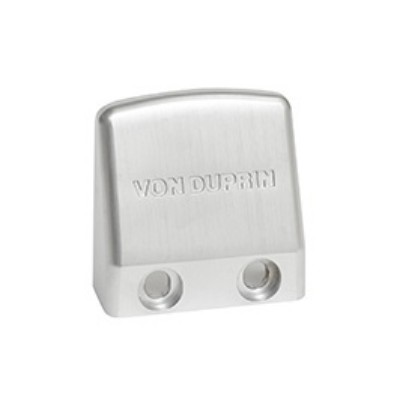
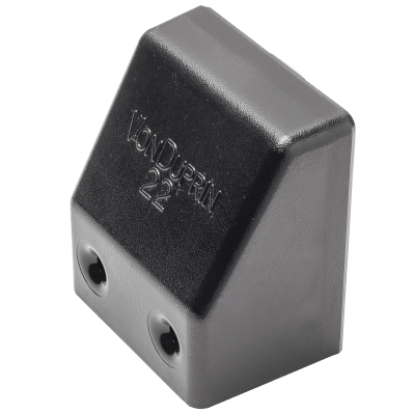
Von Duprin 050564 center case cover bracket from the middle of a panic bar
A center case cover bracket. Covers and brackets are listed separately from the case itself, which is why a damaged cover is a small order rather than a device replacement.

Why is the center case reinforced?

Because it carries the concentrated load. A rail spreads force across the door, but the center case takes the whole pull of the latch mechanism at one point. Reinforcing brackets exist to transfer that load into the door rather than leaving it on the baseplate fixings.

On a door that is kicked, barged or propped regularly, the reinforcement is the part that keeps the center case flat against the door. A center case that has started to lift is the early warning of a device that will fail entirely.

What Is Inside the End Cap?

Less than people expect, and that is the point. The end cap closes the hinge end of the rail, anchors the rail to the door and keeps the internal components enclosed.

It is also the part most likely to be damaged, because it sits at the end of a long lever and takes impacts from trolleys, furniture and the wall. Impact resistant versions exist specifically for openings where that is routine.
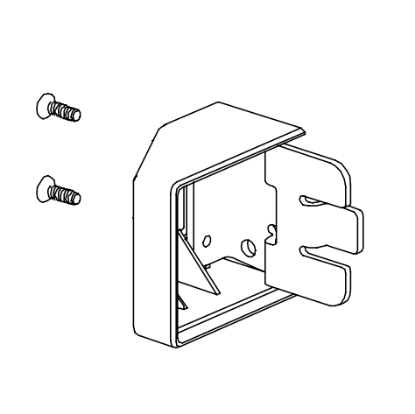
Von Duprin 900397 metal end cap kit for the hinge end of a panic bar rail
A metal end cap kit. End caps are supplied as kits with their fixings, because replacing the cap without the correct screws is how the next one works loose.

Does a missing end cap matter?

Yes, on two counts. It exposes the internals of the rail to dirt and interference, and it removes an anchor point, which lets the rail flex when the touchpad is pushed. A device with a flexing rail will eventually stop retracting the latch fully.

How Does the Latch Assembly Work?

The latch is pulled back by the mechanism, held back while the touchpad is depressed, and sprung forward again when the touchpad releases.

Three components do that work: the latch itself, the latch tail that connects it to the mechanism, and the spring that returns it. All three are stocked separately, and the spring is usually the first to go.

A latch that retracts but returns slowly is a spring. A latch that retracts partially is usually the tail or the linkage. A latch that does not move at all with a working touchpad is a center case fault.
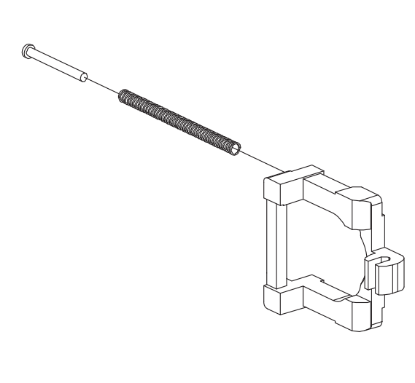
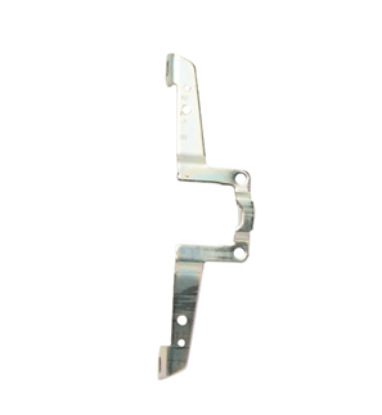
Von Duprin 050500 latch tail, spring and rivet kit from a panic bar latch assembly
A latch tail, spring and rivet kit. Supplied together because they wear together, and because a new spring in an old tail rarely holds its adjustment.

Why does the latch group change between devices?

Because the latch has to reach something different. A rim device latches into a strike on the frame. A surface vertical rod device drives rods up and down to latch at the head and sill. A concealed vertical rod device does the same with the rods inside the door. A mortise device drives a lock case in the door edge.

Everything from the touchpad to the center case is largely common across those four. The latch group is where they diverge, which is why diagrams for different device types look similar until the right hand end. Our concealed vertical rod guide covers the most complex of the four.

What Is Dogging and Which Parts Control It?

Dogging holds the touchpad depressed and the latch retracted, so the door becomes push and pull during the hours the building wants it open.

Two methods are common. Hex dogging uses a hex key in a socket to drive a shaft that holds the mechanism. Cylinder dogging uses a keyed cylinder to do the same job, so only key holders can set it.

Dogging methods and the parts involved
MethodHow it is setParts that wear
Hex doggingHex key in a socketShaft, socket, spring and guide
Cylinder doggingKeyed cylinderCylinder, cam, plug and bracket
Electric latch retractionSignalled from the panelMotor, cable and harness
No doggingNot fittedPlug fills the socket position
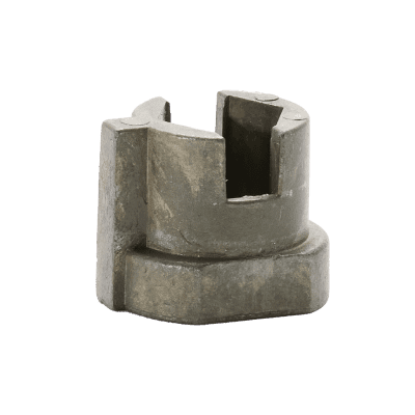
Von Duprin 090043 dogging adaptor shown in a panic bar parts diagram
A dogging adaptor. Supplied in pairs, which tells you something about how often these wear on devices that are dogged every morning.

Can a device be converted between dogging types?

Often, using a conversion kit. Moving from hex to cylinder dogging is a common request on sites that want to stop staff dogging doors informally, and the conversion is a parts order rather than a new device. The reverse conversion also exists.

One point worth confirming first: dogging is not permitted on every opening. A fire rated opening has to latch, so a dogged device on a fire door is a defect rather than a convenience.

Why Does the Touchpad Feel Loose or Noisy?

Usually because of what sits behind it rather than the pad itself.

The touchpad travels every time somebody uses the door, and it stops against the body of the device at the end of that travel. Shock absorbing components take that impact. When they fail, the pad bottoms out metal against metal, which is both the noise people report and a load path into the mechanism that was never intended.
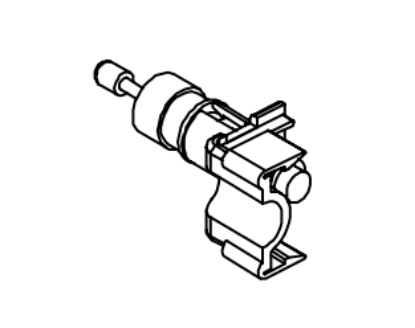
Von Duprin 050491 shock absorber package fitted behind a panic bar touchpad
A shock absorber package. A small part that stops the touchpad striking the device body, and a common cause of a bar that has become noticeably louder.

Is a noisy panic bar a safety problem?

Not in itself, but it is a sign of wear that eventually becomes one. A touchpad that has lost its cushioning transmits full impact into the linkage every cycle, and on a busy door that is hundreds of impacts a day. Fixing it at the noise stage is far cheaper than fixing it at the failure stage.

Which Panic Bar Parts Fail Most Often?

In rough order: dogging components, end caps, springs, touchpad cushioning, and latch tails.

Common failures and what they look like on the door
PartSymptomUsual cause
Dogging shaft or socketHex key slips, will not hold doggedDaily use, worn socket
End capLoose, missing or crackedImpact at the hinge end
Latch springLatch returns slowly or not fullyFatigue
Shock absorberLoud bar, hard stop at the padWear from cycling
Baseplate screwsRail lifts off the doorLoosening under load

None of those require a new device. For the full Von Duprin component listing, our Von Duprin panic bar parts guide and 98 and 99 Series parts guide set the numbers against the groups described here.

What about double doors?

A pair of doors adds the mullion or the overlapping astragal arrangement to the picture, and with it another set of parts that can fail independently of the devices. Our mullion guide covers the removable mullion, which is the most commonly misdiagnosed component on a pair.

How Do You Identify a Part From a Diagram?

Place it in its group first, then match the shape, then confirm the series.

Group narrows the field from fifty items to about eight. Shape narrows it further. The series then decides which of the remaining candidates is the correct number, because the same looking bracket exists in several series with different numbers.

What if the device series is unknown?

Read the stamping, usually found on the baseplate under the rail or on the end cap. If the device has been painted over, the dimensions of the center case and the type of latch group between them identify the family in most cases.

Photographs are worth more than descriptions here. A picture of the device on the door, a second of the latch end, and a third of any visible stamping will usually settle it. Our panic bar selection guide covers how the series are distinguished, and the exit device installation guide covers the mounting arrangement that the diagram assumes. If you are starting from the user side rather than the parts side, our crash bar overview is the better starting point, and panic hardware on commercial doors covers where these devices are required.

About the Author

Security Parts has supplied repair parts for commercial door hardware since 2001, covering Von Duprin, LCN, Schlage, Falcon, Detex and Adams Rite at the component level. Our diagram based lookup exists so a technician can confirm a part before ordering it. This guide was written by the Security Parts team from supplier documentation and the questions our customers bring us.
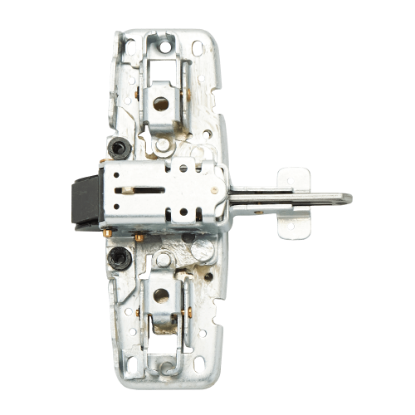
Crash Bar Door: What It Is, What the Parts Are and What Fails

Quick Summary

Key points

  • A crash bar is the same piece of hardware the industry calls an exit device or panic bar. Nobody who sells parts will correct you, but the part number lives under the formal name.
  • The bar you push is only one of four parts that can fail. The center case, the latch, the end cap and the outside trim all wear separately and are ordered separately.
  • Crash bars exist because of egress law, not convenience. On a door that needs one, the door has to open with a single push from the inside with no prior knowledge of the hardware.
  • Fire rated crash bars and standard crash bars look almost identical and behave differently. The fire version cannot be held open, and that difference decides half the parts list.
  • Nearly every complaint we hear about a crash bar turns out to be the latch, the strike or the closer rather than the bar itself.
What people call it, and what the part number calls it
Everyday nameIndustry nameWhat you search for parts under
Crash barExit deviceDevice series number, for example 98, 99, 22, 25
Push barExit device or touchpad deviceSame, plus the push element type
Panic barPanic hardwareSame, with panic or fire rating noted
Emergency barExit device, often delayed egressDevice series plus the alarm or delay option

Somebody calls and says the crash bar on the back door is broken. That sentence is completely clear to everyone in the building and completely useless for ordering a part, because no manufacturer prints the words crash bar on anything.

This guide translates. It covers what a crash bar actually is, the four assemblies inside it, why the door has one in the first place, and how to work out which part has failed before you spend money on the wrong one.

What Is a Crash Bar on a Door?

A crash bar is a horizontal bar across the inside face of a door that releases the latch when you push it. Push anywhere along it, in any direction that moves it towards the door, and the door opens.

The formal name is an exit device. Manufacturers, specifiers and parts catalogues all use that term, along with panic hardware when the device is there to satisfy egress requirements. Crash bar is the name it picked up on site, probably because of what happens when a crowd hits one.

The defining characteristic is that it needs no instruction. There is no knob to turn, no direction to work out and no latch to find. A person moving quickly, in the dark, carrying something, pushes and the door opens.

Von Duprin 050020 rim center case kit, the mechanism inside a crash bar door device
The center case is the mechanism the bar actually operates. It sits behind the cover at the latch end, and on most devices it is replaceable on its own without touching the rail or the trim.

Why does the name matter when ordering?

Because the catalogue is organised by device series, not by nickname. Once you know the series stamped on the chassis, the parts list narrows from thousands of items to a few dozen. Until then, no amount of describing the bar gets you to a part number.

What Are the Parts of a Crash Bar?

Four assemblies do the work, and they fail independently. Knowing which one you are looking at is most of the diagnosis.

The four assemblies in a crash bar and what each one does
AssemblyWhat it doesHow it usually fails
Push rail or touchpadThe part the user pressesBent from impact, or loose on its mounts
Center caseConverts the push into latch movementInternal wear, springs, dogging mechanism
Latch and strikeHolds the door shutWorn latch, misaligned or damaged strike
End capCloses the far end of the railKnocked off, cracked, fixings backed out

Outside trim is a fifth item but it is not strictly part of the device. It is what gives you a way back in from the outside, and it is ordered separately and matched to the device series.

Von Duprin 900981 end cap kit for a crash bar
End caps take the most physical abuse of any part on the device, because they sit at trolley height on the end of the rail. They are a stocked kit, so a missing end cap never justifies replacing a device.

Which part should you suspect first?

Work from the symptom. A bar that feels loose or rattles points at the rail mounts or the end cap. A bar that moves fully but the door stays shut points at the latch or the connection to it. A door that will not stay shut points at the latch or the strike. A bar that has become stiff points at the center case.

Why Does a Door Need a Crash Bar?

Crash bars are a life safety requirement, not a convenience fitting. The building codes require panic hardware on certain doors so that a crowd can leave without anyone needing to understand the lock.

The triggers are occupancy type and occupant load. Assembly and educational occupancies above a defined occupant load need panic hardware on their egress doors, and rooms containing certain electrical equipment need it regardless of how many people use them. The authority having jurisdiction has the final word on any specific opening.

Our guide to panic hardware on commercial doors sets out the code side in detail, including where the two main model codes differ.

What does the hardware have to do to comply?

Three things, and they are worth stating plainly because they explain the design. The device has to release the latch with a single motion. It has to work with a push, not a pull or a turn. And the force needed has to stay within the limit the code sets, so that a child or someone being pressed from behind can still get out.

What Types of Crash Bar Are There?

The type is decided by where the device latches, which in turn is decided by the door. This is the single most important thing to establish before ordering anything.

Crash bar types by latching configuration
TypeWhere it latchesTypical door
RimOne latch into a strike on the frame or mullionSingle doors, or pairs with a mullion
Surface vertical rodTop and bottom, rods visible on the door facePairs without a mullion
Concealed vertical rodTop and bottom, rods hidden inside the leafPairs where appearance matters
MortiseOne latch in a case set into the door edgeSingle doors needing a heavier lock case

If you have established the device is rim type, our rim exit device guide covers it at part level. For the vertical rod versions, see the concealed vertical rod guide.

What Is the Difference Between a Fire Rated and a Standard Crash Bar?

They look nearly identical and they behave differently in one way that matters every day: a fire rated device cannot be dogged.

Dogging is the facility to hold the latch retracted so the door pushes open freely, usually with a hex key or a cylinder. It is how a shop holds a back door operable during trading hours. A fire door has to latch positively every single time it closes, so dogging is not available and the mechanism is not fitted.

Fire rated against standard crash bar
 Standard panic deviceFire exit device
Dogging availableYes, hex key or cylinderNo
Must latch every closurePreferredRequired
Label on door edgeMay be absentPresent, states the rating
Parts interchange with the other typeNoNo

Read the label on the edge of the door before ordering. If the opening is fire rated, the device and every part on it has to suit that rating. Our commercial door fire rating guide explains how the labels are read.

What if the device on a fire door has a dogging keyhole?

Then something is wrong with how the opening was specified or the device was replaced at some point with the wrong configuration. It is worth raising, because an inspection will pick it up.

How Do You Identify Which Crash Bar You Have?

Five minutes at the door saves a wrong order. Collect these in sequence.

What to record before searching for parts
StepWhat to look atWhat it tells you
1Stamping on the chassis or under the coverManufacturer and device series
2Rods on the door face, or latches top and bottomRim, surface rod, concealed rod or mortise
3Label on the door edgeFire rated or not
4Keyhole in the touchpad endWhether dogging is fitted
5Outside of the doorTrim type, and whether there is a cylinder

Door width and handing matter too, because rail lengths and some latch parts are handed. Measure rather than estimate.

What Does It Mean to Dog a Crash Bar?

Dogging holds the push bar depressed and the latch retracted, so the door behaves like a push plate until you undog it. It is used to keep a door freely operable during business hours without propping it with a wedge.

Two mechanisms exist. Hex dogging uses a small hex key in the touchpad end. Cylinder dogging uses a key cylinder, so only keyholders can dog the device. The cylinder version is usual where staff should not be able to leave a door unsecured.

A device that will not dog, or will not release from dogged, almost always has a worn dogging assembly or a rounded hex socket. Both are stocked parts rather than a reason to replace the device.

Can a Crash Bar Have an Alarm on It?

Yes, and it is one of the most common upgrades on a back door that keeps getting used as a smoking exit.

An alarm kit fits to the device and sounds locally when the bar is pushed. It does not lock the door and it does not delay egress, which is the point: the door still opens instantly, but the building knows about it.

Von Duprin 99-ALK alarm kit for 99 Series crash bar devices
An alarm kit is matched to the device series it mounts on. It turns an unmonitored exit into a monitored one without changing how the door opens.

Where the requirement goes further than an audible alarm, delayed egress hardware holds the door for a set period before releasing. That is a code controlled function with its own rules, covered in our guide to delayed egress.

Why Would a Door Have a Crash Bar That Does Nothing?

Dummy bars exist and they confuse people regularly. A dummy touch bar has no mechanism behind it. It is fitted to the inactive leaf of a pair so both doors look the same, or used as a pull on a door that does not latch.

Von Duprin 350 dummy touch bar for a crash bar door
A dummy touch bar matches the look of the working device next to it and operates nothing. If one leaf of a pair opens and the other does not, this is usually why.

If a bar moves but nothing happens and there is no latch visible anywhere on that leaf, you are probably looking at dummy trim rather than a fault.

What Goes Wrong With Crash Bars in Service?

These are the complaints that come to us most often, and what they usually turn out to be.

Symptom and the usual cause
What the user reportsUsual causeWhat to check first
Door will not stay shutLatch or strike, not the barWatch the latch meet the strike with the door closing slowly
Bar is hard to pushCenter case wear, or a binding latchOperate the device with the door open
Bar rattlesLoose rail fixings or a missing end capFixings along the rail
Door only latches when slammedDoor closer, not the deviceLatch speed adjustment on the closer
Key turns outside but door will not openOutside trim or the cylinderCylinder, tailpiece, then the trim
Device will not dogDogging assembly or hex socket wornWhether the opening is fire rated at all
Von Duprin 050014 impact resistant end cap kit
On openings where the same end cap keeps getting knocked off, an impact resistant kit is the answer rather than another standard one. Repeat failures are usually telling you the part is underspecified for the traffic.

How Do You Order the Right Crash Bar Parts?

Order by assembly, not by device. The device series and the configuration narrow the list, then the symptom tells you which assembly to buy.

Parts do not cross between series, and they rarely cross between the standard and fire rated versions of the same series. A part that looks identical in a photograph can have a different internal profile.

Start from the exit device parts section, or the 98 and 99 Series parts guide if that is what is on the door. For the naming question that brought you here, our comparison of exit devices and panic bars covers where the terms came from.

About the Author

Security Parts has supplied repair parts for commercial door hardware since 2001, covering Von Duprin, LCN, Schlage, Falcon, Detex and Adams Rite at the component level. Our diagram based lookup exists so a technician can confirm a part before ordering it. This guide was written by the Security Parts team from supplier documentation and the questions our customers bring us.
If all you have is a photograph and the words crash bar, that is enough to start. Send it through our contact page with the door type and we will identify the series, or browse Von Duprin parts if you already have a number.

Blog|Security Parts

Blog|Security Parts

Blog|Security Parts