RSS

Blog posts tagged with 'spindle'

Mortise Lock Repair: What Fails and What You Can Replace

Quick Summary

Key points

  • Most mortise lock faults are trim, spindle or strike problems rather than faults inside the lock case, and the three are easy to tell apart once the door is open.
  • Test with the door open before anything else. A lock that works perfectly with the door open and fails when it is closed has a frame problem, not a lock problem.
  • The lock case, the trim, the cylinder and the strike are all ordered separately, so a failure in one does not force a complete lockset.
  • Rounded spindles are the single most common mechanical failure, because the spindle takes every turn of the lever and is softer than the hub it drives.
  • A case that is genuinely worn out is worth replacing rather than repairing, and the function code on the existing lock decides which case to order.
Where mortise lock faults actually sit
SymptomUsual locationCase fault?
Lever droops or spins freelySpindle or hubSometimes
Key turns but nothing movesCylinder or camRarely
Latch sluggish returningCase, or dirt in the caseOften
Will not latch when door closesStrike alignmentNo
Deadbolt throws but will not retractBinding against the strikeRarely

Mortise locks are built to be serviced. The case comes out of the door, the trim comes off the faces, the cylinder unscrews and the strike unscrews from the frame. Every one of those is a separate part, which is why a mortise lock repair is usually a component job rather than a replacement job.

What makes these calls go wrong is diagnosing from the symptom instead of from the door. This guide covers how to find the actual fault, what can be repaired, what cannot, and what to confirm before ordering.

What Usually Fails Inside a Mortise Lock?

Less than people expect. The case is a steel box full of levers and springs, and on a normal opening it will outlast several sets of trim.

What fails first is whatever is softest and most used. The spindle, because it transmits every turn of the lever. The hub, because the spindle wears into it. Springs, because they cycle constantly. And the latch bolt face, because it rubs against the strike every time the door closes.

Does a mortise lock wear out from the outside in?

Usually, yes. Damage arrives through the trim, the lever and the key, and works inwards. That is why the parts closest to the user fail first and the parts deepest in the case last the longest, and why a lock that feels rough at the lever is more often a trim job than a case job.
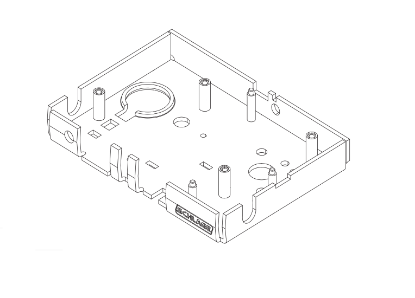
Schlage L283-112 mortise lock case for L9000 Series mortise lock repair
A basic mortise lock case. The case is supplied on its own, so a worn out mechanism does not drag the trim, cylinder and strike into the order with it.

How Do You Tell a Lock Fault From a Door Fault?

Open the door and work the lock in free air.

With the door open, operate the lever, throw and retract the deadbolt, and turn the key through its full travel. Everything the lock does with the door open is the lock. Anything that only goes wrong when the door is closed belongs to the frame, the strike or the door itself.

That single test resolves a large share of mortise lock calls before any tools come out, and it stops perfectly good locks being replaced because a door had dropped a few millimetres on its hinges.

The door open test and what each result means
Door openDoor closedWhere the fault is
Works correctlyFailsStrike, frame or door alignment
Rough or stickyAlso roughInside the lock, or the trim driving it
Lever free, latch stillSameSpindle or hub
Key turns looselySameCylinder or cam
Deadbolt throws freelyDeadbolt jamsStrike cutout position

What if the fault is intermittent?

Intermittent faults on an otherwise sound lock are usually environmental. A timber door that swells in humid weather, a frame that moves with temperature, or an exterior opening where debris is finding its way into the case. Note when it happens rather than only what happens, because the pattern is the diagnosis.

Can a Mortise Lock Be Repaired, or Does It Need Replacing?

Both are routine. The question is which part has failed and how much of the rest has aged alongside it.

Repair is the right route when a specific component has failed on a lock that is otherwise sound: a spindle, a spring, a trim plate, a cylinder, a strike. Replacement of the case makes sense when the mechanism itself is worn, when several parts have already been changed, or when the function needs to change.

When does the function decide the answer?

Whenever the room has changed use. A store that becomes an office, or a classroom that needs a different locking behaviour, is a function change rather than a repair. The lock case carries the function, so that is a case order, and the trim and cylinder may well carry over.

Our lock function codes guide covers how the function is expressed in the model number, which matters because two visually identical locks can behave completely differently.
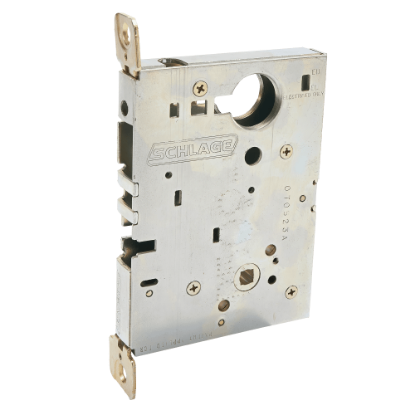
Schlage L283-133 mortise lock case for L9050, L9060, L9070 and L9071 functions
A lock case listed against specific function codes. The case is where the function lives, which is why a function change is a case order rather than a trim order.

How Do You Get the Lock Case Out Without Damaging the Door?

In order, and with the door supported.

Take the trim off both faces first, then the cylinder, then the faceplate screws at the door edge. The case then withdraws from the mortise pocket. Forcing a case out before the cylinder is clear is how cams get bent and how pocket edges get torn.

On a heavy door, wedge the leaf before you start. A door that swings while you have the case half out will take the weight of the case on the pocket edge.

What should you check while the case is out?

Four things, because the pocket is only open once. The condition of the mortise pocket itself, the state of the wiring if the lock is electrified, whether the faceplate is flat and undamaged, and whether the cylinder threads are clean. Finding any of those later means taking the lock out again.

If the trim is also being changed, our trim parts guide covers what is supplied separately on the face of the door.

What Does a Worn Spindle or Hub Do to the Lock?

It produces the most recognisable fault on any mortise lock: the lever turns, and nothing happens.

The spindle is the shaped bar that carries the turn from the lever through the door into the lock hub. It is the part under the most direct load, and it rounds off at the corners over time. Once it has rounded enough, it spins inside the hub instead of driving it.

A lever that turns a few degrees and then goes slack, or one that works intermittently depending on how hard you turn, is almost always a spindle. Replacing the lock case for that symptom is a common and expensive mistake.
Von Duprin 967480 lever spindle that carries the turn into a mortise lock hub
A lever spindle. The corners carry the whole load of the turn, so this is the part to inspect before suspecting anything inside the case.

How do you check a spindle without stripping the door?

Take one lever off and look at the spindle end. Sharp, square corners mean the spindle is sound. Rounded or twisted corners mean it has been slipping, and the hub it drives needs looking at as well, because a worn spindle wears the hub it turns in.

Replacing a rounded spindle and leaving a worn hub gives you a repair that fails again quickly. If both are worn, the case goes on the order with the spindle.

Why Does the Deadbolt Throw but Not Retract?

Nearly always because it is under load from the strike rather than because the lock has failed.

When a door has dropped, or the frame has moved, the deadbolt enters its cutout at an angle and jams against the edge. The key then has to overcome that binding as well as turning the mechanism, and at some point it will not.

The test is simple. Open the door, throw the deadbolt and retract it. If it moves freely in free air, the lock is fine and the frame needs attention. Our mortise lock strike guide covers how the strike is dimensioned for the bolt it receives.

Can you force a jammed deadbolt?

You can, and it is how bolts get bent and keys snap in cylinders. Lift or push the door slightly to take the load off the bolt first, then turn the key. If it releases, you have both diagnosed and temporarily solved the problem in one movement.
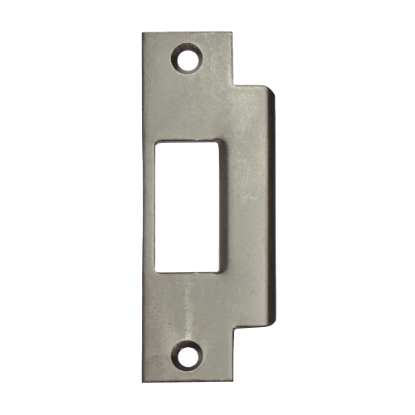
Von Duprin 575 mortise lock strike for a mortise latch and deadbolt
A mortise lock strike. The strike receives both the latch and the bolt, so a strike in the wrong position creates two separate symptoms that look like two separate faults.

What Parts Are Stocked Separately for Mortise Lock Repair?

Enough that a complete lockset is rarely the answer.

Mortise lock components supplied as separate items
PartWhat it doesTypical reason to order it
Lock caseCarries the mechanism and the functionWorn mechanism or a function change
SpindleDrives the hub from the leverRounded corners, lever spinning
Trim and leverUser facing hardwareImpact damage or accessibility change
CylinderKeyingRekeying, lost keys, worn plug
StrikeReceives latch and boltAlignment, damage, frame change
Screw packRefittingWorn or missing fixings after service

Screw packs matter more than they look. Refitting a serviced lock with mixed fixings from the van is how the next technician finds a lock that has worked loose in its pocket.
Schlage 47279023 L9000 screw pack for refitting a repaired mortise lock
A screw pack listed against a specific lock series. Fixings are specified for the hardware, which is why they are stocked rather than substituted.

Is the cylinder part of the lock?

No, and that is useful. The cylinder is a separate item with its own cam, which means rekeying an opening never touches the lock case. Our mortise cylinder and rim cylinder comparison covers how the two differ and why the cam matters.

What Should You Confirm Before Ordering Repair Parts?

Six things, and they come off the door rather than out of a catalogue.

The lock series, from the stamping on the case or faceplate. The function, because it decides the case. Which component has actually failed, established by the door open test. The handing, where the part is handed. The finish, because visible parts have to match the rest of the opening. And whether the lock is electrified, because that changes both the case and the wiring arrangement.

What if the lock is unmarked?

Measure and photograph. The backset, the case dimensions, the faceplate size and the arrangement of the latch and bolt together narrow the family quickly. A photograph of the case out of the door, with a tape measure across the faceplate, is usually enough to confirm the part.

For a wider view of the range, our mortise lock parts guide lists components by function, and the commercial mortise locks guide covers how these locks are specified in the first place. If you are still establishing which family of lock is on the door, start with mortise locks versus cylindrical locks.

About the Author

Security Parts has supplied repair parts for commercial door hardware since 2001, covering Von Duprin, LCN, Schlage, Falcon, Detex and Adams Rite at the component level. Our diagram based lookup exists so a technician can confirm a part before ordering it. This guide was written by the Security Parts team from supplier documentation and the questions our customers bring us.
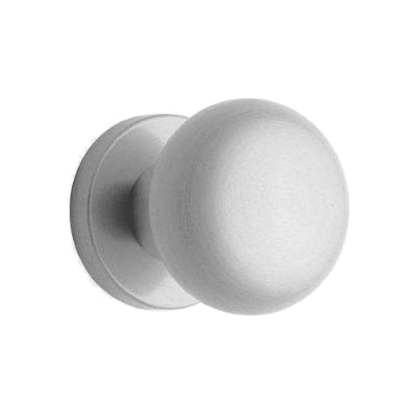
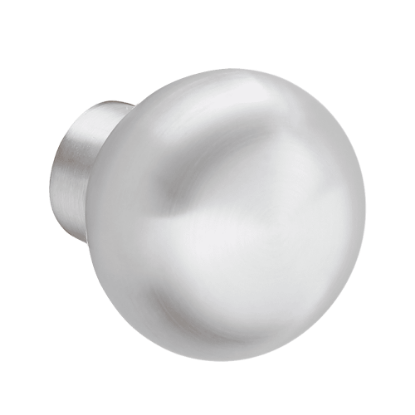
Schlage Door Knob Parts: Assemblies, Roses and What to Order

Quick Summary

Key points

  • A Schlage knob is not one part. The outside assembly, the inside assembly, the rose and the spindle are separate items and they fail separately.
  • Inside and outside assemblies are not the same thing and rarely interchange, because the outside one usually carries the cylinder preparation and the inside one does not.
  • The rose is the plate behind the knob. It is ordered on its own, which means a damaged rose never justifies a new lockset.
  • Changing a knob to a lever on the same lock body is usually possible and is the most common reason buildings order these parts at all.
  • Series, function, handing and finish decide the part number. Design name alone is not enough to order from.
The separately ordered parts behind one Schlage knob
PartWhat it doesOrdered separately
Outside knob assemblyThe knob on the secure side, usually prepared for a cylinderYes
Inside knob assemblyThe knob on the free egress sideYes
RoseThe plate that covers the hole and supports the knobYes
SpindleThe bar that carries the turn through to the lockSometimes, depending on series

A knob comes loose, a rose starts spinning, a knob snaps off in someone's hand, and the question is always the same: can we just replace that bit, or does the whole lock have to come out?

Almost always you can just replace that bit. This guide covers which parts exist, how they relate to each other, and the four things that decide the part number.

What Counts as a Schlage Door Knob Part?

Everything from the face of the door outwards, plus the spindle that connects through to the lock. The lock case or chassis is a separate conversation, and in most knob failures it is untouched.

That is the useful insight, because the chassis is the expensive part. A knob that has worn, loosened or been snapped off is trim damage, and trim is stocked at component level.

Schlage 09-506 42 outside knob assembly, a core Schlage door knob part
An outside knob assembly for an L Series mortise lock. The assembly includes the knob and the parts that mount it, and it is ordered as one item rather than built up from pieces.

Is a door knob part the same as a door handle part?

In the catalogue, broadly yes. Knob and lever trim sit in the same families and share roses, spindles and mounting arrangements on most series. The practical difference is the shape you grip, and on many locks the two are directly interchangeable.

Which Schlage Series Is on Your Door?

The series decides everything downstream, so establish it before looking at any part.

Reading the door to narrow the series
What you seeLikely familyWhere the parts live
Lock case set into the edge of the door, escutcheon or rose trimMortise, L SeriesMortise lock trim and case parts
Chassis through a bored hole in the door faceCylindrical, ND and ALX familiesCylindrical lock trim and chassis parts
Two bored holes with a deadbolt above the knobInterconnected lockInterconnected lock parts
Small bore, lighter chassisTubularTubular lock parts

If you have established the lock is mortise, our Schlage L Series mortise lock parts guide covers it at component level. If it is cylindrical, the cylindrical lock parts section is the place to start.

What Is the Difference Between the Inside and Outside Knob Assembly?

They are built for different jobs and they are usually different part numbers.

The outside assembly sits on the secure side. On most functions it carries the cylinder preparation, and whether the knob turns at all depends on the lock function and the state of the lock.

The inside assembly sits on the egress side. It almost always turns freely, because free egress is a requirement, not an option, on the great majority of commercial doors.

Schlage 09-402 41 inside knob for L Series
The inside knob assembly is a simpler part than the outside one, because it has no cylinder to accommodate. It still has to match the series, the finish and the design of the knob opposite it.

Can you fit an outside assembly on the inside?

Usually not, and it is not worth trying. Even where it physically mounts, you can end up with a keyed knob on the escape side of a door, which is the wrong outcome for the building and potentially a code problem.

What Does the Rose Do, and Why Is It Ordered Separately?

The rose is the plate between the knob and the door face. It covers the preparation in the door, carries the fixings and, on many designs, provides the bearing surface the knob turns against.

It gets ordered separately because it fails separately. A rose that has started to spin, worked loose, or been scratched through by years of keys does not mean anything is wrong with the knob or the lock.

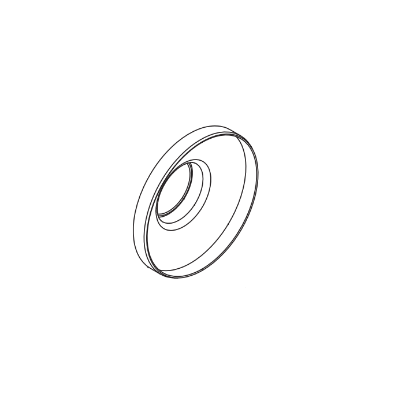
Schlage 08-029-PLY Plymouth rose
Roses are design specific as well as series specific. The design name in the part number is what keeps a replacement rose matching the knob already on the door.

Why do roses work loose?

Because they take the side load every time someone leans on the knob or pulls the door closed by it. On a high traffic door that is thousands of cycles a year. Retightening often works for a while, but a rose that keeps loosening usually has worn fixings or a worn seat in the door face.

What Is a Spindle and Does It Come With the Knob?

The spindle is the square or shaped bar that passes through the lock and carries the turning motion from one knob to the mechanism.

Whether it comes with the knob assembly depends on the series. Some assemblies include it, some expect you to reuse the one already in the door, and some list it separately. That is worth checking at the point of order rather than discovering on site.

A spindle that has rounded off produces a knob that turns a few degrees then spins freely. It is a cheap part and a common one on old doors.

Can You Change a Schlage Knob to a Lever?

On most series, yes, and this is the single most common reason these parts get ordered.

Accessibility requirements mean hardware on an accessible route has to be operable with one hand without tight grasping or twisting of the wrist. A round knob cannot meet that, and no adjustment changes it. A lever can.

Schlage 09-506 outside lever and knob with rose
Outside trim supplied with the rose included. Where a building is converting knobs to levers across a site, ordering trim and rose together keeps the finish consistent.

Because the lock body stays in the door, a knob to lever conversion is a trim order rather than a lock order. The function, the keying and the strike all stay as they are. Our ADA door clearance guide covers the operable parts requirement that drives these conversions.

Does the handing change when you fit a lever?

It can matter where a knob did not. A knob is symmetrical and a lever is not, so a lever has to point the correct way for the door. Confirm the handing from outside the door before ordering.

Are the knobs on a pair of doors always the same part?

Not necessarily. On a pair, the active leaf usually carries a working lock and the inactive leaf often carries dummy trim that operates nothing. Both can look identical from a distance, so measuring and checking behaviour beats assuming.

The same applies to a run of doors along a corridor. They were often fitted at the same time in the same finish and design, but the functions vary by room, and the function is what decides whether the outside knob is keyed, fixed or free.

How Do Knob Designs and Finishes Affect the Part Number?

Both are carried in the number, and both are easy to get wrong because they are the parts of the code people skip.

Design names identify the shape of the knob or lever. Two assemblies that are identical in function and series can have completely different numbers purely because of the design, and they will not look alike on the door.

Finish is a coded suffix. Matching it to the rest of the opening matters more than matching it to a photograph, because photographs of metal finishes are unreliable. Our finish guide lists what the codes mean.

Schlage 09-402 inside lever and knob assembly
Inside trim for an L Series lock. Where a pair of doors is being matched, ordering both leaves at once avoids the small finish variation that comes from buying months apart.

What Fails on a Schlage Knob?

Symptom, likely cause and the part to look at
SymptomLikely causePart
Knob turns but the latch does not moveSpindle rounded, or the chassisSpindle first, then chassis
Knob wobbles on the doorRose fixings loose or wornRose
Rose spins on the door faceWorn seat or missing retaining featureRose
Knob snapped offImpact or metal fatigueKnob assembly, that side only
Key turns outside but the knob stays lockedCylinder, tailpiece or lock functionCylinder and tailpiece before trim
Knob stiff in cold weatherLubrication, or a binding latchLatch and strike before trim

Where the key is involved, check the cylinder before the trim. Our Schlage lock cylinder replacement guide covers the tailpiece question that explains most of those cases.

Can You Replace Just the Knob, or Does the Whole Lock Go?

Just the knob, in almost every case. The exception is when the chassis itself has failed, which shows up as a knob that turns the full travel without retracting the latch even with a sound spindle.

There is one more reason to replace rather than repair, and it is worth being straight about: if a lock has already had two or three trim parts replaced and the door is heavily used, the economics shift. At that point a new lockset of the same function is often the better call.

What about knobs on fire rated doors?

Trim on a fire rated opening has to suit the rating of the assembly, and the door still has to latch positively every time it closes. That rules out dummy trim on an active leaf and makes the latch and strike condition as important as the knob itself.

If a fire door has a knob that is hard to turn, resist the temptation to solve it by loosening anything. A stiff knob on a fire door is usually telling you the latch is binding against a misaligned strike, and that same misalignment is what will stop the door latching when it matters.

How Do You Order the Right Schlage Knob Part?

What to record before ordering
InformationWhere to get itWhat it decides
SeriesLock type and any stampingWhich parts family applies
Inside or outsideWhich side of the door failedDifferent assemblies
FunctionHow the lock behavesWhether the outside knob is keyed or fixed
DesignShape of the existing knob or leverAppearance match
FinishCode on existing hardwareAppearance match
HandingHinge side viewed from outsideMatters for levers, not for knobs

Our commercial lock function codes guide explains how to read the function, and the Schlage lock parts overview covers the wider range. For the lever specific parts on L Series, see the 09-506 outside lever guide.

About the Author

Security Parts has supplied repair parts for commercial door hardware since 2001, covering Von Duprin, LCN, Schlage, Falcon, Detex and Adams Rite at the component level. Our diagram based lookup exists so a technician can confirm a part before ordering it. This guide was written by the Security Parts team from supplier documentation and the questions our customers bring us.
If the knob design is unfamiliar and there is no stamping to read, send a photograph of the door and the trim through our contact page, or browse Schlage replacement parts and mortise lock parts.

Blog|Security Parts

Blog|Security Parts

Blog|Security Parts