RSS

Blog posts of '2026' 'November'

Schlage L9070: Classroom Function, Related Locks and Parts

Quick Summary

Key points

  • The Schlage L9070 is the classroom function in the L Series mortise range, locked and unlocked by key from the outside only.
  • Classroom means the outside lever can be left locked or left free. That is the whole difference from a storeroom function, which can never be left unlocked.
  • The inside lever is always free, so people can leave whether the outside is locked or not.
  • Related functions change who can lock the door. The L9071 adds lockdown from inside, and the L9076 adds holdback.
  • The lock case carries the function, so changing what a door does usually means a case rather than a whole lockset.
L9070 against its neighbours in the range
FunctionWho can lock the outside leverTypical use
L9070 classroomKey from outside onlyStandard teaching space
L9071 classroom securityKey from outside or insideRooms needing lockdown from within
L9076 classroom holdbackKey from outside, with holdbackDoors left unlocked for long periods
StoreroomNobody, it is always lockedStores and plant rooms
OfficeKey or inside controlOffices and suites

The Schlage L9070 is one of those part numbers that turns up on a schedule with no explanation attached. It is a mortise lock, it is a classroom function, and the difference between it and the function next to it in the catalogue decides how a room actually gets used.

This guide covers what the L9070 does, how classroom differs from storeroom, what the related functions change, which parts are serviceable, and what to confirm before ordering.

What Is the Schlage L9070?

It is the classroom function in the L Series mortise lock range, with lockdown from the exterior only.

In practice that means a key in the outside cylinder locks or unlocks the outside lever, and it stays as it was left. Leave it unlocked and anyone can walk in. Lock it and the outside lever is fixed until a key changes that. Nobody inside the room can change the state of the outside lever.

The inside lever always retracts the latch. That is not a convenience; it is how the door meets the requirement that people can always leave. Our commercial mortise lock guide covers how the L Series is built around that principle.

Why is it called a classroom function?

Because that is the pattern a teaching room needs: unlocked while the room is in use, locked when it is not, changed by whoever holds the key. The name describes the behaviour rather than restricting where it can be fitted, and the same function suits meeting rooms, labs and consulting rooms.
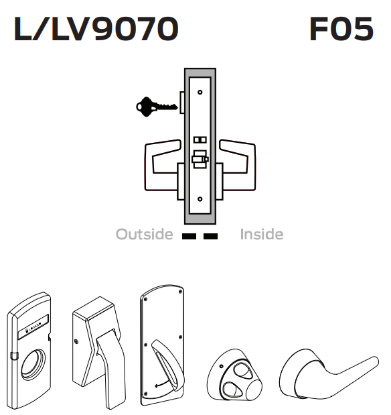
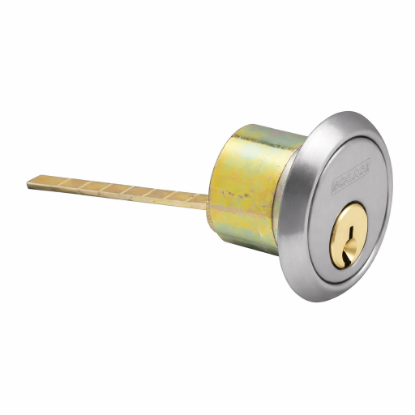
Schlage L9070 classroom mortise lock with exterior lockdown only
The L9070 classroom lock. Lockdown is from the exterior only, which is the single fact that separates it from the functions around it.

How Is Classroom Different From a Storeroom Function?

A classroom function can be left unlocked. A storeroom function cannot.

On a storeroom lock the outside lever is permanently rigid, and a key retracts the latch for one entry before the door relocks behind the user. There is no state in which the outside lever simply works. That is correct for a plant room and wrong for a classroom, where people come and go all day.

The practical consequence is what happens when somebody props the door. On a classroom function the right answer is to unlock the lever with a key so the door works normally. On a storeroom function there is no such option, which is exactly why doors with storeroom locks end up with wedges under them. Our storeroom lock guide covers that function in detail.

Choosing between the two on a real door
QuestionIf yesIf no
Does the room need to be freely enterable at times?ClassroomStoreroom
Must the door never be found unlocked?StoreroomClassroom
Is a key holder present during use?Either worksClassroom is more practical
Is the room high value or hazardous?StoreroomClassroom
Do occupants need to secure themselves?Consider L9071L9070 is sufficient

Does the key stay in the lock while it is unlocked?

No. The key changes the state and comes out. That is what makes the function useful: the condition persists without anybody holding anything, and the next change needs the key again.

What Does the L9071 Add?

Lockdown from the inside as well as the outside.

On the L9071, a key cylinder on the inside face lets somebody in the room lock the outside lever without going out into the corridor. The inside lever still works, so egress is unchanged. What changes is who can secure the door and how quickly.

That difference is the reason the function exists. On an L9070 a room can only be secured by somebody standing outside it with a key, which is not always practical. Where the requirement is for occupants to secure themselves, the L9071 is the function that does it.
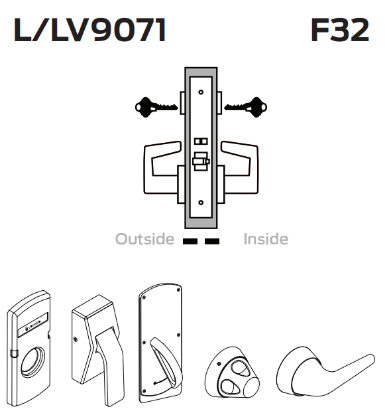
Schlage L9071 classroom security lock with interior and exterior lockdown
The L9071 adds an inside cylinder. The outside lever can be locked from within the room without anybody opening the door.

Does locking from inside affect getting out?

No, and it must not. On both functions the inside lever retracts the latch mechanically whatever the outside lever is doing. Locking down a room secures it against entry, never against exit, which is the line every one of these functions is designed around. Our lock function codes guide covers how the whole set is organised.

What Is Holdback and Why Does the L9076 Have It?

Holdback keeps the latch retracted so the door is push and pull, without anyone propping it.

On a holdback function the latch can be held back deliberately, so the door simply opens and closes without latching at all. That suits a room that is open for a whole session, or a corridor door that needs to be free during busy periods, and it removes the wedge from the equation.

It is not appropriate everywhere. A door that must latch, including any fire rated opening, cannot have its latch held back, which is why holdback is a separate function rather than a feature on every lock. Our fire rating guide covers why positive latching matters.
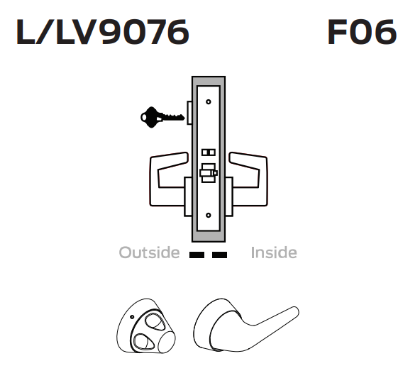
Schlage L9076 classroom holdback lock
The holdback function keeps the latch retracted on purpose. It solves the propped door problem rather than tolerating it.

How do you tell if a door has holdback fitted?

Operate the lock with the door open and see whether the latch can be left retracted. On a standard function the latch springs back every time. On a holdback function it can be set and will stay. Checking takes seconds and settles an argument that otherwise runs on assumption.

Which Parts Are Serviceable on These Locks?

Most of them, which is the main practical advantage of a mortise lock.

The lock case, the trim, the cylinder, the spindle and the strike are all separate items. A worn lever does not need a new lock. A rekey does not touch the case. A damaged faceplate is a faceplate. The one component that carries the function is the case itself, and that is the one to change when the door needs to behave differently.

What to order for the common faults
FaultPart involvedDoes the function change?
Lever turns without retracting the latchSpindle, then the hubNo
Key turns but nothing happensCylinder camNo
Room needs inside lockdownLock caseYes, to the L9071 function
Trim damaged or datedTrim and escutcheonNo
Latch sluggish with the door openLock caseNo, same function

Is the lock case specific to the function?

Yes, and that is the point. The case contains the mechanism that decides what the key and each lever can do, so cases are listed against the functions they serve. A case listed for one pair of functions is not a universal part, and the listing is the specification rather than a note.
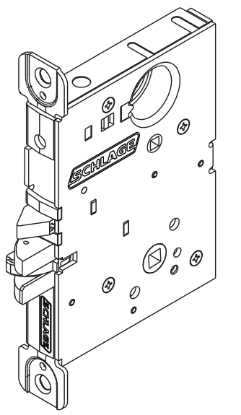
Schlage L283-039 mortise lock case for the L9076 and L9077 functions
A lock case listed for specific functions. The case is where the function lives, which is why it is the part that changes when the door has to behave differently.

What Goes Wrong on an L9070 Door?

The same things that go wrong on any mortise lock, plus one that is specific to the function.

The general faults are a rounded spindle, a worn hub, a cylinder cam that no longer drives the mechanism, and a latch binding against a misaligned strike. None of these are function related, and our mortise lock repair guide covers how to separate them.

The function specific complaint is a door that is found unlocked when it should not be. On a classroom function that is almost never a hardware fault. Somebody unlocked the lever with a key and did not lock it again, because the function allows exactly that. Treating it as a lock failure wastes a visit.

How do you check whether the fault is the lock or the door?

Open the door and work everything in free air: both levers, the key in both directions, and the latch. Anything that misbehaves with the door open belongs to the lock. Anything that only appears when the door is closed belongs to the strike, the frame or the alignment.
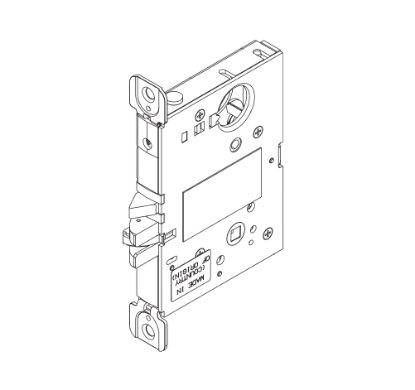
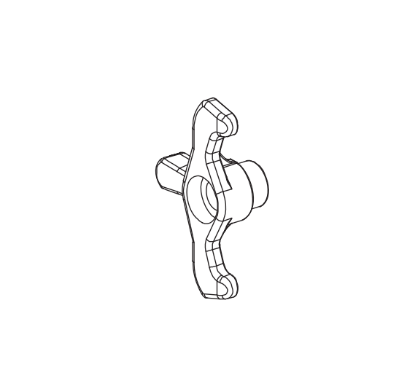
Schlage 46928818 narrow mortise lock retractor
A retractor is one of the internal components that carries lever movement into the latch. Internal wear shows up as a lever that moves without achieving anything.

How Do You Choose Between These Functions on a New Door?

Start from who needs to be able to lock the door and when.

If only key holders need to secure the room, and they can do it from the corridor, the L9070 is sufficient. If occupants need to secure themselves without opening the door, the L9071 is the function. If the door spends long periods deliberately unlatched, holdback should be considered, provided the opening is not required to latch.

Decide that before looking at trim, finish or keying, because those are all independent. The function is the one decision that is awkward to change later, since it lives in the case inside the door. Our L Series parts guide covers how the rest of the assembly is specified.

Does the keying strategy affect the choice?

It affects who can actually use the function. A classroom lock is only as useful as the key distribution behind it, and a function that relies on someone being present with a key fails quietly if that person is not. Our key systems guide covers how that side is planned.

What Should You Confirm Before Ordering?

Six things, and the first is the one most often assumed.

The function currently fitted, read from the lock rather than from the schedule. The function required, decided from the questions above. The handing. The backset and door thickness. The trim design and finish. And whether the cylinder is being reused, replaced or rekeyed.

If the door is being changed from one function to another, confirm whether the existing case can be replaced on its own or whether the trim has to change as well. That answer decides whether this is a small job or a full lockset. Our L283 trim parts guide covers the trim side.

What if the schedule and the door disagree?

Believe the door. Schedules are written before installation and rarely updated afterwards, and a room that changed use five years ago will have hardware that reflects the change rather than the drawing. Read the lock, test the behaviour, and order from what is actually there.

About the Author

Security Parts has supplied repair parts for commercial door hardware since 2001, covering Von Duprin, LCN, Schlage, Falcon, Detex and Adams Rite at the component level. Our diagram based lookup exists so a technician can confirm a part before ordering it. This guide was written by the Security Parts team from supplier documentation and the questions our customers bring us.
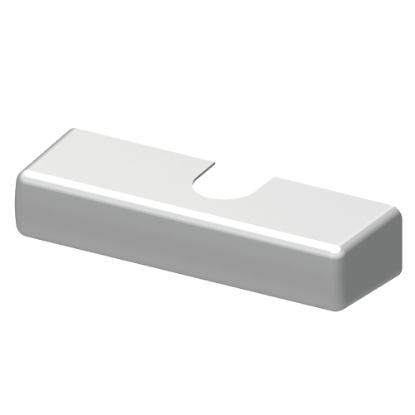
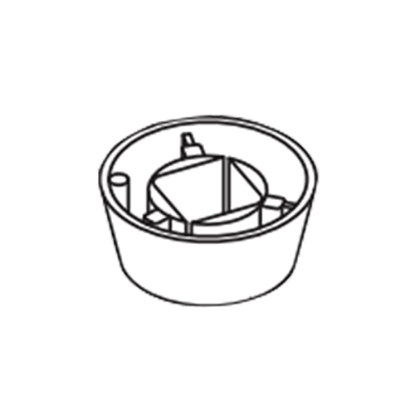
Door Closer Not Closing All the Way: Causes and Fixes

Quick Summary

Key points

  • A door closer not closing all the way is a force problem at the end of the swing, and the cause is usually outside the closer.
  • Work from the door inwards: hinges, seals, strike and latch first, then the closer settings, then the closer itself.
  • The latch speed valve is the most common adjustment, but only if the door is arriving and stalling rather than never getting there.
  • A closer that no longer responds to its valves has usually lost fluid, and no amount of adjustment will recover it.
  • On a fire rated opening this is a failure rather than a nuisance, because the door has to latch under its own closer every time.
Where the door stops and what it points to
Where it stopsLikely causeFirst check
Last inch, latch touching strikeLatch speed or friction at the strikeStrike alignment, then latch valve
Several inches outSeals, carpet or a dropped leafWatch the gap along the frame
Anywhere, inconsistentlyHinge wear or frame movementLift test at the latch edge
Only in cold or wet weatherSeasonal seal and frame changeCompare against a dry day
Everywhere, very slowlyCloser losing fluid or wrong sizeResponse to the sweep valve

A door closer not closing all the way is one of the most common faults on a commercial opening, and one of the most commonly misdiagnosed. The closer is the visible piece of equipment, so the closer gets adjusted, and the door carries on stopping short.

This guide covers how to read where the door stops, what to rule out before touching an adjuster, which valve actually governs the end of the swing, and when the closer really is the problem.

What Does Where the Door Stops Tell You?

Almost everything, if you watch it rather than the closer.

Release the door from about thirty degrees and let it close with nobody touching it. Watch the gap between the leaf and the frame all the way round as it arrives. A door stopping with an even gap is running out of energy. A door stopping with the gap closed at the top and open at the bottom is being held off by something, and that something is usually the leaf itself rather than the closer.

Repeat from ninety degrees and from full open. A door that closes from ninety but not from thirty has a latch speed or friction problem near the frame. A door that fails from every position has a force problem through the whole swing.

Why start from thirty degrees?

Because it is the hardest test. From wide open the door has momentum to carry it through small obstructions. From thirty degrees there is very little stored energy left, so anything absorbing force shows up immediately. A door that latches reliably from thirty degrees will latch from anywhere.

LCN 1260-72 slim cover removed to reach the closer valves
The cover comes off before any valve is touched. On many units the adjusters sit behind it, and so does the first evidence of a leaking closer.

What Should You Rule Out Before Adjusting Anything?

Everything on the opening that absorbs energy, because the closer is the last thing in the chain.

Start with the hinges. Lift the leaf at the latch edge and watch for movement at the hinge side. A dropped door catches the frame somewhere in the last part of the swing, and no closer setting fixes geometry.

Then the seals. Compression seals and sweeps are designed to be squeezed, and when they stiffen with age or cold they absorb a surprising amount of the closing force. Then the floor covering, which can catch a leaf that used to clear it. Then the latch and strike, which is where most of these faults actually live. Our strike alignment guide covers that last one in detail.

Friction checks in order
CheckHowWhat a failure looks like
Hinge wearLift the latch edgeVisible movement, door binds at the head
SealsClose the door slowly by handResistance before the frame is reached
Floor coveringLook at the bottom edge through the swingContact or a worn arc in the carpet
Latch and strikeMark the latch and closeMark lands on the lip, not in the cutout
Frame conditionSight along the stopBowing or a strike that has moved

How much difference can a seal really make?

Enough to stop a correctly set closer on a light door. The last few inches of the swing are where the closer has the least energy and the seal has the most compression, so the two work against each other at exactly the wrong moment. A door that latches in summer and not in winter is usually telling you this.

LCN 1260-146 shaft cover on a door closer that is not closing all the way
While the cover is off, check the shaft area. Oil here means the closer has started to lose the fluid its adjusters depend on.

Which Valve Governs the End of the Swing?

The latch speed valve, and only the last few inches of travel.

Most surface closers divide the closing cycle into a sweep and a latch region. The sweep valve controls the long middle part. The latch valve controls the final approach, where the latch has to be driven into the strike. If the door is arriving at the frame and stalling there, the latch valve is the control that matters.

Open it slightly to let the door complete the swing faster and with more authority, in small increments, testing from thirty degrees each time. If opening it fully does not get the door latched, stop. The valve is not the problem and continuing will simply produce a door that slams once the real cause is fixed. Our closer adjustment guide covers each valve in turn.

What if the valves do not change anything at all?

That is a diagnosis in itself. Valves meter fluid, so a valve that produces no change is a valve with no fluid behind it. Check for oil at the shaft, at the body joint and on the door face below the unit. Our guide to a closer leaking oil covers what follows if you find it.

Can the Arm Be the Reason the Door Stops Short?

Yes, and it is the cause most often overlooked on a door that has never worked properly.

The arm converts spring force into movement at the leaf, and how much of that force arrives depends on geometry. A parallel arm on the push side delivers less closing force near the frame than a regular arm on the pull side. If a closer was moved, or fitted in a position the door was not designed for, the geometry may simply not deliver enough force at the end of the swing.

The giveaway is a door that has never latched reliably since installation, as opposed to one that used to and stopped. Wear produces gradual change; geometry produces a problem that was there on day one. Our parallel arm guide covers how the mountings compare.

LCN 1260-3077L long arm used where the closer sits far from the hinge
A long arm suits openings where the closer sits further from the hinge than standard. The right arm restores geometry that no valve setting can replace.

Does the arm need adjusting as well as choosing?

It does. Most arms are set at installation so the forearm sits at the correct angle to the door when closed, and that preload affects how much force reaches the leaf at the end of the swing. An arm that has been refitted without resetting the preload is a common reason a door stopped latching after unrelated work.

LCN 1260-62A auxiliary shoe that sets the parallel arm geometry
The shoe sets where the arm meets the frame. Change it and you change the leverage the closer has through the whole swing.

Could the Closer Simply Be Too Small?

On a heavy or exposed door, frequently.

Closer size is matched to door width and weight, and a unit that is undersized will behave exactly like this: adequate through the middle of the swing, out of authority at the end. It is especially common where a door was replaced with a heavier leaf and the original closer was reused, or where an exterior door faces wind pressure the original specification did not account for.

An adjustable spring closer may have range left, which is the first thing to check. A fixed size closer does not, and no adjustment will create force the unit cannot produce. Our closer sizing guide covers matching the unit to the opening, and our spring tension guide covers using the range you have.

Signs the closer is undersized rather than faulty
SignWhy it points at size
Never latched since the door was changedLeaf got heavier, closer did not
Fails only on windy daysExternal pressure exceeds the margin
Spring already at maximumNo range left to use
Door is wide and solidWidth multiplies the force needed
Valves respond normallyHydraulics are fine, force is not

Is winding the spring up the right answer?

Only within reason, and only after friction has been dealt with. Spring tension is also what somebody feels when they open the door, so solving a latching problem by raising it can take an accessible opening outside acceptable opening force. Our door clearance guide covers those limits.

What Changes on a Pair of Doors?

Sequence, and the fact that one leaf can prevent the other from closing at all.

On a pair with an astragal, the inactive leaf has to close first. If the active leaf arrives early it lands on the astragal and stops, which looks exactly like a closer problem on the active leaf. The actual fault is that the inactive leaf is slow, or that a coordinator is not doing its job.

Test them separately. Hold the active leaf open, let the inactive one close, then release the active one. If each leaf latches properly on its own, the closers are fine and the sequence is the fault.

Does a mullion change this?

It removes the problem, because each leaf closes against the mullion rather than against the other leaf. That is one reason pairs with removable mullions are simpler to maintain. Our mullion guide covers how those openings are arranged.

LCN 1260-30 cush shoe support
Shoe supports and brackets hold the arm geometry in place. A support that has worked loose lets the arm move, and the door loses force at the frame.

Why Does This Matter More on a Fire Door?

Because latching is the function, not a convenience.

A fire rated assembly depends on the leaf closing from any position and latching positively under its own closer with nobody helping. A door that stops an inch short looks closed and is not. In a fire that gap is the difference between a barrier and an opening.

It is also the reason the thirty degree test matters on rated openings specifically. A door that only latches when pushed, or when released from wide open, has not met the requirement. Our fire rating guide covers what else depends on the same listing.

What should be recorded after the repair?

That the door was released from thirty, ninety and full open and latched unaided from each, along with what was changed to achieve it. On a rated opening that record is as much a part of the job as the repair.

What Should You Check Before Ordering Parts?

Whether you are buying a closer, an arm, or neither.

Confirm the closer model from the body or cover, the arm type and mounting, the door width, weight and whether it is exterior, the condition of hinges and seals, and whether the valves still respond. That last point separates a worn out unit from a healthy one on a difficult door.

If friction turned out to be the cause, the order is likely seals, hinges or a strike rather than anything from the closer. Fixing the closer in that situation leaves the original problem in place with a new unit attached to it. Our LCN closer parts guide covers how arms, shoes and brackets are listed.

How do you avoid the same callout in six months?

Fix the cause rather than the symptom, and note what you found. A door that stops short because of a stiff seal will do it again next winter if the seal is left in place and the closer is simply wound up to overcome it. Our maintenance checklist covers catching these before they become callouts.

About the Author

Security Parts has supplied repair parts for commercial door hardware since 2001, covering Von Duprin, LCN, Schlage, Falcon, Detex and Adams Rite at the component level. Our diagram based lookup exists so a technician can confirm a part before ordering it. This guide was written by the Security Parts team from supplier documentation and the questions our customers bring us.
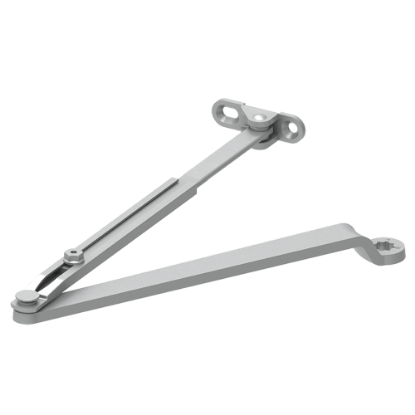
Schlage Emergency Unlock Tool: What It Is and How to Use It

Quick Summary

Key points

  • A Schlage emergency unlock tool releases a privacy function from outside. It is the deliberate override on a restroom, changing room or patient room door.
  • It is not a lever removal tool. One takes trim off for service, the other opens a locked door, and the two look similar enough to be confused on a van shelf.
  • The tool only works because the lock was built with an emergency release. If the function has no release, no tool will open it.
  • The release itself is a stocked component. A privacy lock that will not override usually has a worn turn button or plunger rather than a broken chassis.
  • Access to the tool is a procedure question as much as a hardware one. A tool nobody can find at two in the morning is not an override.
Emergency unlock against the tools it gets confused with
ToolWhat it doesWhen you reach for it
Emergency unlock toolReleases a privacy function from outsideSomebody is locked in or unresponsive
Spanner wrenchDepresses a catch so trim can be removedServicing or replacing the lever
Cylinder nut toolTurns the retaining nut behind trimChanging a cylinder on exit device trim
Control keyRemoves an interchangeable coreRekeying a site that runs cores
Hex keySets dogging or closer arm fixingsRoutine device and closer work

A Schlage emergency unlock tool is the small item that nobody thinks about until a restroom door will not open and somebody inside is not answering. It exists because privacy locks are designed to be overridden, and the override needs something to turn it.

This guide covers what the tool actually does, how the emergency release inside the lock works, why it is not the same as a lever removal tool, what fails, and how to make sure the override is there when it is needed.

What Does a Schlage Emergency Unlock Tool Do?

It operates the emergency release built into a privacy function lock, from the outside of the door.

A privacy function locks the outside lever from the inside, usually with a push button or a turn piece. There is no key cylinder, because the room is not meant to be secured against the building, only against somebody walking in. What there is instead is a small opening in the outside trim with a slot, a hole or a shallow recess behind it, connected to a plunger that releases the lock.

The tool engages that release and turns or pushes it. The lock unlocks, the outside lever works, and the door opens. The design intent is that this takes seconds and needs no key and no permission.

Why is there no key on a privacy lock?

Because a keyed lock creates a different problem. If a restroom needed a key to override, the person with the key would have to be found first, and the lock would then be part of the building key system with everything that implies. The emergency release gives immediate access without making the door part of the security hierarchy. Our lock function codes guide covers where privacy sits among the other functions.

Schlage N123-084 ND Series emergency turn, button and plunger used with a Schlage emergency unlock tool
The emergency turn, button and plunger is the mechanism the tool acts on. It is a stocked component, which is why a lock that will not override is usually repairable.

How Is It Different From a Lever Removal Tool?

They do completely different jobs and only look alike.

A lever removal tool, usually a spanner wrench, depresses a hidden catch so the lever and rose can be pulled off the chassis. It is a service tool, and the door is normally open when it is used. An emergency unlock tool operates a release inside the lock to open a door that is locked and that somebody may be behind.

The confusion is understandable. Both are small, both engage a hole in the trim, and both end up in the same pouch. The consequence of mixing them up is that somebody tries to remove the trim from a door they are trying to open, which wastes the one resource an emergency does not have. Our lever removal tool guide covers the service side in full.

Can you open a privacy lock with a screwdriver or a nail?

Sometimes, and it is worth knowing in an emergency, but it is not a method. The release is sized for a specific tool, and anything approximate rounds out the opening or pushes the plunger out of alignment. A lock that has been opened with improvised tools a few times is a lock whose override will eventually fail at the moment it matters.

Schlage Sparta button lever with the push button that sets privacy
A button lever. The push button in the lever is what the occupant uses, and the emergency release on the opposite face is what the tool uses.

Which Locks Have an Emergency Release?

Privacy functions, and only privacy functions, because they are the ones designed to be locked by an occupant.

A storeroom function has no release, because the outside lever is permanently locked and a key is the intended access. A classroom function is controlled by key from outside. An office function is locked and unlocked deliberately by a key holder. None of these are the situation an emergency release is for.

Privacy is different: the person inside locks it, nobody outside has a key, and the building still needs a way in. That is the whole reason the release exists, and it is why checking the function is the first step when somebody asks whether a door can be overridden.

Function against whether an emergency release applies
FunctionWho locks itEmergency release?
PrivacyThe occupant, from insideYes, that is what it is for
StoreroomAlways locked outsideNo, key access is the route
ClassroomKey holder, from outsideNo
Office or entryKey holder or inside buttonNot usually
PassageNobody, it does not lockNot applicable

Do hospital and patient room locks work the same way?

They follow the same principle with different hardware. A hospital privacy function gives the occupant privacy and staff a way in, and the override is built around the same idea of immediate access without a key. The specific release and the tool that fits it vary with the lock family, so confirm against the lock rather than assuming the tool on the van fits.

Schlage ALX-FK40 privacy function kit that creates the lock an emergency tool releases
A privacy function kit. Function is a parts level decision on many series, so a passage set can become a privacy set without replacing the lockset.

Does a Mortise Privacy Lock Work Differently?

The idea is the same, but the hardware sits in an escutcheon rather than a rose, and the release is part of that escutcheon.

On a mortise privacy lock the inside face carries a turn piece, and on some functions a deadbolt as well. The outside face carries the emergency release. Because the escutcheon is a single plate covering the whole preparation, the release position is fixed by the plate design rather than by a small rose.

That has a practical consequence: the escutcheon is a stocked part in its own right. A damaged outside plate, or one where the release opening has been worn out, can be changed without touching the lock case. Our mortise lock parts guide covers how those assemblies break down.

Schlage 23599335 privacy interior escutcheon on a mortise privacy lock
A privacy interior escutcheon. The inside plate carries what the occupant operates; the outside plate carries the release.

What changes when the privacy lock also has a deadbolt?

The override has more to do. On functions where the inside turn throws a bolt as well as locking the lever, the emergency release has to retract that bolt too. If it does not, the door stays shut after the lever frees up. Check what the inside turn actually operates before assuming the release covers it.

Schlage 23599350 interior privacy escutcheon with deadbolt
A privacy escutcheon with a deadbolt. What the inside turn throws decides what the outside release has to undo.

Why Will My Privacy Lock Not Override?

Usually the plunger or the turn button rather than the lock itself.

The release mechanism is a small plunger that has to move freely when the tool pushes or turns it. It sits behind an opening in the trim, which means it collects dust, cleaning product and whatever else gets near a restroom door. A plunger that has stiffened will resist the tool, and a plunger that has seized will not move at all.

The turn button on the inside wears in the same way. Buttons that are pushed thousands of times develop play, and a worn button can set a lock that the release then cannot clear cleanly.

Override faults and what they point to
SymptomLikely causeUsual fix
Tool turns but nothing releasesPlunger seized or disconnectedTurn, button and plunger assembly
Tool will not engageWrong tool, or opening damagedCorrect tool, then inspect the trim
Releases but lever still lockedDeadbolt thrown on that functionConfirm what the inside turn operates
Lock sets itself at randomWorn buttonReplace the button and plunger
Override works but lever is looseTrim wear, unrelated to the releaseTrim or spring cage parts

How often should the override be tested?

As part of routine maintenance, on every privacy door, because it is the one function on the opening that nobody exercises in normal use. The occupant uses the button, the public uses the lever, and the release sits untouched for years. Our hardware maintenance checklist covers where it fits alongside everything else on the door.

Where Should the Tool Actually Live?

Somewhere a person on shift can reach in under a minute, which is rarely where it ends up.

An emergency unlock tool in a technician's van is not an override for a building whose staff need access at night. The usual answer is a small number of tools held at reception, in a facilities office or with a duty manager, with people who know what they are and when to use them.

The second half is knowing which doors they fit. A site with several lock families may need more than one tool, and the only way to find that out calmly is to check in advance rather than during an incident.

What should be written down?

Which doors have privacy functions, which tool each one takes, where the tools are kept, and who is expected to use them. That list takes an hour to compile and removes the part of an emergency that is pure confusion. Our hardware troubleshooting guide covers how to work through the door itself once you are inside.

What Should Happen After an Emergency Unlock?

Someone should find out why it was needed, because an override is a symptom rather than an event.

A privacy lock that had to be overridden once because somebody could not work the inside button is a training matter. A lock that has needed overriding three times in a month is telling you something mechanical is wrong, and the next time may be the time the override does not work either.

Check the inside release, the latch and the strike while the door is open and accessible. Most repeat overrides come from a latch that is binding rather than from anybody misusing the lock. Our mortise lock repair guide covers narrowing that down.

Should the override be recorded?

On any door where occupant privacy matters, yes. A short note of when the door was opened and why protects everybody involved, and over time it is also what shows a particular lock is becoming unreliable before it fails completely.

What Do You Need to Know Before Ordering?

The lock series, the function, and whether you are buying the tool or the mechanism it acts on.

The series decides the tool shape and the release design. The function confirms there is a release at all. And the distinction between tool and mechanism matters, because a door that will not override needs a part, not another tool.

Also note the finish if trim is involved, and whether the opening is in a setting where wear is likely to be high. Restroom and changing room doors live hard, and the components that fail there are the small ones. Our ND Series storeroom lock guide covers the neighbouring functions on the same chassis family.

Can the function be changed instead?

On several series, yes, with a function kit. If a door keeps being locked when it should not be, or privacy is not actually the requirement, changing the function solves the problem more completely than repeating overrides. The lock body stays in the door and the trim and keying are unaffected.

About the Author

Security Parts has supplied repair parts for commercial door hardware since 2001, covering Von Duprin, LCN, Schlage, Falcon, Detex and Adams Rite at the component level. Our diagram based lookup exists so a technician can confirm a part before ordering it. This guide was written by the Security Parts team from supplier documentation and the questions our customers bring us.
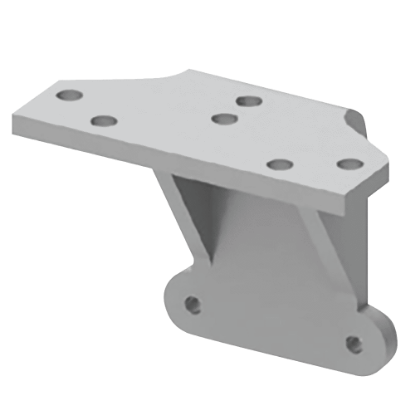
Door Closer Spring Tension Adjustment: How to Get It Right

Quick Summary

Key points

  • Spring tension sets how hard the closer pulls the door shut. It is a different adjustment from the speed valves, and it is the one that changes opening force.
  • Adjustable spring closers let you change the power without changing the unit. Fixed size closers do not, so the answer there is a different closer.
  • Turn the spring up when the door will not latch from rest. Turn it down when the door is too heavy to open comfortably.
  • Accessible openings limit opening force, so spring tension cannot simply be wound up to solve a latching problem. Fix the friction first.
  • Arm type and mounting change how much of the spring force reaches the door, so the same setting behaves differently in different geometries.
Spring tension against the speed valves
AdjustmentWhat it changesSymptom it addresses
Spring tension or powerHow hard the closer pulls shut and pushes backDoor will not latch, or is too heavy to open
Sweep valveSpeed through the main part of the swingDoor closes too fast or too slow overall
Latch valveSpeed in the last few inchesDoor slams at the frame or stalls short
BackcheckResistance near full openDoor thrown into the wall
Delayed actionPause before the sweep beginsSlow users need longer to pass

Door closer spring tension adjustment is the control people reach for last and should often reach for first. The speed valves decide how the door moves. The spring decides whether it has enough force to finish the job at all.

This guide covers what the spring actually does, how adjustment differs from the valves, when to change it, what limits how far you can go, and how the arm and mounting change the result.

What Does the Spring in a Door Closer Do?

It stores the energy that closes the door, and it resists you while you open it.

Opening the door compresses the spring inside the closer body. That stored energy is what pushes the door shut when you let go. The hydraulic side does not provide any closing force at all; it only controls how quickly the spring is allowed to release what it holds.

That split explains most closer confusion. If a door closes too fast, the fluid is the problem. If a door closes slowly and then stops short of the frame, the spring has run out of authority before the job was finished. Our hydraulic door closer guide covers how the two halves work together.

Is spring tension the same as closer size?

They describe the same thing from different ends. Closer size is the power rating the unit is built to deliver, usually matched to door width and weight. Spring tension adjustment is how far you can move within that unit's range. An adjustable closer covers several sizes; a fixed size closer delivers one. Our closer sizing guide covers how the size is chosen in the first place.

When Should You Change Spring Tension Rather Than a Valve?

When the problem is force, not speed.

Work out which one you have by watching the door close from about thirty degrees with nobody touching it. If it moves at a reasonable speed and then stops just short of latching, or pushes the latch against the strike without seating it, that is a force problem and the spring is the control. If it reaches the frame but arrives too hard or too softly, that is speed and the valves are the control.

Which control to reach for
What the door doesControlDirection
Stops short of the latchSpring tensionIncrease
Latches but needs a shove to openSpring tensionDecrease, after checking friction
Slams into the frameLatch valveSlow it
Crawls through the middle of the swingSweep valveSpeed it up
Hits the wall when thrown openBackcheckIncrease resistance

What should you rule out before touching the spring?

Friction, every time. A dragging weatherseal, a worn hinge, a carpet catching the leaf or a misaligned strike all absorb closing energy, and winding the spring up to overcome them makes the door harder to open without fixing anything. Our strike plate alignment guide covers the most common of those causes.

LCN 4040XP-159 arm screw that carries the spring load into the arm
Every bit of spring force passes through the arm fixings. A loose arm screw shows up as lost closing force long before anything looks broken.

How Is Spring Tension Actually Adjusted?

On an adjustable closer, through a dedicated adjustment at the body, separate from the speed valves.

The important part is that it is separate. Speed valves are small needle adjusters, usually behind the cover or on the end of the body, and they meter fluid. The spring adjustment changes preload on the spring itself and needs noticeably more effort to turn. If an adjuster is easy to turn and changes how fast the door moves, you are on a valve.

Work in small increments and test between each one. Spring adjustment moves the behaviour of the whole swing at once, so a large change often overshoots in both directions: the door now latches firmly and is too heavy to open.

How do you know how far you have gone?

Count and write it down before you start. Note the starting position, count turns, and record where you finish. A closer that has been adjusted by several people without records ends up at a setting nobody chose. Our commercial closer adjustment guide covers the valve side with the same discipline.

What Limits How Far You Can Wind the Spring Up?

Opening force requirements, and they are not negotiable on an accessible route.

Accessible openings limit how much force a person should need to open the door. Spring tension is the single biggest contributor to that force, so a closer wound up to force a difficult door shut can take the opening outside what is acceptable. The door now latches and the people who need it most cannot open it.

That is why friction gets fixed first. Reducing what the closer has to fight lets the spring come back down, which keeps opening force within range while still closing the door properly. Our door clearance guide covers the requirements that apply to the opening as a whole.

Opening force troubleshooting order
StepWhat to doWhy it comes first
1Check hinges and leaf alignmentA dropped door fights the frame all the way
2Check seals and sweepsCompression seals absorb a surprising amount
3Check the strike and latchA dragging latch is read as weak closing
4Set the valves correctlySpeed faults can imitate force faults
5Adjust spring tensionLast, with the opening already honest

Does a fire door change the limits?

It changes the priority. A fire door has to close and latch from any position under its own closer, so there is a floor below which the spring cannot go however light the door needs to feel. Where that floor conflicts with opening force, the opening needs a different solution, such as a power operator, rather than a compromise setting.

How Does the Arm Change What the Spring Delivers?

Considerably, because the arm decides how spring force is turned into door movement.

A regular arm pulls on the door from a position that gives it good mechanical advantage. A parallel arm mounted on the push side works at a less favourable angle and delivers less closing force to the leaf for the same spring setting. That is why the same closer, moved from one mounting to another, can go from closing firmly to stopping short.

Track arm and cush arm installations change it again. A cush arm includes a stop function and trades some of the swing for that control. Our parallel arm closer guide covers how those geometries compare.

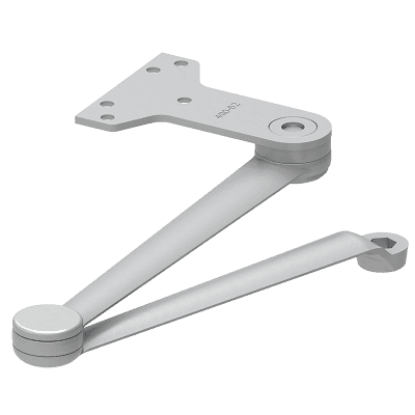
LCN 4040XP-3077EDA extra duty arm used where door closer spring tension is high
An extra duty arm. Where spring tension is set high or the door gets abused, the arm is the component that has to carry it.

Should the arm change instead of the spring?

Sometimes that is the better answer. If the door needs more closing force than the current mounting can deliver, moving to a geometry with better mechanical advantage achieves it without raising opening force as much as winding the spring up would. It is a part change rather than a setting, but it solves the cause.

LCN 4040XP-3077CNS cush arm that limits opening travel
A cush arm builds a stop into the arm. On doors that get thrown open it protects the closer from loads that spring adjustment cannot defend against.

Does Where the Closer Mounts Affect the Setting?

Yes, and a drop plate or bracket often matters more than people expect.

A closer mounted lower on the leaf, or further from the hinge, changes the leverage it works with. Drop plates exist because many frames do not give the closer the position it was designed for, and the plate restores a workable geometry rather than being an optional extra.

If a closer has been fitted in a compromised position, no spring setting will make it behave properly. The adjustment range is being used to compensate for geometry, which leaves nothing in reserve when the door seals stiffen in winter.

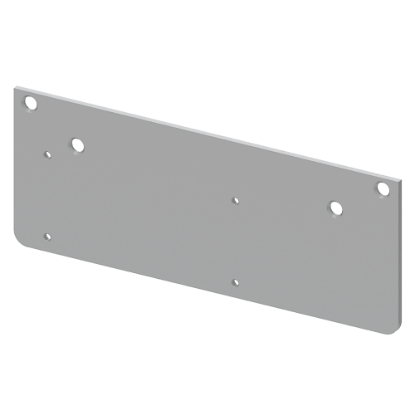
LCN 4510-18 drop plate that changes where a door closer mounts
A drop plate relocates the closer to a position the geometry actually supports, which is usually cheaper than fighting it with spring tension.

What if the door has a transom or narrow top rail?

Then the mounting options narrow and the plate or bracket becomes part of the specification rather than an accessory. Establish what the opening will physically accept before deciding how much closing force is available, because the mounting decides the ceiling. Our closer installation guide covers the mounting decisions in sequence.

What About Hold Open Arms and Spring Tension?

A hold open arm does not change the spring, but it changes how people treat the door.

The arm holds the leaf at a set position until somebody pushes it out of detent. The spring is still doing its normal job once released. The complication is that a door held open every day is a door whose closer is loaded differently, and users who force it out of hold open put a shock load into the arm and the body.

If a hold open door also has a latching problem, resist the temptation to wind the spring up to compensate for the extra distance it travels. The cause is usually the same friction as on any other door. Our door slamming guide covers the reverse case, where force is already too high.

LCN 4040XP hold open extra duty arm with a 62G shoe
A hold open extra duty arm. Hold open does not reduce what the spring has to do; it changes when the spring is asked to do it.

Can you fit a hold open arm to a fire door?

Not as a mechanical hold open. A fire door has to close on alarm, so anything that holds it open has to release automatically when that happens. A plain mechanical detent arm does not, which is why rated openings use a different arrangement entirely.

What Should You Check Before Ordering Parts?

Whether the closer you have is adjustable at all, and what the opening actually needs.

Identify the model from the body or cover. Confirm whether it is an adjustable spring unit or a fixed size. Note the arm type and mounting, the door width and weight, whether the opening is fire rated or on an accessible route, and what the door is doing wrong in plain terms.

If the unit is fixed size and underpowered, no part will change that and a correctly sized closer is the answer. If it is adjustable and already at the top of its range, the same conclusion usually applies. Our LCN closer parts guide covers how arms, shoes and plates are listed.

How do you leave the door for the next person?

Set, tested and recorded. Release the door from thirty degrees, from ninety degrees and from full open, and confirm it latches from each without help. Then write down the final spring position and valve settings somewhere that survives, because the next person to look at this door will otherwise start from scratch.

About the Author

Security Parts has supplied repair parts for commercial door hardware since 2001, covering Von Duprin, LCN, Schlage, Falcon, Detex and Adams Rite at the component level. Our diagram based lookup exists so a technician can confirm a part before ordering it. This guide was written by the Security Parts team from supplier documentation and the questions our customers bring us.
Electric Strike for Mortise Lock: How to Choose the Right One

Quick Summary

Key points

  • A mortise lock needs a strike built for a mortise latch, which means a deeper keeper and a backbox sized for the frame it sits in.
  • The first number to collect is the latch throw. A strike listed for a 3/4 inch throw will not seat a longer latch correctly, and that single figure rules most options in or out.
  • Deadbolts change the answer. An electric strike releases a latch, not a bolt, so a mortise lock whose deadbolt is thrown stays locked whatever the strike does.
  • Fail secure keeps the door locked when power is lost, fail safe releases. Neither affects getting out, because egress is through the inside lever of the mortise lock.
  • Faceplates, spring kits and sliders are stocked separately, so a damaged face or a sluggish keeper is a parts order rather than a new strike.
What a mortise lock asks of an electric strike
RequirementWhy the mortise lock sets itWhat goes wrong if ignored
Keeper depthA mortise latch projects further than a cylindrical latchLatch bottoms out or sits proud of the keeper
Latch throwFixed by the lock case, not adjustableLatch does not seat, door rattles or fails to hold
Backbox depthDecided by the frame the lock closes againstStrike will not fit the frame cavity
Deadbolt presenceA bolt is not released by any strikeDoor stays locked when the strike releases
Faceplate sizeHas to cover the existing frame preparationVisible gap or fouling against the stop

An electric strike for a mortise lock looks like the same job as one for a cylindrical lock, and it is not. The latch is longer, the frame preparation is deeper, and the lock may carry a deadbolt that no strike will ever release.

This guide covers what changes when the lock is a mortise lock, how to choose the strike, which measurements decide it, and what goes wrong when the wrong unit is fitted.

What Changes When the Lock Is a Mortise Lock?

The latch does, and everything else follows from it.

A mortise lock sits inside a pocket cut into the edge of the door, and its latch projects from the lock case rather than from a small cylindrical chassis. That latch is typically longer and squarer than a cylindrical latch, so the keeper it drops into has to be deeper and shaped to receive it. A strike that suits a cylindrical lockset will often accept the mortise latch partway and then stop. Our mortise lock repair guide explains what fails and what you can replace.

The second change is the frame. Mortise locks are common on openings with substantial frames, and the cavity behind the strike has to take a backbox deep enough for the mechanism. Our guide to commercial mortise locks covers how those locks are built, and the strike has to answer the geometry they create.

Does the lock function matter as well?

Yes, more than most people expect. A storeroom function presents a latch only. An office or entry function may present a latch and a deadbolt. A classroom security function changes which side the key controls. The strike only ever deals with the latch, so the function tells you whether releasing the latch is actually enough to open that door.

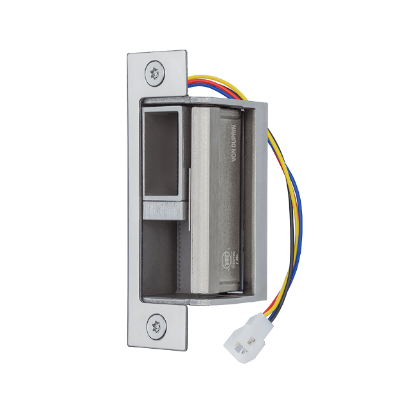
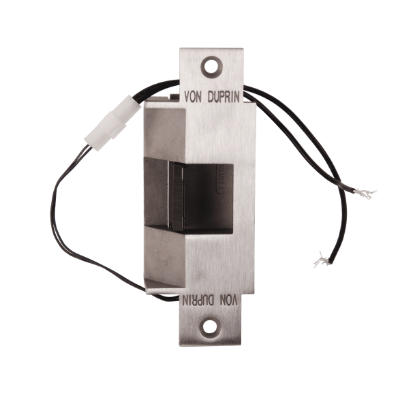
Von Duprin 6400 electric strike for mortise or cylindrical locks
A strike listed for mortise or cylindrical locks. Units that cover both are specific about the latch throw they will accept, so the listing is the starting point rather than the finish.

Why Is Latch Throw the First Thing to Measure?

Because it is fixed by the lock and it eliminates most of the catalogue in one step.

Latch throw is how far the latch bolt projects from the face of the lock when it is fully extended. Electric strikes are listed against a throw figure, and that figure is not advisory. A strike built for a 3/4 inch throw presented with a longer latch will either refuse the latch or hold it at an angle where it never seats properly.

Measure it with the door open and the latch fully out, from the face of the lock to the tip of the bolt. Do not measure the keeper you already have, because the existing strike may be the reason you are standing there.

Measurements to take before choosing a strike
MeasurementWhere to take itWhat it decides
Latch throwLock face to bolt tip, door openWhich strikes will accept the latch at all
Latch height and widthAcross the bolt faceKeeper opening size
Frame cavity depthInside the existing preparationWhich backbox will fit
Existing faceplate sizeAcross the frame faceWhether the prep is covered
Deadbolt projectionWith the bolt thrownWhether a strike alone solves the problem

What if the latch has an anti friction tongue?

Many mortise latches carry a small secondary tongue ahead of the main bolt that reduces drag as the door closes. It has to clear the keeper lip cleanly. If the strike lip is set too far out, the tongue catches and the door checks against the frame before the latch arrives, which reads as a sticking door rather than a strike problem.

Which Strike Suits a Mortise Lock on a Standard Frame?

On most commercial openings, a heavy duty strike from a series built for mortise and cylindrical locks without deadbolts.

These units are designed around the latch a mortise lock presents, with a keeper deep enough to take the bolt and a body sized for a frame cavity. Within a series the variants differ by frame material and backbox depth rather than by how they work, so the choice is driven by the opening rather than by preference. Our 6211 electric strike guide works through that variant logic in detail on one unit. Our electric strike vs magnetic lock comparison explains which suits your door.

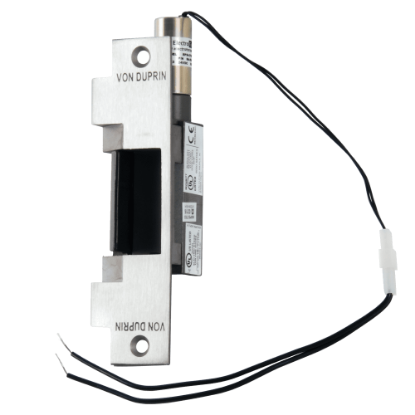
Von Duprin 6212 electric strike for a mortise lock opening
A 6200 Series strike. Variants within the series share the mechanism and differ in frame fit, so the frame decides which one is ordered.

How do you pick between variants in the same series?

By the frame, in three steps. Establish the frame material, measure the cavity depth available behind the strike, and confirm the faceplate size needed to cover the existing preparation. Those three answers normally leave a single variant standing. Guessing between them is how a strike arrives that is correct in every respect except that it will not go into the hole.

Von Duprin 6213 electric strike from the 6200 Series
Another variant from the same series. The mechanism is shared; the body and preparation are what change between part numbers.

Why Will an Electric Strike Not Release a Deadbolt?

Because a strike releases a keeper, and a deadbolt is not held by one.

An electric strike works by letting its keeper swing out of the way so the latch can leave the frame. A latch is sprung and retracts under load. A deadbolt is driven out by the key or thumbturn and stays where it is put, so there is nothing for the keeper to release. If the bolt is thrown, the door stays shut no matter what the access control system does.

This matters most on office and entry functions, where users throw the deadbolt at night and the access control system appears to have failed the next morning. The system is working perfectly; the door is simply bolted. Where remote release has to work regardless, the answer is usually an electrified lock rather than a strike, and our electrified mortise lock against electric strike comparison covers that decision.

What do you do on a door that has to have a deadbolt?

Separate the two jobs. Let the deadbolt be the manual, after hours security and let the access control release the latch during the working day, with a clear instruction that the bolt stays retracted while the system is in use. Where that discipline cannot be relied on, the lock itself needs to change.

Should the Strike Be Fail Safe or Fail Secure?

Decide it from what the door must do when the power stops, not from what sounds safer.

Fail secure means the keeper stays locked without power, so the door remains secure and a key still works from outside. Fail safe means the keeper releases without power, so the door can be pushed open. Neither affects escape, because on a mortise lock the inside lever retracts the latch mechanically whatever the strike is doing.

Choosing the release mode on a mortise lock opening
OpeningUsual choiceReason
Store or plant roomFail secureMust stay locked in an outage
Office suite entranceFail secureKey access is retained without power
Door on a fire alarm releaseAs specified by the designBehaviour is set by the strategy, not the hardware
Door with continuous current concernsFail secureDraws nothing while idle
Door that must release on power lossFail safeNo power means no holding

Does the mode change the current draw?

Yes, and it is worth knowing before the power supply is sized. A fail secure strike is energised only while it is being released, so it draws nothing in its resting state. A fail safe strike has to be energised continuously to stay locked, which adds a standing load to every door fitted with one. Our complete electric strike guide covers the supply side in more detail.

What Is the Faceplate For and When Does It Change?

It covers the frame preparation and presents the keeper, and it changes whenever the existing cutout does not match the new strike.

Faceplates are listed separately from the strike body for a practical reason: the frame in front of you was prepared for whatever was fitted first. A replacement strike with a different face leaves a gap or overlaps the stop. Ordering the correct faceplate turns a frame modification into a parts change.

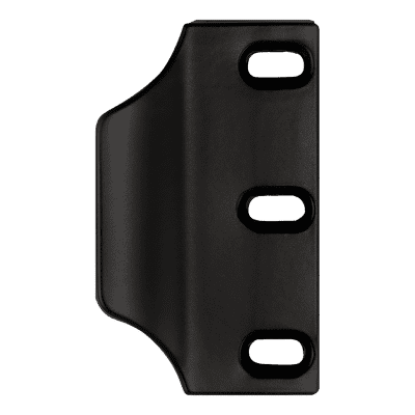
Von Duprin 970303 electric strike faceplate for a mortise lock strike
A faceplate listed against specific strike models. Matching the plate to the existing frame cutout is usually easier than cutting the frame again.

Can you reuse the old faceplate?

Only when it is listed for the new strike. Plates look interchangeable and are not, because the keeper opening and the fixing positions are matched to the body behind them. A plate that is close but not correct holds the keeper slightly out of position, and the latch then lands on the edge of the opening instead of inside it.

Von Duprin 970280 electric strike faceplate ordered as a separate part
A second faceplate for a different model in the same family. The part number is tied to the strike, not to the frame.

Why Does My Electric Strike Buzz But Not Release?

Nearly always voltage at the strike or load on the latch, in that order.

A buzz means the coil is energised, so the signal has arrived. What it has not done is move the keeper. The two common reasons are that the voltage reaching the strike has dropped below what the unit needs after the run of cable, or that the door is pressed against the frame hard enough to load the latch into the keeper so it cannot swing clear.

Test both quickly. Measure at the strike terminals while somebody operates the release, not at the panel. Then ease the door against its swing to take the load off the latch and try again. If it releases with the load removed, the fault is alignment or door closing force rather than the strike.

Symptoms and where to look first
SymptomMost likely causeFirst check
Buzzes, does not releaseVoltage drop or latch under loadMeasure at the strike, then ease the door
Silent, no releaseNo signal or no supplySupply at the unit, then the input
Releases but door does not openDeadbolt thrownCheck the bolt, not the strike
Sluggish keeper returnTired springsSpring kit rather than a new strike
Door rattles when closedKeeper too far outStrike position and faceplate fit

How do you tell a strike fault from an alignment fault?

Operate the strike with the door standing open. If the keeper moves freely with nothing touching it, the unit is working and the problem lives at the opening. If it does not move with no load at all, the fault is in the strike or its supply. That one test separates most callouts before any tools come out, and our hardware troubleshooting guide covers the rest of the opening.

Does a Fire Rated Door Change the Strike Choice?

It narrows it, because the strike becomes part of a listed assembly.

A fire rated opening is tested and listed as a complete set, and the strike is one of its components. The replacement has to be suitable for that use, and the door has to latch positively every time under its own closer. A strike that releases on loss of power is not normally appropriate on a door that has to stay latched in a fire, so fail secure is the usual answer on those openings.

Positive latching is the part that gets missed. A strike that holds the door closed but does not let the latch seat fully has not met the requirement, even though the door looks shut. Our fire rating guide covers what else on the opening is bound by the same listing.

What about an accessible opening?

Accessible routes limit the force needed to open a door, and a strike contributes to that in one specific way. If the keeper is set too far into the frame the latch has to be dragged out of it, which raises opening force. Setting the strike so the latch leaves cleanly is part of meeting the requirement rather than a refinement, and our door clearance guide covers the rest.

What Should You Confirm Before Ordering?

Six things, and five of them come off the door rather than out of a catalogue.

The lock series and function, so you know what the strike has to work with. The latch throw, measured rather than assumed. The frame material and the cavity depth behind the existing strike. Whether a deadbolt is present. The faceplate size needed to cover the current preparation. And the voltage available at the door, measured at the opening.

Record them before you look at part numbers. Every one of those answers removes options, and a strike chosen without them is a strike chosen on hope. For the parts side of the strikes themselves, our electric strike parts guide covers what is stocked separately.

What if the opening already has an electric strike that never worked properly?

Treat it as evidence rather than as a baseline. A strike that has never worked well is often the wrong throw or the wrong depth for the lock in front of it, and copying its part number repeats the mistake. Measure the lock, measure the frame, and let those numbers select the replacement. Our electric strike installation guide covers setting the new unit once it arrives.

About the Author

Security Parts has supplied repair parts for commercial door hardware since 2001, covering Von Duprin, LCN, Schlage, Falcon, Detex and Adams Rite at the component level. Our diagram based lookup exists so a technician can confirm a part before ordering it. This guide was written by the Security Parts team from supplier documentation and the questions our customers bring us.
Door Closer Leaking Oil: Causes, Risks and What to Do

Quick Summary

Key points

  • A door closer leaking oil is a sealed unit that has failed. The fluid is what provides the control, and once it is escaping the control goes with it.
  • Topping a closer up is not an option. The body is not serviceable in the field, and there is no filling point on a commercial surface closer.
  • The leak usually shows at the shaft, at the joint between body and cover, or as a film on the door face below the unit.
  • Replace the cylinder or the whole closer. Arms, covers and fixings are separate parts, so a sound arm can often stay.
  • On a fire rated door a leaking closer is urgent, because a door that no longer closes and latches reliably is not performing its function.
Where the oil shows and what it usually means
Where you see itLikely sourceWhat it tells you
Film on the door face below the unitShaft or body sealLeak has been running a while
Inside the cover when removedBody or valve sealsCaught early, control may still be partly intact
Around the pinion shaftShaft sealClassic wear failure on a high cycle door
At the arm end of the bodyEnd seal or damageOften follows an impact or a forced door
On the floor under the openingAdvanced lossCloser is close to no control at all

A door closer leaking oil is one of the few hardware faults that announces itself before it stops the door working. There is a smear on the paintwork, then a film on the leaf, and then one day the door swings shut on its own momentum.

This guide covers why these units leak, what the oil is actually doing inside, why topping up is not possible, how to tell a leak from a stain, and what gets replaced.

What Is the Oil in a Door Closer Doing?

It is the control. Everything you feel in a well behaved door comes from fluid being pushed through small passages.

Inside the closer body a spring is compressed as the door opens. On the way shut that spring pushes a piston back, and the piston has to move fluid from one side of itself to the other. The route the fluid takes runs through valves, and the size of those openings is what sets how fast each part of the swing happens. Sweep speed, latch speed, backcheck and delayed action are all the same mechanism with different passages.

Take the fluid away and the spring is still there, but nothing is restraining it. The door closes at whatever speed the spring and the door weight produce, which is why a leaking closer eventually becomes a slamming door. Our hydraulic door closer guide covers how the internals are arranged.

Why can you not just top it up?

Because there is nowhere to put it and nothing holding it in. A commercial surface closer is assembled and filled at the factory and sealed. There is no filling plug, and the valves on the outside are adjusters, not access points. Even if fluid could be introduced, the seal that let the original escape would let the new fluid out as well.

LCN 4040SE-3071 cylinder assembly, the hydraulic unit inside a leaking door closer
The cylinder assembly is the sealed hydraulic unit. On ranges where it is listed separately, replacing it is the repair, because the fluid and the seals live inside it.

Where Does a Door Closer Usually Leak From?

Three places, and each has a different story behind it.

The pinion shaft is the most common. It is the only part of the sealed body that has to rotate, and the seal around it works every cycle. On a high traffic door that is tens of thousands of movements a year, and seals wear.

The second is the body joint or end cap, where two parts of the housing meet. The third is damage: a struck closer, a door forced past its stop, or an arm levered against the body can crack a housing or distort a joint enough to let fluid past.

Leak location against likely cause
LocationTypical causeIs the closer recoverable?
Pinion shaftSeal wear from cyclesNo, but the arm and fixings usually are
Body jointAge or distortionNo
End of bodyImpact or forced doorNo, and check the arm for damage too
Around a valveOver travelled adjusterNo, the valve is not a serviceable seal
Nowhere, stain onlyOld leak already replaced, or another sourceNothing to fix on the closer

How do you confirm it is the closer and not something else?

Clean the area thoroughly, dry it, and look again after a day of normal use. Hinges, overhead stops and operators all sit near a closer and can leave their own stains. A genuine closer leak returns to the same spot and spreads downwards from it. A stain that never comes back was historic.

LCN 1460-146 shaft cover at the pinion, a common door closer oil leak path
The shaft area is where most closers eventually let go. The cover here is a trim part, not a seal, so a clean cover does not mean a dry closer.

What Does a Leaking Closer Feel Like Before You See It?

The door changes behaviour, usually at one end of the swing first.

Early fluid loss often shows as a door that closes normally for most of its travel and then arrives too quickly in the last few inches, because the latch passage is the smallest and the first to lose its effect. Later the whole swing speeds up. On a door with backcheck, the resistance near full open fades, and the door starts hitting the wall or the stop.

Users describe it as the closer needing adjustment. Turning the valves at that point produces little or no change, which is itself a diagnostic: a closer that no longer responds to its own adjusters has usually lost the fluid those adjusters work on. Our closer adjustment guide covers what those valves should do on a healthy unit.

Could it be adjustment rather than a leak?

It can, and the test takes a minute. Make a small change to the sweep valve, no more than a quarter turn, and watch the door. A working closer responds visibly. A closer with no fluid behind the valve does nothing, or changes briefly and then reverts. If the adjusters have gone dead, stop adjusting and start looking for oil.

LCN 4040SE-72 standard cover where oil from a leaking door closer first shows
Covers hide the early stages. Taking one off during routine maintenance is how a leak gets found before the door starts slamming.

Why Is a Leaking Closer Urgent on a Fire Door?

Because the closer is what makes a fire door a fire door in daily use.

A fire rated assembly relies on the leaf closing from any position and latching positively, with nobody helping it. A closer that has lost its control may still close the door, but it does it at a speed nobody designed for, and a door that bounces off the frame does not latch. A closer with no fluid left may not generate enough controlled force to complete the last part of the swing at all.

Either outcome leaves an opening that looks normal and does not perform. Our fire rating guide covers what the rest of the assembly depends on, and on a rated opening a leaking closer is a replacement rather than a deferred item.

Does it matter on a non rated door?

Less urgently, but it still matters. A door closing uncontrolled is a finger injury risk, it damages the frame and the hardware, and it will eventually break the arm or the fixings. The cost of leaving it is rarely just the closer. Our guide to a door that slams covers the other causes worth ruling out.

Can a Leaking Closer Be Topped Up or Resealed?

Not in the field, and this is the question that comes up on nearly every one of these jobs.

The hydraulic circuit inside a closer is sealed at manufacture and is not built to be opened, refilled and closed again on site. There is no fill point, the fluid specification is not something to improvise, and any air left in the circuit changes how the valves behave. A unit that has leaked has also lost the seal that was holding the fluid in, so refilling it simply starts the leak again.

The practical answer is to replace the part that holds the fluid. On a serviceable range that may be the cylinder assembly rather than the whole closer, which keeps the arm, cover and bracket in place. Our LCN closer parts guide covers how those components are listed.

What about sealants or additives sold for leaks?

They do not address the problem. The leak is a failed seal under pressure, not a porous casting, and anything thick enough to block the path is also thick enough to interfere with the valves. On a rated opening it is worse than useless, because the door has to close and latch predictably and an improvised fix makes that unpredictable.

What Gets Replaced and What Can Stay?

The hydraulic body goes. Most of the rest of the opening usually does not.

On ranges where the cylinder assembly is listed as a separate item, that assembly is the repair, because it is the sealed unit containing the fluid. On others the closer is replaced as a complete unit. Either way, arms, shoes, brackets, drop plates, covers and fixings are stocked separately and a sound one can be reused.

What to inspect while the closer is off
ComponentWhat to look forReplace if
Arm and forearmBends, play at the jointsAny visible distortion
Shoe or bracketElongated holes, movementFixings no longer pull tight
CoverOil staining, cracksCracked, or you want a clean finish
FixingsThread condition in the doorHoles have opened out
Door and frameHinge wear, frame movementAddressed before the new unit goes on

Should you replace the arm at the same time?

Only if it needs it. An arm that is straight, with no play at the pivots, has nothing wrong with it and will outlast another closer body. An arm that has been bent, even slightly, loads the new closer unevenly from day one and shortens its life. Our LCN closer parts guide covers how those components are listed.

LCN 4040SE-3077T standard arm that loads the closer body
Arms are ordered separately. A straight arm with tight pivots is worth keeping, because it is the part that transmits every load into the new body.

Why Did This Closer Fail Early?

Usually because something outside the closer made it work harder than it was sized for.

A closer sized too small for the leaf runs at higher internal pressure for every cycle. A door with a dragging seal or a worn hinge makes the closer fight the opening on the way shut. A door that gets pushed past its stop puts a shock load straight into the body through the arm. None of these show up as a closer fault until the closer is the thing that leaks.

If a replacement unit on the same opening fails again within a couple of years, the opening is the problem rather than the hardware. Our closer sizing guide covers matching the unit to the door.

Does an overhead stop help?

On a door that gets thrown open, yes, considerably. The alternative is that the arm and the closer body absorb the over travel, and they were not designed for it. Where a stop cannot be fitted, an arm designed to limit travel does part of the same job, which is covered in our parallel arm closer guide.

LCN 4040SE-78 arm and tube supplied separately from the closer
Arm and tube assemblies are listed in their own right. Replacing a damaged arm costs far less than the repeat closer failure it prevents.

How Do You Deal With the Oil That Has Already Escaped?

Clean it properly, and check what it has run onto.

The fluid will have run down the door face and may have reached the floor. On a painted leaf it leaves a mark that will show through a fresh coat if it is not cleaned first. On a floor it is a slip risk, and in a corridor that matters more than the door does.

Check whether it has reached anything it should not have. Fluid on a strike face or on a latch will attract dust and turn into a paste that affects how the door latches, so those surfaces are worth cleaning even if they look fine.

What should you record before ordering a replacement?

The closer model from the body or the cover, the arm type fitted, how the unit is mounted, whether a drop plate or bracket is in use, the door width and weight, whether the opening is fire rated, and anything about the door that made the old unit work hard. Our closer parts diagram helps match what you are looking at to what you need to order.

About the Author

Security Parts has supplied repair parts for commercial door hardware since 2001, covering Von Duprin, LCN, Schlage, Falcon, Detex and Adams Rite at the component level. Our diagram based lookup exists so a technician can confirm a part before ordering it. This guide was written by the Security Parts team from supplier documentation and the questions our customers bring us.
Roller Strike Guide: What It Does and When to Fit One

Quick Summary

Key points

  • A roller strike replaces the fixed lip of a conventional strike with a rotating roller, so the latch rolls across the keeper instead of dragging over it.
  • It exists to solve friction, not security. The usual symptoms are a door that needs a shove to latch, a squealing latch, and a worn groove across the strike lip.
  • Roller strikes are matched to the exit device and the opening, not chosen by preference. The device series, the configuration and the device length all narrow the part.
  • A roller strike will not rescue a badly aligned opening. If the latch is landing in the wrong place, the alignment has to be corrected first or the roller simply wears instead of the lip.
  • On a fire rated opening the strike is part of the listed assembly, so the replacement has to suit the device and the door rather than just fit the hole.
Roller strike against a fixed lip strike at a glance
Point of differenceFixed lip strikeRoller strike
How the latch engagesSlides across a static lipRolls across a turning roller
Closing effort neededHigher, rises as the lip wearsLower and more consistent
Typical wear pointGroove worn into the lipRoller bearing and spindle
Noise in useScrape or squeal when dryQuieter, less dependent on lubrication
Best suited toLow traffic and light closing forceHigh traffic, strong closers, heavy leaves

A roller strike is one of those parts nobody specifies until a door starts misbehaving. The door closes, stops just short, and sits there unlatched until somebody pushes it the last inch.

This guide covers what a roller strike actually changes at the opening, how it differs from the fixed lip strikes most doors are fitted with, when it is the right answer, when it is the wrong one, and what has to be confirmed before ordering a replacement.

What Is a Roller Strike and How Does It Work?

It is a strike whose keeper face is a rotating roller rather than a fixed metal lip.

On a conventional strike, the latch bolt of an exit device slides across a static lip, is pushed back into the device by the ramp of that lip, and then springs out into the keeper once it clears. Every one of those cycles is metal sliding on metal. On a roller strike, that same latch meets a roller mounted on a spindle. The roller turns, the latch rolls over it, and the sliding contact is largely replaced by rolling contact.

The practical result is that less of the door's closing energy is lost at the strike. On a heavy leaf with a strong closer that difference is barely noticeable. On a door where the closing force is already marginal, it is the difference between latching and not latching.

Does a roller strike change how secure the door is?

Not in the way people sometimes assume. The roller changes how the latch gets into the keeper, not how well the keeper holds it once it is there. A latch seated in a roller strike is retained by the body of the strike exactly as it would be in a fixed strike. What a roller strike does not do is add deadlocking or resist manipulation on its own, so a door that needs that still needs the hardware designed to provide it.

Von Duprin 1439 roller strike for a rim exit device latch
A roller strike for a rim exit device. The roller across the face is what the latch rides over as the door closes.

When Do You Actually Need a Roller Strike?

When friction at the strike is the reason the door is not latching reliably, and the alignment is already correct.

That second half matters more than the first. A roller strike is a friction fix. If the latch is landing high, low or short of the keeper, friction is not the problem and a roller will not help. Our strike plate guide covers the geometry side, and alignment should be proven before any part is changed.

Symptoms and what they usually point to
What you observeLikely causeIs a roller strike the answer?
Door needs a push to latch, mark is centredFriction at the strike lipYes, often
Latch mark is above or below the cutoutAlignment or hinge wearNo, correct alignment first
Squeal as the latch crosses the strikeDry sliding contactYes, and check closer settings too
Visible groove worn into the lipRepeated sliding under loadYes, replace the worn strike
Door bounces back off the frameClosing speed or latch speed set too highNo, adjust the closer

Could the closer be the real problem?

Frequently. A closer with latch speed set too low cannot drive the latch over any strike, roller or not. A closer with latch speed set too high throws the door at the frame and it rebounds. Before changing the strike, watch the last few inches of the swing and see whether the door is arriving with too little energy or too much. Our guide to a door that slams covers the adjustment side of that behaviour.

Which Roller Strike Suits Your Device?

The device decides it, not the frame.

Exit device strikes are matched to the latch they receive. The latch throw, the latch shape and the height at which it presents all come from the device, so a strike that suits a rim device on one series will not necessarily suit another. Narrow stile openings narrow the choice further, because there is less frame face to work with.

Von Duprin 699 roller strike used on narrow stile openings
A roller strike intended for narrower frame faces. The body is shallower, so the mounting positions differ from a standard strike.

Does device length change the strike?

It can, and this catches people out. Some roller strikes are listed against a specific device length because the latch position and the reinforcement behind it differ on that build. A strike described as suiting a five foot device is not a general purpose part, and fitting it to a shorter device leaves the latch meeting the roller off centre.

Detex 99R roller strike for a five foot exit device
A roller strike listed for one device length only. The length in the description is a fitting requirement, not a note.

What Do You Give Up by Choosing a Roller Strike?

A moving part where there previously was none.

A fixed lip strike is a piece of shaped metal. It wears, but it has nothing to seize, and a worn lip still works after a fashion. A roller strike has a roller on a spindle, and a roller that stops turning is worse than a fixed lip, because it presents a smaller contact face for the latch to drag over. In a dusty environment, or one where the opening is washed down regularly, that is a real consideration.

Choosing between strike styles on a problem opening
Opening conditionBetter choiceReason
High traffic interior corridorRoller strikeCycle count is the main load
Exterior door, exposed to gritFixed lip, maintainedNothing to seize
Heavy leaf with strong closerRoller strikeReduces energy lost at the strike
Door that also needs a stopIntegral stop strikeOne part does both jobs
Pair of doors with a mullionDevice matched strikeLatch positions are fixed by the pair

What is the fixed lip alternative?

A standard panic strike. It is the part most exit devices leave the factory expecting, and on a well aligned opening with a correctly set closer it does the job for years. If the diagnosis points at alignment rather than friction, this is usually what should go back on.

Von Duprin 1408 standard panic strike, the fixed lip alternative to a roller strike
A standard panic strike. The fixed lip is the reference point every roller strike decision is measured against.

When Should the Strike Also Act as a Door Stop?

When the opening has nowhere sensible to put a separate stop, and the door is over travelling.

An integral stop strike combines the keeper with a stop face, so the leaf is arrested at the frame rather than by a floor or wall mounted stop. On openings where a floor stop would be a trip hazard, or where the wall behind the door is glazed, that combination solves two problems with one part.

It is not a free upgrade. The stop face takes the full impact of the door every time somebody pushes it hard, and that load now goes into the frame at the strike rather than into a stop designed for it. On a door that gets thrown open, a separate stop is still the better engineering answer.

Von Duprin 1410 integral stop strike combining a strike and a door stop
An integral stop strike. The raised face arrests the leaf, which means the frame carries the impact load.

Does a mullion change the strike choice?

Yes, because on a pair of doors with a removable mullion the strike is mounted on the mullion rather than the frame, and the mullion defines where the latch lands. Our mullion guide covers how those openings are put together and why the strike cannot be chosen independently of the mullion.

Does a Roller Strike Affect a Fire Rated Opening?

It is part of the assembly, so yes, it has to be treated as such.

A fire rated door is listed as a complete assembly: leaf, frame, hinges, closer, exit device and strike. Changing the strike changes a component of that assembly. The replacement has to be one that suits the device and the opening as listed, and positive latching has to work every time, because a fire door that does not latch is not performing its function at all.

This is also where the friction argument carries the most weight. A fire door is required to close and latch under its own closer with no help from anybody. If the strike is the reason it needs a push, that is not a comfort issue, it is a performance failure. Our fire rating guide covers what else on the opening is bound by the same listing.

What about an accessible opening?

Accessible routes limit how much force a person should need to open a door. Opening force and latching force are different measurements, but they share a cause: an opening fighting itself. A strike that drags increases the force the closer has to supply, and the usual fix for that is to wind the closer up, which then raises the force a person needs to push the door open. Reducing friction at the strike can let the closer come back down.

What Should You Check When Fitting a Roller Strike?

Four things, in this order: position, engagement, fixings and function.

Position means the strike sits where the latch actually arrives, not where the old one happened to be. Engagement means the latch is seating fully into the keeper rather than catching on the edge of it. Fixings means the screws are landing in frame material or reinforcement rather than air. Function means the door latches from a standstill under the closer alone, several times, with nobody touching it.

Post fitting checks and what failing each one means
CheckHow to test itWhat a failure means
Latch rides the roller centrallyMark the latch and close slowlyStrike is high, low or out of plane
Roller turns freelySpin it by handSpindle damaged or strike distorted by fixings
Latch seats fullyPull the door after it latchesKeeper too shallow or strike set too far out
Closes under the closer aloneRelease from 30 degrees, repeatClosing force or remaining friction still insufficient
No new rattle in the leafPush and pull the closed doorStrike set too far back from the stop

How tight should the fixings be?

Firm, not forced. Over tightening into a thin frame face can pull the strike body out of shape, and a distorted body is the quickest way to stop a roller turning. If the screws feel like they are turning without biting, the fixing holes are worn and the frame needs addressing before the strike goes back on.

When Is the Strike Not the Problem at All?

More often than the symptoms suggest.

A door that will not latch is reporting a symptom, not a diagnosis. Hinge wear drops the leaf and moves the latch down. A sagging frame moves the keeper. A dragging weatherseal absorbs closing energy before the latch ever reaches the strike. A device whose latch no longer throws fully presents less bolt to engage with. Each of those produces the same complaint at the door, and each is unaffected by fitting a roller.

The quick discrimination is to open the door, operate the device by hand, and watch the latch. If the latch is sluggish, short or sticky with the door open and nothing touching it, the fault is in the device. Our hardware troubleshooting guide covers how to work through the rest of the opening, and the rim exit device guide covers how the latch end of those devices is put together.

What should you record before ordering?

The device series and configuration from the stamping, the device length, whether the opening is a single or a pair, whether a mullion is involved, whether the door is fire rated, and a note of where the latch is currently landing relative to the cutout. That last one is what tells you whether you are ordering a roller strike to solve a real friction problem or about to fit a new part to an old alignment fault.

About the Author

Security Parts has supplied repair parts for commercial door hardware since 2001, covering Von Duprin, LCN, Schlage, Falcon, Detex and Adams Rite at the component level. Our diagram based lookup exists so a technician can confirm a part before ordering it. This guide was written by the Security Parts team from supplier documentation and the questions our customers bring us.
Commercial Door Operator Repair: Faults, Parts and Checks

Quick Summary

Key points

  • Most operator callouts are not operator faults. Activation devices, wiring and door hardware produce the same complaint and fail far more often than the operator itself.
  • The first question is always whether a signal is reaching the operator. A unit that does nothing in the absence of a signal is behaving correctly.
  • Operator faults split cleanly into electrical and mechanical. Electrical faults stop the door moving at all. Mechanical faults let it move but control it badly.
  • The door still has to work as a door. A failed closer function on a low energy operator shows up as a leaf that slams or drifts, not as a door that will not open.
  • Repairs on these units are component level. Arms, cable kits, activation switches and mounting hardware are all ordered separately from the operator.
Where commercial door operator faults actually sit
Symptom at the doorMost likely areaFirst thing to prove
Nothing happens on activationActivation device or its wiringThat the device is sending a signal
Opens, then will not close properlyOperator hydraulics or armWhether it closes with power off
Opens too fast or too farOperator adjustmentCurrent speed and backcheck settings
Works intermittentlyWiring, transfer or switch contactsContinuity through the hinge side
Door binds during the cycleDoor, frame or hardwareHow the leaf moves with the arm disconnected

A commercial door operator is the unit that opens the door under power and then controls it closed again. When one is reported as broken, the fault is often somewhere else entirely on the opening.

This guide covers how to separate an activation fault from an operator fault, what actually fails on these units, which parts are ordered separately, and what has to be checked before the opening goes back into service.

What Is a Commercial Door Operator and How Is It Different From a Closer?

A closer only controls the door on the way shut. An operator does that and also opens the door under power.

That difference is the whole reason the part count is higher. An operator needs a control board, a power supply, activation inputs and usually a motor or a powered assist, none of which a closer has any equivalent for. It also takes over the closing function, which is why you rarely see an operator and a separate closer on the same leaf.

Low energy operators are the type most commonly found on commercial openings that are not full automatic entrances. They open slowly enough that the door does not need the guard rails and sensors a high energy automatic door requires, and they are activated deliberately, usually by a push plate or a touchless switch.

Does an operator remove the need for a door closer?

Yes, on that leaf. The operator controls the door closed, so there is no second closer fitted. The consequence is that a hydraulic fault inside the operator presents as a door that slams or drifts rather than as a door that will not open. Technicians who expect operator faults to be electrical can spend a long time on the wiring of a unit whose only problem is on the closing side.

Detex AO19-2 low energy automatic door operator for double doors
A low energy operator built for a pair of doors. On a pair, each leaf has its own unit and the two have to be sequenced.

How Do You Tell an Activation Fault From an Operator Fault?

Make the signal happen a different way and see whether the door moves.

This is the single most useful test on these units. If the push plate does nothing but a second activation device opens the door, the operator is fine and the plate or its wiring is not. If no activation method moves the door, the fault is in the operator, its supply or the common wiring both devices share.

Narrowing a dead operator in four steps
StepWhat you doWhat the result tells you
1Confirm power is present at the unitNo power means supply or breaker, not operator
2Trigger from a second activation deviceDoor moves means the first device is at fault
3Trigger the input directly at the controllerDoor moves means the fault is in the field wiring
4Open the door by handHeavy or binding means a door fault, not electrical

Why do activation devices fail so often?

Because they are the part people touch. A push plate takes thousands of impacts, often from elbows, trolleys and wheelchair footplates rather than hands. Touchless switches avoid the impact but introduce a sensing range that can drift or be obstructed. Either way, these devices sit in the most abused position on the opening and their wiring runs through the busiest part of it.

Detex NXG-IR-A touchless activation switch that triggers a door operator
A touchless activation switch. It removes the impact loading of a push plate but introduces a sensing range to keep clear.

Why Does the Door Work Sometimes and Not Others?

Intermittent operation almost always means a connection, not a component.

The hinge side of a powered door is where cabling has to cross from a static frame to a moving leaf, and that crossing flexes every single cycle. Over tens of thousands of cycles a conductor inside a transfer or a cable kit work hardens and breaks, often while the insulation looks perfect from outside. The door then works when the conductor happens to be touching and fails when it is not.

The giveaway is a fault that correlates with door position. If the unit behaves differently with the door open than closed, suspect the crossing before you suspect the board. Our power transfer guide covers how those crossings are built and what they are rated for.

Von Duprin 040192 CX motor cable kit for a motorised door device
A motor cable kit. On powered hardware, the cable is a wear item and is supplied as a part in its own right.

Can you test a flexing conductor without stripping the opening?

Usually yes, by cycling the door slowly while watching for the fault to appear and disappear at a repeatable point in the swing. A conductor that is broken but touching will often restore when the leaf reaches a particular angle. That repeatability is what separates a cable fault from a board fault, because a failing board does not care where the door is.

What Fails Mechanically on a Door Operator?

The arm, the hydraulics and the mountings, in roughly that order of visibility.

The arm is the link between the operator and the door, and it takes every bit of the load in both directions. On a door that gets pushed open faster than the operator drives it, the arm takes impact loading it was never intended to see. Bent arms, worn pivots and loose arm fixings all show up as a door that moves unevenly or makes noise through part of its travel.

Hydraulic faults inside the unit present on the closing side, because that is the part of the cycle the hydraulics control. A door that opens correctly under power and then slams, drifts or stops short has an operator problem even though the powered half of the cycle looks perfect.

Mechanical symptoms and the part usually involved
What the door doesUsual causePart affected
Judders through part of the swingBent or binding armPush arm assembly
Slams on the closing cycleLoss of hydraulic controlOperator internals
Drifts and stops before latchingInsufficient closing forceOperator adjustment or internals
Unit moves on the frameLoose or pulled fixingsMounting hardware
Noise at full openBackcheck or stop out of adjustmentOperator adjustment

Can the arm be replaced on its own?

Yes, and it frequently is. Arms are supplied as separate parts precisely because they are the component most likely to be damaged by misuse while the operator itself is still sound. Replacing an arm is a far smaller job than replacing a unit, and on a door that has been forced open it is often the only thing needed.

Detex 104728-1 push arm for a commercial door operator repair
A push arm supplied separately from the operator. A bent arm is a common outcome of a door being forced faster than the unit drives it.

What Changes When the Operator Is on a Pair of Doors?

Sequencing, and the fact that one fault can look like two.

On a pair, each leaf normally has its own operator, and the two have to open and close in the right order so the leaves do not collide and any astragal closes correctly. A sequencing fault therefore presents as two doors behaving oddly when only one unit is actually wrong.

Dual egress pairs add another wrinkle, because the leaves swing in opposite directions. The operators are configured for that arrangement rather than being interchangeable with a standard pair, so a replacement has to match how the opening actually swings, not just how many leaves it has.

Detex AO19-3 low energy automatic door operator for dual egress doors
An operator configured for a dual egress pair. The swing arrangement is part of the specification, not an installation option.

Which leaf should you work on first?

The one that is wrong on its own. Disconnect or disable the second leaf, prove the first behaves correctly in isolation, then do the same for the other. Trying to diagnose a sequencing problem with both leaves live is how a single bent arm turns into a two unit replacement quote.

What Do You Have to Check Before Putting the Opening Back in Service?

That the door still meets the requirements that apply to it, not just that it opens.

Low energy powered doors are governed by a standard covering how fast they may open, how fast they may close and how much force they may exert. The opening itself is separately governed by the usual accessible door requirements for clear width, manoeuvring clearance and hardware height. A repair that restores motion but leaves the unit opening faster than permitted has not finished the job.

Checks after a commercial door operator repair
CheckWhy it mattersWhat a failure looks like
Opening speed and forceGoverned for low energy operationDoor opens faster than a person can react
Closing speed and latchingDoor must close and latch reliablyLeaf drifts or stops short of the strike
Manual operation with power offEgress must not depend on powerDoor is heavy or will not move by hand
Activation range and positionDevice must be reachable and clearPlate out of reach or switch triggering on passers by
Fire rating, where applicableAssembly listing covers the whole openingDoor no longer latches positively

Does the door still have to open by hand?

Yes. On a low energy operator the leaf must remain operable manually, because the opening has to work in a power failure. If the repaired door is noticeably heavier by hand than it was, something in the arm or the operator is binding and the job is not finished. Our door clearance guide covers the accessibility side of what the finished opening has to achieve.

What Should You Check on an Operator Between Callouts?

The things that fail slowly, because those are the ones that turn into emergency visits.

Arm fixings work loose long before an arm bends, and a loose fixing is a two minute job that prevents a part replacement. Activation plates develop play in their mounting before the switch inside them fails. Closing speed creeps as hydraulics age, so a door that latches reliably in January can be stopping short of the strike by July without anybody changing a setting.

Routine checks and what they catch early
CheckHow oftenWhat it prevents
Arm and mounting fixingsEach visitBent arms and pulled fixings
Full close and latch from restEach visitDoors found standing open
Manual operation with power offPeriodicallyEgress failures in a power cut
Activation device mounting and rangeEach visitDead plates and nuisance triggering
Cable crossing at the hinge sidePeriodicallyIntermittent faults later

Why does closing performance drift over time?

Because hydraulic control depends on fluid behaviour, seals and the condition of the whole opening, and all three change. Add a stiffening weatherseal or a hinge that has started to drag and the same closing force no longer finishes the job. The door has not suddenly broken; the margin it was set up with has been used up.

When Is It Worth Repairing Rather Than Replacing?

Whenever the failure is in a part that is supplied separately, which covers most of them.

Arms, cable kits, activation switches, mounting hardware and the fixings that hold everything on are all component level items. A unit whose arm is bent, whose activation plate is dead or whose cable has broken does not need replacing. A unit whose hydraulics have failed or whose internal control has failed is a different conversation, and on a door that has already needed several interventions the cumulative cost usually settles the argument.

The honest test is whether the next failure is likely to be the same one. One bent arm on a door that gets forced is a repair. The third bent arm on the same door is a sign that the opening needs a stop, a sign or a rethink rather than another arm.

What should you record before ordering parts?

The operator model from the unit itself, whether the opening is a single, a standard pair or a dual egress pair, whether the fault is electrical or mechanical, which activation devices are fitted and where, the arm type, and whether the door is fire rated. Our hardware troubleshooting guide covers working through the rest of the opening, and the request to exit sensor guide covers the sensing devices that often share wiring with an operator.

About the Author

Security Parts has supplied repair parts for commercial door hardware since 2001, covering Von Duprin, LCN, Schlage, Falcon, Detex and Adams Rite at the component level. Our diagram based lookup exists so a technician can confirm a part before ordering it. This guide was written by the Security Parts team from supplier documentation and the questions our customers bring us.
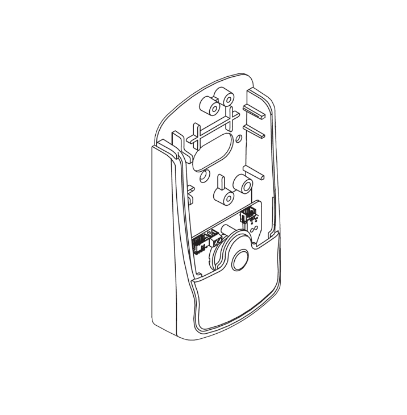
Von Duprin Templates: Which One You Need and Why It Matters

Quick Summary

Key points

  • A template is the drawing that tells you where every hole goes on the door and frame before an exit device is fitted. It is specific to the device, not to the brand.
  • Four things select the template: the device series, the device configuration, the door and frame material, and the handing.
  • Function changes the pattern. An electrified device, a cylinder dogging device and a plain mechanical device of the same series do not share a hole pattern.
  • Handing mirrors the drawing. A template read the wrong way round puts the latch at the hinge end, and the holes are already drilled by the time anyone notices.
  • Most retrofit problems come from assuming the existing prep is correct. Measure the holes that are there before ordering the device that has to use them.
What a template tells you and why it matters
InformationWhat it governsConsequence of getting it wrong
Mounting centreline heightWhere the device sits on the leafDevice fouls glazing, trim or a closer arm
Through hole positionsBaseplate and trim fixingsFixings miss reinforcement in the door
Cylinder and trim cutoutsKeyed access and outside trimCylinder will not reach, trim will not sit
Strike positionWhere the latch engagesDevice latches badly or not at all
Reinforcement locationsWhat the fixings land inDevice works loose under use

Von Duprin templates are the quiet part of an exit device order. Nobody asks for them until the device is on site, and by then the holes are often already in the door.

This guide covers what the templates actually govern, how to pick the right one, why function and handing change the pattern, and what to check before drilling anything.

What Is a Von Duprin Template and What Does It Specify?

It is the dimensioned drawing that locates the device on the door and the strike on the frame.

A template is not a general guide to fitting exit hardware. It is a specific set of dimensions for a specific device, giving the mounting height, the positions of every through hole, the cutouts needed for cylinders and trim, and where the strike has to sit so the latch engages it correctly.

Door and frame preparation is permanent. That is the whole reason templates exist: a hole in the wrong place on a steel door stays there for the life of the door.

Is a template the same as installation instructions?

No, and the two are often supplied separately. The instructions cover the sequence of assembly, the adjustments and the checks. The template covers the geometry. You can follow instructions perfectly and still have a device in the wrong place if the template was never used. Our exit device installation guide covers the sequence side of it.

Von Duprin 112835 mounting plate package positioned by the Von Duprin template
A mounting plate package. The plate position is set by the template, and every fixing that follows is located from it.

Which Template Do You Need for Your Device?

Four pieces of information select it, and all four come off the opening and the order rather than out of a catalogue.

The four inputs that select a template
InputWhere you get itWhy it changes the drawing
Device seriesStamping on the device or the orderEach series has its own geometry
ConfigurationRim, surface rod, concealed rod or mortiseDecides what the latch end needs
Door and frame materialThe opening itselfFixings and reinforcement differ
HandingWhich way the door swings and from whereMirrors the whole pattern

If the series is not known, that is the first thing to settle rather than the last. Our Von Duprin series guide covers how the ranges are distinguished, and the selection guide covers how a series is chosen in the first place.

Does the device length change the template?

It changes the mounting dimensions along the door, because the device has to be centred on the leaf and the end cap has to land somewhere sensible. A device sized for one door width fitted to a narrower leaf will not place its fixings where the template expects, which is why device length is confirmed against the leaf rather than assumed from the old device.

Why Does the Device Function Change the Template?

Because function adds hardware, and hardware needs holes.

A plain mechanical device needs the baseplate fixings and the latch arrangement. Add cylinder dogging and the door needs a cutout for the cylinder. Add outside trim and the door needs the trim fixings and the spindle or tailpiece hole. Add electrification and the door needs a route for conductors, which usually means a transfer position as well.

Each of those additions is a different drawing, not an annotation on the same one. A device ordered with electric latch retraction and fitted to a door prepped for a mechanical device will be short of at least one hole.

Von Duprin 090037 baseplate screws that land on the template hole pattern
Baseplate screws. They are specified for the fixing positions the template gives, which is why substituting fasteners tends to end with a device that moves on the door.

What about conversion kits?

Conversion kits exist precisely because the hole pattern is the expensive part. A kit that converts a device from one dogging type to another, or adds motorised retraction, is designed to work within the preparation that is already there wherever possible. Our conversion kit parts guide covers one of the common examples.

How Does Handing Affect the Hole Pattern?

It mirrors it. Everything that was on the left is now on the right.

Handing describes which edge of the door the hinges are on and which way the leaf swings. On an exit device it determines which end of the rail carries the latch and which carries the end cap, and therefore where every asymmetric feature sits.

The failure mode is unforgiving. A template read for the wrong hand produces a door with the latch cutout at the hinge end. There is no adjustment that recovers from that.

How do you establish handing before ordering?

Stand on the outside of the door, the side you would need a key for. If the hinges are on your right and the door opens away from you, it is one hand. If they are on your left, it is the other. Write it down at the opening rather than reconstructing it later from memory.

On a pair of doors, hand each leaf separately. The two are not the same, and one of the most common ordering errors on pairs is applying one hand to both. Our mullion guide covers the related decisions on pairs.

What Does the Template Say About Reinforcement?

Where the fixings need something solid to land in.

Exit devices concentrate load at the center case and at the latch end. On a hollow metal door, that load needs internal reinforcement at the right positions, and the template is where those positions are defined. On a timber door, the equivalent question is whether the fixings are reaching solid material or just the skin.

This is the part of the drawing that gets skipped most often, because the consequence is delayed. A device fixed into unreinforced skin works perfectly on the day and loosens over the following months.

Von Duprin 050565 center case reinforcing bracket behind the template hole pattern
A center case reinforcing bracket. It spreads the concentrated load at the middle of the device, which is exactly where the template expects support.

Does the frame need preparation too?

Yes, and it is easy to forget when the attention is on the door. The strike position is part of the template, the frame may need reinforcement behind it, and on a mullion arrangement the mullion fixings at head and sill are part of the same drawing.

Von Duprin 090059 latch bracket mounting screws for the templated latch position
Latch bracket mounting screws. The latch end is where the device transfers load into the door, so these fixings matter as much as the ones at the center case.

Can You Fit a New Device to an Existing Door Prep?

Often, and that is what retrofit kits are for. The question is whether the existing holes match what the new device needs.

Retrofit works when the replacement device shares enough of the original pattern that the existing holes can be reused, with any extras drilled and any surplus covered. It stops working when the two patterns differ in the centreline height or in the latch position, because those cannot be hidden.

Von Duprin 47259560 QM rim device retrofit kit for reusing an existing door prep
A rim device retrofit kit. Kits like this exist because reusing a door preparation is usually cheaper and tidier than creating a new one.

How do you record an existing prep?

Measure from fixed references and photograph with a tape in shot. Record the centreline height from the floor, the distance of each hole from the latch edge and from the floor, the diameter of each hole, and the cutouts for any cylinder or trim.

That record is what lets a supplier tell you whether a given device will land on the holes that exist. A description of the old device is not enough, because two devices from the same series can have been prepped differently depending on their function.

What Goes Wrong When the Template Is Ignored?

The common template failures and when they show up
ErrorWhen it becomes obviousRecovery
Wrong handAt first offer upNew leaf or extensive filling
Wrong centreline heightDevice fouls a closer or glazingRe-drill, fill original holes
Function not accounted forCylinder or cable has nowhere to goAdditional drilling on site
No reinforcementWeeks or months laterRemove device, add reinforcement
Strike position guessedDoor will not latch reliablyReposition strike, fill old fixings

The pattern across all five is that the cheap errors reveal themselves immediately and the expensive ones do not. Reinforcement and strike position are the two that will be somebody else's call out.

Does a fire rated opening change anything?

It raises the stakes considerably. A rated assembly is tested as a set, and site drilling beyond what the hardware listing allows can take the opening outside what was certified. Templates matter more here, not less. Our fire rating guide covers what is permitted on a rated assembly.

How Do Templates Differ Between Door Types?

Mostly in what the fixings land in and what the latch end has to reach.

A hollow metal door needs reinforcement positions defined. A timber door needs fixings that reach solid material rather than veneer. An aluminium stile door is dimensionally constrained by the stile width, which limits what will fit at all. A glass door with a rail at top and bottom limits the mounting position to the rail.

Those constraints are why the door material is one of the four inputs that selects the template rather than a detail.

What changes on a concealed vertical rod device?

Everything inside the door. A concealed rod device routes rods through the leaf to latch at the head and the sill, so the preparation is internal rather than only through the face. That makes retrofitting one far more involved than retrofitting a rim device, and it makes the template non negotiable. Our concealed vertical rod guide covers the configuration in detail.

What Should You Check Before Drilling?

Five things, in this order, and all of them before the drill is picked up.

That the template matches the exact device on the bench, including its function. That the hand is right, confirmed at the door rather than from the paperwork. That the centreline height clears the closer arm, any glazing and any existing trim. That the fixings have something to land in. And that the strike position on the frame has been marked as part of the same exercise rather than left until the device is on.

What if the device has not arrived yet?

Then do not drill. The number of openings prepped from a template for the device that was ordered and then fitted with the device that was delivered is not small. Confirm the device in front of you against the drawing in your hand, every time.

For a worked example of how a template governs a different category of hardware, our door closer installation template guide covers the same principles applied to closers, and the 98 and 99 Series parts guide covers the components that the pattern has to accommodate.

About the Author

Security Parts has supplied repair parts for commercial door hardware since 2001, covering Von Duprin, LCN, Schlage, Falcon, Detex and Adams Rite at the component level. Our diagram based lookup exists so a technician can confirm a part before ordering it. This guide was written by the Security Parts team from supplier documentation and the questions our customers bring us.
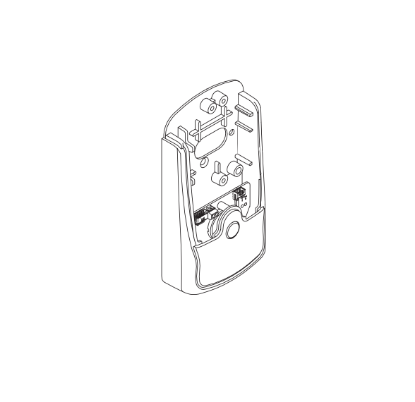
Electric Strike vs Magnetic Lock: Which Suits Your Door

Quick Summary

Key points

  • An electric strike releases a latch that is already there. A magnetic lock supplies the holding force itself. That one difference drives every other comparison.
  • An electric strike can be fail secure, so the door stays locked with no power. A magnetic lock cannot, because it has nothing to hold the door with once it is de-energised.
  • The strike goes in the frame and leaves the door alone. A maglock puts hardware on both halves of the opening and carries load across the joint.
  • Egress is the deciding factor on many openings. With a strike, people leave through the existing lock. With a maglock, egress has to be designed and built.
  • Neither is better across the board. The door preparation, the power situation and the egress requirement decide it, usually in that order.
Electric strike against magnetic lock at a glance
ConsiderationElectric strikeMagnetic lock
What holds the doorThe existing latchThe lock itself
LocationFrame onlyFrame and door
Power loss behaviourFail secure or fail safeAlways releases
Current draw at restNone when fail secureContinuous
EgressThrough the existing lockHas to be provided
Door preparationFrame cutoutThrough fixings in the leaf

Electric strike or magnetic lock is one of the first questions on any access control job, and it is often answered by habit rather than by the opening. Both put a door under the control of a reader or a panel. They go about it in completely different ways, and those ways suit different doors.

This guide compares the two on the points that actually decide the choice, and sets out which opening suits which.

What Is the Basic Difference Between an Electric Strike and a Magnetic Lock?

An electric strike does not lock anything. It releases something that is already locked.

The door has a lock on it with a latch. The strike sits in the frame where that latch lands. Normally it holds the latch. When it is signalled, it lets go, and the door can be pushed open even though the lock is still locked.

A magnetic lock is the opposite. There is no latch involved at all. An electromagnet on the frame and a steel armature on the door hold the two together by magnetic force, and the door is held shut by nothing else.

Why does that distinction matter so much?

Because it decides what happens when something goes wrong. A strike that loses power can still leave a locked door, because the mechanical lock is doing the work. A maglock that loses power has nothing left. Every other difference between the two is downstream of that.

Detex ML-1548RT magnetic lock with relock timer, the magnetic lock side of the comparison
A magnetic lock with a relock timer. The whole holding force comes from the unit itself, which is why it has to be energised the entire time the door is secured.

Which One Keeps the Door Locked in a Power Cut?

The electric strike, provided it is specified fail secure.

A fail secure strike holds the latch when power is removed, so the door stays locked from outside exactly as the mechanical lock intended. A fail safe strike releases, by design, for openings that have to open in an emergency.

A magnetic lock has no fail secure option. Remove the power and it lets go, because the power is the lock. That is not a limitation to be worked around, it is how the product works, and on many openings it is the reason the maglock was chosen.

Behaviour on loss of power
DeviceDoor stateWhy
Electric strike, fail secureLockedLatch is held mechanically
Electric strike, fail safeReleasedSpecified to release
Magnetic lockReleasedNo holding force without power

Does that make a maglock less secure?

Not in normal operation. It makes it unsuitable for openings that must stay secure through an outage, which is a different statement. A store room, a plant room or an equipment cage is strike territory precisely because the requirement is to stay locked no matter what.

Von Duprin 970300 electric strike faceplate for the 6114
An electric strike faceplate. The strike lives entirely in the frame, which is why the door itself needs no preparation at all.

Which Is Easier to Install?

It depends entirely on the frame.

An electric strike needs a cutout in the frame deep enough for its backbox, plus a cable route to that point. On a new frame or a frame that already has a strike prep of the right size, that is straightforward. On a narrow aluminium stile or a frame with no room behind it, it can be impossible.

A magnetic lock needs no cutout at all. It bolts to the surface of the frame and the door, which is why it is the standard answer on glass doors, on frameless arrangements and on openings where cutting the frame is not an option.

What does each one do to the door?

The strike does nothing to the door. The door keeps its lock, its latch and its preparation, and the only change is in the frame. That is a genuine advantage on a door that is difficult or expensive to modify.

Von Duprin 970271 electric strike faceplate for the 6111 strike
A faceplate for a different strike in the range. Faceplates are listed per model, so a replacement is matched to the strike rather than to the frame cutout.

The maglock puts an armature on the leaf, through bolted, and that means fixings through the door at a defined height. Our maglock installation guide covers the mounting in detail, and the electric strike installation guide covers the other side.

How Do the Two Compare on Egress?

This is the comparison that decides more openings than any other, and it is the one most often left until last.

With an electric strike, egress is already solved. The lock on the door still works mechanically from the inside, so somebody leaving turns the lever and goes, whatever the strike or the access control system is doing. Nothing has to be added.

With a magnetic lock, there is no mechanical path at all. The door is held by magnetism, and the only way to open it is to take the power away. Codes treat electrically locked egress doors as a special case, with conditions that typically include a manual release device on the egress side, release on loss of power and release on fire alarm activation. What is required on a given opening is decided by the authority having jurisdiction.

So a maglock always needs more hardware?

In practical terms, yes. A maglock opening is a designed arrangement rather than a single product: the lock, the release device, the sensing and the interfaces to the alarm system. Our request to exit sensor guide covers one of the components that usually appears, and the delayed egress guide covers the case where the door has to hold briefly before releasing.

Which Draws More Power?

The magnetic lock, by a wide margin, and continuously.

A fail secure electric strike sits idle. It draws current only while it is being released, which on a normal door is a few seconds a day in total. A magnetic lock is energised every moment the door is secured, which on most doors is almost all the time.

That matters for two reasons. The supply has to carry the total continuous load of every maglock on the system, and the battery backup has to carry it for the required standby period. A building with twenty maglocks has a very different power design from a building with twenty fail secure strikes.

What about a fail safe strike?

A fail safe strike is also held by power, so its draw profile is closer to a maglock than to a fail secure strike. If the comparison is specifically fail safe strike against maglock, the power argument largely disappears and the decision moves back to the frame and the egress arrangement.

Von Duprin 050943 spring kit for 6100 and 6200 series electric strikes
A spring kit for electric strikes. Strikes have moving mechanical parts that wear, which is one practical difference in what each type needs over its life.

Which Is More Secure?

They fail in different directions, which makes a single answer misleading.

An electric strike relies on the latch and on the frame around it. Its weak points are mechanical: a worn keeper, a latch that is not fully engaging, a frame that has been attacked around the strike cutout.

A magnetic lock relies on surface contact and on continuous power. Its weak points are an armature that is not meeting the magnet flat, faces that have corroded or been painted, and anything that interrupts the supply.

Where each one is vulnerable
DeviceMain weaknessWhat mitigates it
Electric strikeLatch engagement and frame conditionCorrect alignment, frame reinforcement
Electric strikeKeeper and spring wearStocked spring kits and faceplates
Magnetic lockPartial face contactArmature float, clean faces, closer adjustment
Magnetic lockLoss of supplyBattery backup and monitoring

In practice the deciding factor is maintenance rather than design. A well aligned maglock outperforms a neglected strike, and a well maintained strike outperforms a maglock holding on half its face.

Does monitoring change the picture?

Considerably, and it applies to both. A door position switch tells the system whether the door actually closed rather than only whether it energised the lock. On a maglock that is close to essential, and on a strike it is still worth having. Our door position switch guide covers how the signals fit together.

Detex MS-1059S surface mounted magnetic switch used to monitor either lock type
A surface mounted magnetic switch. Door position monitoring applies to either technology, and it is what turns a lock into something the system can actually report on.

What Does Each One Need in Maintenance?

Different things, on different intervals.

An electric strike wears mechanically. Springs lose tension, keepers develop a groove where the latch sits, and faceplates get bent by levering. Those parts are stocked individually, so service is a component swap rather than a replacement. Our electric strike parts guide lists what is available.

A magnetic lock has no moving parts, which sounds like no maintenance and is not. What it needs is clean, flat contact between two faces, and that degrades quietly. Paint, corrosion, grit and a drifting alignment all reduce holding force without producing any symptom until somebody pulls on the door.

Which one tells you when it is failing?

The strike, usually. A worn strike gets noisy, sticky or slow, and somebody reports it. A maglock holding at half strength behaves identically to one holding at full strength until the day it does not hold at all. That silent degradation is the strongest argument for scheduled checks on maglock openings.

Which One Suits Your Door?

Work through the opening in order and the answer usually appears before the end.

Choosing by the opening
SituationUsually points toReason
Door must stay locked in an outageElectric strike, fail secureMaglock has no fail secure mode
Frame cannot be cutMagnetic lockSurface mounted, no cutout
Glass or frameless doorMagnetic lockNothing to mortise into
Existing lock and latch in good conditionElectric strikeReuses what is already there
Door must release on alarmEither, specified accordinglyFail safe strike or maglock
Minimal continuous load wantedElectric strike, fail secureNo draw at rest

Can you use both on the same opening?

It happens, usually on high security doors where a maglock supplements a mechanical lock and electric strike. It doubles the power load and doubles the egress complexity, so it needs to be a deliberate decision rather than a belt and braces reflex.

Where the opening is fire rated, both options narrow. A rated assembly is tested as a set, and what can be added to it is constrained. Our fire rating guide covers that, and for the full detail on each technology see our complete electric strikes guide and electromagnetic lock parts guide.

About the Author

Security Parts has supplied repair parts for commercial door hardware since 2001, covering Von Duprin, LCN, Schlage, Falcon, Detex and Adams Rite at the component level. Our diagram based lookup exists so a technician can confirm a part before ordering it. This guide was written by the Security Parts team from supplier documentation and the questions our customers bring us.
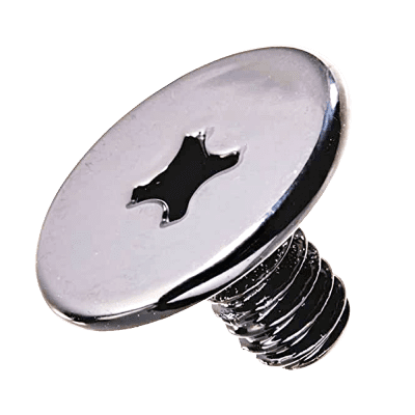
What Is a Rim Lock? Rim Devices, Cylinders and Strikes

Quick Summary

Key points

  • Rim means surface mounted. A rim lock sits on the face of the door rather than inside a pocket cut into its edge, and that single difference drives everything else about it.
  • On commercial openings the word usually turns up in two places: rim exit devices, and rim cylinders that key them from outside.
  • A rim cylinder does not thread into the lock like a mortise cylinder. It is held by a backplate behind the door and drives the lock through a cam or tailpiece.
  • The strike is part of the specification, not an afterthought. A rim latch needs a strike positioned for a surface mounted device, which is why rim strikes are listed separately.
  • Rim hardware is easier to fit and easier to service than mortise hardware, which is a large part of why it dominates on exit doors.
Rim against the other mounting formats
FormatWhere the body sitsDoor preparation
RimOn the face of the doorThrough holes only
MortiseInside a pocket in the door edgeDeep pocket plus edge cut
CylindricalThrough a bored hole in the faceTwo bored holes
Concealed vertical rodInside the doorFull internal routing

The word rim causes more confusion in commercial door hardware than almost any other term, because it describes a mounting method rather than a product. Ask ten people what a rim lock is and you will get answers ranging from a Victorian box lock to a modern exit device.

Both are correct, and that is the problem. This guide sets out what rim actually means, where it turns up on commercial doors, and what you need to know when ordering parts for it.

What Is a Rim Lock?

A rim lock is a lock whose body is mounted on the surface of the door rather than buried inside it.

Everything else follows from that. The door needs through holes rather than a routed pocket. The lock can be seen and reached without taking anything apart. Servicing happens with the door hanging, not with the lock case pulled out of the edge. And the lock sits proud of the face, which is why rim hardware is specified where appearance matters less than access.

Is a rim lock an old fashioned thing?

The historic surface mounted box lock is where the name comes from, and it still appears on period buildings. In current commercial specification, though, rim describes a mounting method used on thoroughly modern hardware, most visibly on exit devices.

So a rim device on a fire exit in a new building and a rim lock on a church door from 1880 share a principle and nothing else.

Von Duprin 050026 rim center case kit from a surface mounted rim lock device
A rim center case kit from an exit device. The mechanism sits in a case on the face of the door, which is what makes the device a rim device.

How Is a Rim Lock Different From a Mortise Lock?

A mortise lock lives inside a rectangular pocket cut into the edge of the door. A rim lock lives on the surface. That changes the preparation, the servicing, the security profile and the parts list.

Practical differences that affect the job
ConsiderationRimMortise
Door preparationThrough holesRouted pocket and edge cut
Retrofit to an existing doorUsually straightforwardNeeds the pocket to match
ServicingFrom the face, door in placeCase withdrawn from the edge
Visual intrusionVisible on the faceHidden inside the door
Cylinder fixingBackplate behind the doorThreads into the lock case

Neither format is better in the abstract. A mortise lock buys concealment and a heavier mechanism inside the door. A rim device buys access, simpler preparation and faster servicing. Our comparison of mortise and cylindrical locks covers the third format in the same terms.

Can a rim device replace a mortise lock on the same door?

Sometimes, but it is a door preparation question rather than a hardware question. The mortise pocket does not disappear when the mortise lock comes out, and a rim device fixes through the face in a completely different pattern. Expect a filler plate and new fixing positions rather than a straight swap.

Where Do You Find Rim Hardware on a Commercial Door?

Overwhelmingly on exit doors, as rim exit devices.

A rim exit device latches into a strike mounted on the frame, which makes it the simplest of the four exit device configurations. There are no rods running to the head and sill, no lock case in the door edge, and nothing concealed inside the door. For a single door with a frame to latch into, it is the default choice.

The second place the word turns up is on the cylinder. A rim cylinder is the format used to key a rim device from the secure side. Our rim exit device guide covers the devices themselves in detail.

When is a rim device not the right choice?

On a pair of doors with no mullion, where there is nothing in the middle for a rim latch to engage. On a door that has to latch top and bottom for fire performance. And where the aesthetic specification rules out surface mounted hardware. In each of those, a vertical rod or mortise configuration takes over, as our concealed vertical rod guide covers.

What Is a Rim Cylinder and How Does It Attach?

A rim cylinder is a cylinder designed to be held against the outside face of the door by a backplate fitted on the inside, rather than threaded into a lock body.

The sequence is the clue to how it works. The cylinder goes through the door from outside. The backplate goes on behind it. Screws through the backplate pull the cylinder tight against the face. A tailpiece or cam on the back of the cylinder then reaches into the device and operates it.

Von Duprin 3216 rim cylinder used to key a rim lock from outside
A rim cylinder. Note that there is no thread on the body for screwing into a lock case, which is the quickest way to tell a rim cylinder from a mortise cylinder.

Why does the backplate matter so much?

Because it is the only thing holding the cylinder in the door. A mortise cylinder is held by its own thread in the lock. A rim cylinder is held by a plate and two screws, and if those loosen the cylinder can turn or move in the hole.

A cylinder that spins when a key is turned is a backplate problem far more often than a cylinder problem, and the backplate is a stocked item in its own right.

Detex 100221 rim cylinder backplate that secures a rim lock cylinder
A rim cylinder backplate. Small, easily left behind during a cylinder change, and the single most common cause of a rim cylinder that will not stay put.

What Does the Cam or Tailpiece Do?

It is the link between the cylinder and the mechanism. Turning the key turns the plug, the plug turns the cam, and the cam moves whatever the device needs moved.

Cams are not universal. The shape, length and orientation have to suit the device the cylinder is driving, which is why cams are listed as separate parts rather than assumed. Fitting a cylinder with the wrong cam gives you a key that turns smoothly and achieves nothing.

Von Duprin 050501 rim master cam that links a rim cylinder to the lock
A rim cam. The cylinder and the cam are ordered as two decisions, because the keying and the mechanism it drives are independent of each other.

Does the keyway have to match the rest of the site?

If the building runs a key system, yes, and that is a decision made at order time rather than afterwards. A rim cylinder can be supplied to the site keyway so that existing keys work, which is usually preferable to adding another key to a bunch. Our key systems guide covers how that is organised.

What Strike Does a Rim Lock Need?

One positioned for a surface mounted latch, which is not the same as a strike for a mortise or cylindrical lock.

A rim latch approaches the frame from the face of the door rather than from inside its edge, so the strike has to present its opening in a different plane and at a different depth. Rim strikes are listed as their own family for exactly that reason.

On a pair of doors the picture changes again. The inactive leaf has to present something for the active leaf to latch into, which is where double door strikes and mullions come in.

Von Duprin 1609 strike that receives a rim lock latch on a double door
A double door strike for rim and vertical rod devices. On a pair, the strike is part of how the two leaves work together rather than a frame fitting.

Can the strike be electrified?

Yes, and it is one of the most common ways to add access control to a rim device. The electric strike replaces the fixed strike in the frame, the device stays as it is, and the opening gains remote release without touching the door. Our electric strikes guide covers the selection, and our strike plate guide covers the mechanical version.

Is a Rim Lock Secure Enough for a Commercial Door?

On the right door, yes, and it is used on millions of them.

The honest answer has conditions attached. Surface mounted hardware is visible and reachable, so the fixings matter. Through bolting rather than wood screws, a sound backplate behind the cylinder, and a strike that is properly anchored in the frame are what make the difference between a rim device that resists attack and one that does not.

The other factor is that a rim exit device on an exit door is usually on the secure side of the opening with no trim outside at all. There is very little to attack, because there is nothing out there to grip.

What about the cylinder as a weak point?

It is the component most exposed on the outside face, and that is worth designing around. Cylinder guards, recessed trim and the backplate arrangement behind the door all exist to make the cylinder harder to attack. On an opening with a history of attempts, those are the parts to look at rather than the device.

What Fails on Rim Hardware?

Common rim hardware failures and what they mean
SymptomLikely partWhat to check
Cylinder turns in the holeBackplate or its screwsBehind the door, not the cylinder
Key turns, device does not releaseCam or tailpieceCam type against the device
Latch does not reach the strikeStrike position or door dropHinges first, then the strike
Device moves on the doorBaseplate fixingsThrough bolts rather than screws
Latch slow to returnSpring in the latch groupLatch assembly parts

None of those is a device replacement. The point of rim hardware is that the parts are reachable, so the repair is usually a component swap with the door still hanging. Our panic bar parts guide lists the components for the exit devices most of this applies to.

What should you confirm before ordering rim parts?

Five things. The device series, from the stamping. Whether the part is for the device or the cylinder, because they are separate orders. The cam type where a cylinder is involved. The keyway, if the site runs a key system. And the finish, because rim hardware is visible.

If the cylinder format itself is the open question, our mortise cylinder and rim cylinder comparison is the quickest way to settle it, and the exit device terminology guide covers the naming.

About the Author

Security Parts has supplied repair parts for commercial door hardware since 2001, covering Von Duprin, LCN, Schlage, Falcon, Detex and Adams Rite at the component level. Our diagram based lookup exists so a technician can confirm a part before ordering it. This guide was written by the Security Parts team from supplier documentation and the questions our customers bring us.
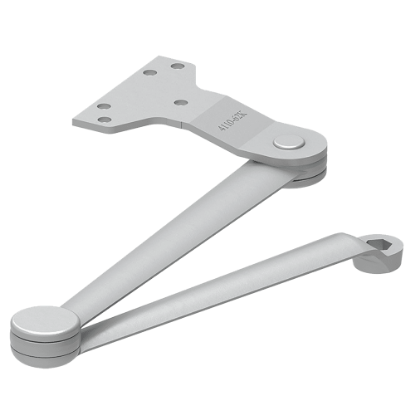
Maglock Installation: Mounting, Wiring and Release Rules

Quick Summary

Key points

  • A maglock installation is three jobs in one: mounting the magnet and armature, getting power to the opening, and giving people a way out that does not depend on the electronics.
  • The magnet mounts on the frame and the armature on the door, and the armature must be allowed to float slightly rather than being clamped rigid.
  • Through bolting the armature is the normal method, which is why sex nuts sized for the door thickness are part of the parts list rather than an afterthought.
  • Maglocks are fail safe by nature. Power holds them locked, so the design question is what else releases the door, not whether the lock releases.
  • Door position monitoring belongs in the same installation. Without it the system knows it energised the magnet but not whether the door ever closed.
The three parts of a maglock installation
StageWhat it coversMost common mistake
MechanicalMagnet, armature, brackets, fixingsArmature bolted rigid instead of floating
ElectricalSupply, voltage, routing into the door frameVoltage drop over a long run
Egress and monitoringRelease devices and door position sensingMonitoring left out entirely

Maglock installation looks like the simplest job in electrified hardware. There is no latch, no strike cutout, no mortise pocket, and the two halves simply have to meet. That is exactly why it gets rushed, and why so many of them end up holding at a fraction of their rating.

This guide covers the mechanical mounting, the power side, the egress arrangements that have to accompany it, and the faults that follow from getting any of the three wrong.

What Does a Maglock Installation Involve?

Three separate pieces of work that have to be planned together.

The mechanical part is mounting the magnet to the frame and the armature to the door so that the two meet flat and square. The electrical part is delivering the correct voltage to the magnet continuously, because a maglock is only locked while it is energised. The third part is everything that lets people out, because a lock that holds by power needs a defined way of letting go.

Treating any of the three as a follow up job is where maglock installations go wrong. The egress arrangement in particular dictates what else goes on the door, and that is easier to design in than to retrofit.

Is a maglock different from an electric strike in installation terms?

Completely. An electric strike goes into the frame and leaves the door untouched. A maglock puts hardware on both the door and the frame, carries its load across the joint between them, and needs power running the whole time the door is locked. Our electric strikes guide covers the alternative where the door preparation is the deciding factor.

Detex ML-1549W weatherized 1200 lb magnetic lock for exterior maglock installation
A weatherized 1200 lb magnetic lock. The holding figure is only achieved when the armature meets the magnet face flat and clean, which makes the mounting the real variable.

Where Does the Magnet Go and Where Does the Armature Go?

The magnet mounts on the frame, usually at the head on the stop side, and the armature mounts on the door so that it arrives against the magnet face when the door closes.

The reason that way round is practical. The magnet is the half that needs wiring, and the frame is the half that does not move. Putting the powered half on a swinging leaf means running conductors across the hinge line for no reason.

How accurately do the two faces need to meet?

Flat and fully in contact. A magnetic lock holds by surface contact, and anything that keeps the two faces apart reduces the hold disproportionately. A small gap, a layer of paint, a build up of dirt or a slight twist in the armature all take holding force away.

This is the single biggest difference between a maglock that performs to its rating and one that can be pulled open by hand. The parts are not usually at fault. The alignment is.

How Is the Armature Fixed to the Door?

Through the door, with the fixings sized for the door thickness, and with the armature left able to move slightly.

That last point surprises people. The armature is not meant to be rigid. It needs a small amount of float so it can settle flat against the magnet face even when the door does not present it perfectly square. Clamping it solid removes that ability and guarantees partial contact.

Schlage P390498 sex nuts for through bolting an armature to a 1-3/4 inch door
Sex nuts listed for a 1-3/4 inch door. Through bolting is the normal method, and the fixings are specified for the door thickness rather than cut to fit on site.

What holds the magnet to the frame?

A mounting pack sized for the installation, and on many openings a bracket. Not every frame presents a flat surface in the right place, and inward opening doors, glass doors and frameless arrangements all need brackets to put the magnet where it needs to be.

Mounting hardware is supplied as a kit for the same reason screw packs are supplied for locks. The fixings are part of the specification, not consumables from the van.

Schlage P23840283 mag mounting pack used during maglock installation
A mag mounting pack. Using the supplied fixings matters because they are sized to let the armature float by the intended amount.

What Power Does a Maglock Need?

Continuous power, at the voltage the unit is listed for, delivered at the lock rather than at the panel.

Because a maglock is energised the whole time it is locked, its supply sizing is different from a fail secure electric strike that draws nothing until released. Every maglock on a system contributes continuously to the load, which matters most when the building is running on battery backup.

Supply considerations specific to maglocks
ConsiderationWhy it matters
Continuous drawThe lock is energised whenever the door is secured
Voltage at the lockDrop over the cable run reduces holding force
Battery backup sizingStandby time is set by the total continuous load
Transfer into the doorOnly needed if anything on the door is powered

Does the installation need a power transfer?

Only if something on the moving leaf needs power. The magnet is on the frame, so a plain maglock does not. The moment an electrified lock, an exit device with latch retraction or a door mounted sensor joins the opening, conductors have to cross the hinge line, and that is a transfer job. Our power transfer guide covers the options.

What Else Has to Be on the Door Before a Maglock Is Used?

This is the part of a maglock installation that is not optional and not a hardware preference.

Codes treat electrically locked egress doors as a special case, because the lock has no mechanical release. The conditions typically attached include a manual release device on the egress side, release of the lock on loss of power, and release on activation of the fire alarm system. What is required on a specific opening is decided by the authority having jurisdiction.

The practical consequence for the installer is that a maglock is never a single product on a door. It arrives with a release arrangement, and the arrangement is as much part of the installation as the magnet.

Does a motion sensor count as the release?

Sometimes, within conditions, and never as the only element. A request to exit sensor above the door can form part of a designed release arrangement, but what is permitted varies and the sensor is one component of a solution rather than the solution itself. Our request to exit sensor guide covers how those units behave and where they are mounted.

Where a door needs to hold briefly before releasing, that is delayed egress, which is a separate function with its own conditions. Our delayed egress guide covers it.

How Do You Monitor a Maglock Once It Is Fitted?

With a door position switch, and ideally with bond monitoring from the lock itself where the unit offers it.

The distinction matters. The access control system knows it energised the magnet. It does not know whether the door actually closed, whether the armature made contact, or whether somebody has propped the leaf. A door position switch answers the first of those, and it is the component most often left out of a maglock installation. Our Wiegand 26 bit guide explains the format, wiring, limits and OSDP.

Detex MS-1039F flush magnetic switch monitoring a door after maglock installation
A flush mounted magnetic switch. Recessed into the door and frame, so there is nothing on the surface to be knocked out of alignment.

Flush or surface mounted switch?

Flush where the door and frame can be drilled and the opening is interior and protected. Surface mounted where drilling is not practical, where the opening is exterior, or where a heavier duty unit is wanted on a door that takes abuse.

Detex MS-2049S heavy duty surface mount Form C magnetic switch for door monitoring
A heavy duty surface mount switch with Form C contacts. Form C gives the panel both a normally open and a normally closed path from one device.

Our door position switch guide covers how the switch and the request to exit signal work together on a monitored opening.

Why Does My Maglock Not Hold Properly?

Nine times out of ten the answer is contact rather than current.

Diagnosing a maglock that releases under load
CauseHow to confirm itFix
Armature not meeting flatMarker transfer across the magnet faceReset the armature float and alignment
Paint, dirt or corrosion on facesVisual check of both facesClean back to bare metal contact
Armature clamped rigidNo movement at all when pushed by handRefit with the intended float
Voltage low at the lockMeasure at the lock, not the panelLarger conductors or a closer supply
Door closing short of the magnetGap visible with the door shutCloser adjustment or packing the magnet

Working through that table in order resolves most complaints without replacing anything. A maglock is a simple device, and simple devices fail for mechanical reasons.

Can a maglock be mounted on a door with a closer?

It usually has to be, because the door needs to arrive at the magnet reliably. What matters is that the closer brings the leaf fully home. A door that stops a few millimetres short will energise the magnet with no contact at all, which looks like a lock failure and is a closer adjustment. Our door clearance guide covers the related measurements around the opening.

What Changes on an Exterior Opening?

Water, temperature and corrosion, all of which attack the contact surfaces that the lock depends on.

Weatherized units exist for exactly this reason. On an exterior door the magnet and armature faces are exposed to rain driven across them and to condensation forming on cold metal, and ordinary steel surfaces will discolour and eventually pit. That pitting reduces contact area, which reduces holding force.

Does an exterior maglock need different maintenance?

Yes, and it is simple. The faces want checking and cleaning periodically rather than after a complaint. A maglock on an exterior door that has not been looked at in three years is usually holding at well below its rating, and nobody will know until somebody pulls on it.

What Should You Confirm Before Ordering a Maglock?

Six things, and the first three come off the opening rather than the specification.

Whether the door is interior or exterior, because that decides weatherized or standard. The door thickness, because the through fixings are sized for it. Whether the door swings in or out, because that decides whether brackets are needed. The voltage available at the opening. Whether monitoring is required, and of what kind. And what the egress arrangement will be, because that is the part that has to be designed rather than ordered.

What if the opening already has an exit device?

Then the maglock may not be the right answer at all. A door that already latches mechanically and releases from the inside has most of what a maglock is being asked to provide, and adding one can complicate the egress picture rather than simplify it. For the full component breakdown of magnetic locks themselves, our electromagnetic lock parts guide covers what is supplied separately, and our fire rating guide covers what changes on a rated opening.

About the Author

Security Parts has supplied repair parts for commercial door hardware since 2001, covering Von Duprin, LCN, Schlage, Falcon, Detex and Adams Rite at the component level. Our diagram based lookup exists so a technician can confirm a part before ordering it. This guide was written by the Security Parts team from supplier documentation and the questions our customers bring us.
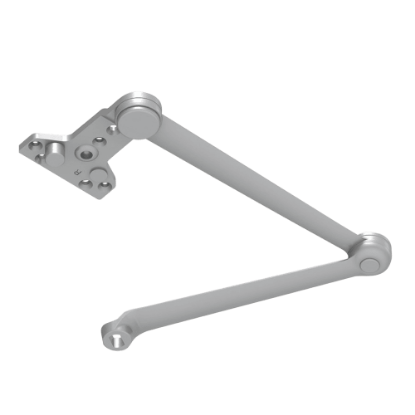
Blog|Security Parts

Blog|Security Parts

Blog|Security Parts