 Trusted Since 2001


Quick Summary
Key points
- The Schlage L9070 is the classroom function in the L Series mortise range, locked and unlocked by key from the outside only.
- Classroom means the outside lever can be left locked or left free. That is the whole difference from a storeroom function, which can never be left unlocked.
- The inside lever is always free, so people can leave whether the outside is locked or not.
- Related functions change who can lock the door. The L9071 adds lockdown from inside, and the L9076 adds holdback.
- The lock case carries the function, so changing what a door does usually means a case rather than a whole lockset.
| Function | Who can lock the outside lever | Typical use |
|---|---|---|
| L9070 classroom | Key from outside only | Standard teaching space |
| L9071 classroom security | Key from outside or inside | Rooms needing lockdown from within |
| L9076 classroom holdback | Key from outside, with holdback | Doors left unlocked for long periods |
| Storeroom | Nobody, it is always locked | Stores and plant rooms |
| Office | Key or inside control | Offices and suites |
In This Guide
- What Is the Schlage L9070?
- How Is Classroom Different From a Storeroom Function?
- What Does the L9071 Add?
- What Is Holdback and Why Does the L9076 Have It?
- Which Parts Are Serviceable on These Locks?
- What Goes Wrong on an L9070 Door?
- How Do You Choose Between These Functions on a New Door?
- What Should You Confirm Before Ordering?
- About the Author
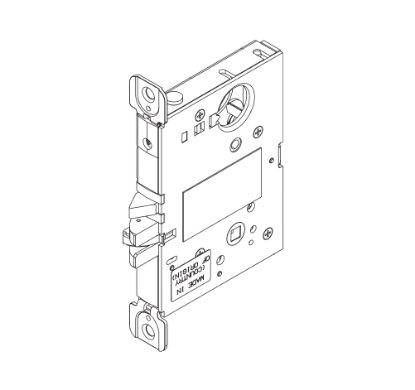
The Schlage L9070 is one of those part numbers that turns up on a schedule with no explanation attached. It is a mortise lock, it is a classroom function, and the difference between it and the function next to it in the catalogue decides how a room actually gets used.
This guide covers what the L9070 does, how classroom differs from storeroom, what the related functions change, which parts are serviceable, and what to confirm before ordering.
What Is the Schlage L9070?
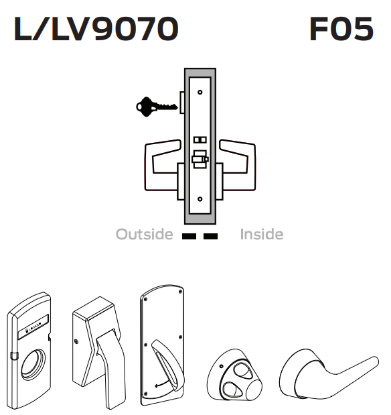
It is the classroom function in the L Series mortise lock range, with lockdown from the exterior only.
In practice that means a key in the outside cylinder locks or unlocks the outside lever, and it stays as it was left. Leave it unlocked and anyone can walk in. Lock it and the outside lever is fixed until a key changes that. Nobody inside the room can change the state of the outside lever.
The inside lever always retracts the latch. That is not a convenience; it is how the door meets the requirement that people can always leave. Our commercial mortise lock guide covers how the L Series is built around that principle.
Why is it called a classroom function?
Because that is the pattern a teaching room needs: unlocked while the room is in use, locked when it is not, changed by whoever holds the key. The name describes the behaviour rather than restricting where it can be fitted, and the same function suits meeting rooms, labs and consulting rooms.
How Is Classroom Different From a Storeroom Function?
A classroom function can be left unlocked. A storeroom function cannot.
On a storeroom lock the outside lever is permanently rigid, and a key retracts the latch for one entry before the door relocks behind the user. There is no state in which the outside lever simply works. That is correct for a plant room and wrong for a classroom, where people come and go all day.
The practical consequence is what happens when somebody props the door. On a classroom function the right answer is to unlock the lever with a key so the door works normally. On a storeroom function there is no such option, which is exactly why doors with storeroom locks end up with wedges under them. Our storeroom lock guide covers that function in detail.
| Question | If yes | If no |
|---|---|---|
| Does the room need to be freely enterable at times? | Classroom | Storeroom |
| Must the door never be found unlocked? | Storeroom | Classroom |
| Is a key holder present during use? | Either works | Classroom is more practical |
| Is the room high value or hazardous? | Storeroom | Classroom |
| Do occupants need to secure themselves? | Consider L9071 | L9070 is sufficient |
Does the key stay in the lock while it is unlocked?
No. The key changes the state and comes out. That is what makes the function useful: the condition persists without anybody holding anything, and the next change needs the key again.
What Does the L9071 Add?
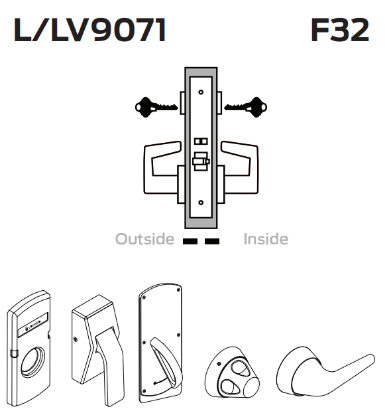
Lockdown from the inside as well as the outside.
On the L9071, a key cylinder on the inside face lets somebody in the room lock the outside lever without going out into the corridor. The inside lever still works, so egress is unchanged. What changes is who can secure the door and how quickly.
That difference is the reason the function exists. On an L9070 a room can only be secured by somebody standing outside it with a key, which is not always practical. Where the requirement is for occupants to secure themselves, the L9071 is the function that does it.
Does locking from inside affect getting out?
No, and it must not. On both functions the inside lever retracts the latch mechanically whatever the outside lever is doing. Locking down a room secures it against entry, never against exit, which is the line every one of these functions is designed around. Our lock function codes guide covers how the whole set is organised.
What Is Holdback and Why Does the L9076 Have It?
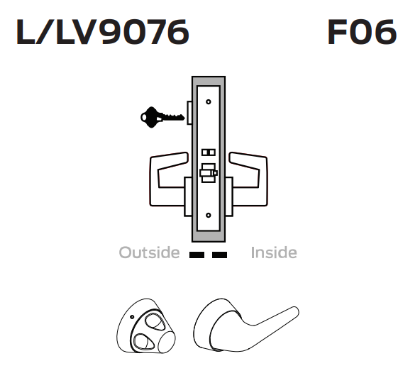
Holdback keeps the latch retracted so the door is push and pull, without anyone propping it.
On a holdback function the latch can be held back deliberately, so the door simply opens and closes without latching at all. That suits a room that is open for a whole session, or a corridor door that needs to be free during busy periods, and it removes the wedge from the equation.
It is not appropriate everywhere. A door that must latch, including any fire rated opening, cannot have its latch held back, which is why holdback is a separate function rather than a feature on every lock. Our fire rating guide covers why positive latching matters.
How do you tell if a door has holdback fitted?
Operate the lock with the door open and see whether the latch can be left retracted. On a standard function the latch springs back every time. On a holdback function it can be set and will stay. Checking takes seconds and settles an argument that otherwise runs on assumption.
Which Parts Are Serviceable on These Locks?
Most of them, which is the main practical advantage of a mortise lock.
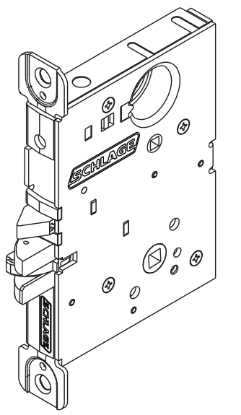
The lock case, the trim, the cylinder, the spindle and the strike are all separate items. A worn lever does not need a new lock. A rekey does not touch the case. A damaged faceplate is a faceplate. The one component that carries the function is the case itself, and that is the one to change when the door needs to behave differently.
| Fault | Part involved | Does the function change? |
|---|---|---|
| Lever turns without retracting the latch | Spindle, then the hub | No |
| Key turns but nothing happens | Cylinder cam | No |
| Room needs inside lockdown | Lock case | Yes, to the L9071 function |
| Trim damaged or dated | Trim and escutcheon | No |
| Latch sluggish with the door open | Lock case | No, same function |
Is the lock case specific to the function?
Yes, and that is the point. The case contains the mechanism that decides what the key and each lever can do, so cases are listed against the functions they serve. A case listed for one pair of functions is not a universal part, and the listing is the specification rather than a note.
What Goes Wrong on an L9070 Door?
The same things that go wrong on any mortise lock, plus one that is specific to the function.
The general faults are a rounded spindle, a worn hub, a cylinder cam that no longer drives the mechanism, and a latch binding against a misaligned strike. None of these are function related, and our mortise lock repair guide covers how to separate them.
The function specific complaint is a door that is found unlocked when it should not be. On a classroom function that is almost never a hardware fault. Somebody unlocked the lever with a key and did not lock it again, because the function allows exactly that. Treating it as a lock failure wastes a visit.
How do you check whether the fault is the lock or the door?
Open the door and work everything in free air: both levers, the key in both directions, and the latch. Anything that misbehaves with the door open belongs to the lock. Anything that only appears when the door is closed belongs to the strike, the frame or the alignment.
How Do You Choose Between These Functions on a New Door?
Start from who needs to be able to lock the door and when.
If only key holders need to secure the room, and they can do it from the corridor, the L9070 is sufficient. If occupants need to secure themselves without opening the door, the L9071 is the function. If the door spends long periods deliberately unlatched, holdback should be considered, provided the opening is not required to latch.
Decide that before looking at trim, finish or keying, because those are all independent. The function is the one decision that is awkward to change later, since it lives in the case inside the door. Our L Series parts guide covers how the rest of the assembly is specified.
Does the keying strategy affect the choice?
It affects who can actually use the function. A classroom lock is only as useful as the key distribution behind it, and a function that relies on someone being present with a key fails quietly if that person is not. Our key systems guide covers how that side is planned.
What Should You Confirm Before Ordering?
Six things, and the first is the one most often assumed.
The function currently fitted, read from the lock rather than from the schedule. The function required, decided from the questions above. The handing. The backset and door thickness. The trim design and finish. And whether the cylinder is being reused, replaced or rekeyed.
If the door is being changed from one function to another, confirm whether the existing case can be replaced on its own or whether the trim has to change as well. That answer decides whether this is a small job or a full lockset. Our L283 trim parts guide covers the trim side.
What if the schedule and the door disagree?
Believe the door. Schedules are written before installation and rarely updated afterwards, and a room that changed use five years ago will have hardware that reflects the change rather than the drawing. Read the lock, test the behaviour, and order from what is actually there.
About the Author
Security Parts has supplied repair parts for commercial door hardware since 2001, covering Von Duprin, LCN, Schlage, Falcon, Detex and Adams Rite at the component level. Our diagram based lookup exists so a technician can confirm a part before ordering it. This guide was written by the Security Parts team from supplier documentation and the questions our customers bring us.