RSS

Blog posts tagged with 'fail safe'

Electric Strike vs Magnetic Lock: Which Suits Your Door

Quick Summary

Key points

  • An electric strike releases a latch that is already there. A magnetic lock supplies the holding force itself. That one difference drives every other comparison.
  • An electric strike can be fail secure, so the door stays locked with no power. A magnetic lock cannot, because it has nothing to hold the door with once it is de-energised.
  • The strike goes in the frame and leaves the door alone. A maglock puts hardware on both halves of the opening and carries load across the joint.
  • Egress is the deciding factor on many openings. With a strike, people leave through the existing lock. With a maglock, egress has to be designed and built.
  • Neither is better across the board. The door preparation, the power situation and the egress requirement decide it, usually in that order.
Electric strike against magnetic lock at a glance
ConsiderationElectric strikeMagnetic lock
What holds the doorThe existing latchThe lock itself
LocationFrame onlyFrame and door
Power loss behaviourFail secure or fail safeAlways releases
Current draw at restNone when fail secureContinuous
EgressThrough the existing lockHas to be provided
Door preparationFrame cutoutThrough fixings in the leaf

Electric strike or magnetic lock is one of the first questions on any access control job, and it is often answered by habit rather than by the opening. Both put a door under the control of a reader or a panel. They go about it in completely different ways, and those ways suit different doors.

This guide compares the two on the points that actually decide the choice, and sets out which opening suits which.

What Is the Basic Difference Between an Electric Strike and a Magnetic Lock?

An electric strike does not lock anything. It releases something that is already locked.

The door has a lock on it with a latch. The strike sits in the frame where that latch lands. Normally it holds the latch. When it is signalled, it lets go, and the door can be pushed open even though the lock is still locked.

A magnetic lock is the opposite. There is no latch involved at all. An electromagnet on the frame and a steel armature on the door hold the two together by magnetic force, and the door is held shut by nothing else.

Why does that distinction matter so much?

Because it decides what happens when something goes wrong. A strike that loses power can still leave a locked door, because the mechanical lock is doing the work. A maglock that loses power has nothing left. Every other difference between the two is downstream of that.
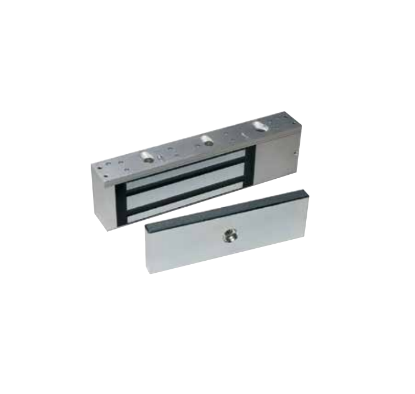
Detex ML-1548RT magnetic lock with relock timer, the magnetic lock side of the comparison
A magnetic lock with a relock timer. The whole holding force comes from the unit itself, which is why it has to be energised the entire time the door is secured.

Which One Keeps the Door Locked in a Power Cut?

The electric strike, provided it is specified fail secure.

A fail secure strike holds the latch when power is removed, so the door stays locked from outside exactly as the mechanical lock intended. A fail safe strike releases, by design, for openings that have to open in an emergency.

A magnetic lock has no fail secure option. Remove the power and it lets go, because the power is the lock. That is not a limitation to be worked around, it is how the product works, and on many openings it is the reason the maglock was chosen.

Behaviour on loss of power
DeviceDoor stateWhy
Electric strike, fail secureLockedLatch is held mechanically
Electric strike, fail safeReleasedSpecified to release
Magnetic lockReleasedNo holding force without power

Does that make a maglock less secure?

Not in normal operation. It makes it unsuitable for openings that must stay secure through an outage, which is a different statement. A store room, a plant room or an equipment cage is strike territory precisely because the requirement is to stay locked no matter what.
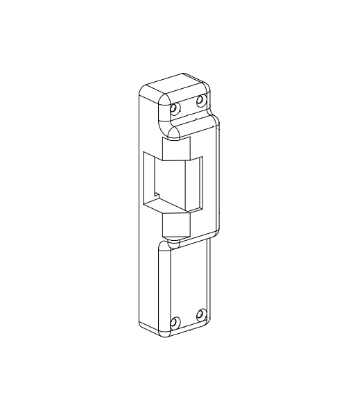
Von Duprin 970300 electric strike faceplate for the 6114
An electric strike faceplate. The strike lives entirely in the frame, which is why the door itself needs no preparation at all.

Which Is Easier to Install?

It depends entirely on the frame.

An electric strike needs a cutout in the frame deep enough for its backbox, plus a cable route to that point. On a new frame or a frame that already has a strike prep of the right size, that is straightforward. On a narrow aluminium stile or a frame with no room behind it, it can be impossible.

A magnetic lock needs no cutout at all. It bolts to the surface of the frame and the door, which is why it is the standard answer on glass doors, on frameless arrangements and on openings where cutting the frame is not an option.

What does each one do to the door?

The strike does nothing to the door. The door keeps its lock, its latch and its preparation, and the only change is in the frame. That is a genuine advantage on a door that is difficult or expensive to modify.
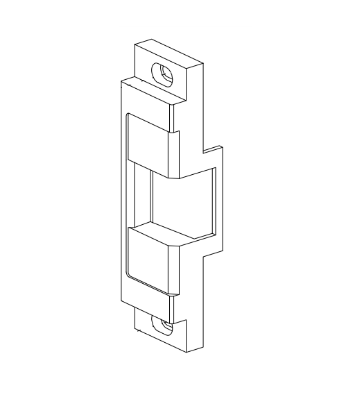
Von Duprin 970271 electric strike faceplate for the 6111 strike
A faceplate for a different strike in the range. Faceplates are listed per model, so a replacement is matched to the strike rather than to the frame cutout.

The maglock puts an armature on the leaf, through bolted, and that means fixings through the door at a defined height. Our maglock installation guide covers the mounting in detail, and the electric strike installation guide covers the other side.

How Do the Two Compare on Egress?

This is the comparison that decides more openings than any other, and it is the one most often left until last.

With an electric strike, egress is already solved. The lock on the door still works mechanically from the inside, so somebody leaving turns the lever and goes, whatever the strike or the access control system is doing. Nothing has to be added.

With a magnetic lock, there is no mechanical path at all. The door is held by magnetism, and the only way to open it is to take the power away. Codes treat electrically locked egress doors as a special case, with conditions that typically include a manual release device on the egress side, release on loss of power and release on fire alarm activation. What is required on a given opening is decided by the authority having jurisdiction.

So a maglock always needs more hardware?

In practical terms, yes. A maglock opening is a designed arrangement rather than a single product: the lock, the release device, the sensing and the interfaces to the alarm system. Our request to exit sensor guide covers one of the components that usually appears, and the delayed egress guide covers the case where the door has to hold briefly before releasing.

Which Draws More Power?

The magnetic lock, by a wide margin, and continuously.

A fail secure electric strike sits idle. It draws current only while it is being released, which on a normal door is a few seconds a day in total. A magnetic lock is energised every moment the door is secured, which on most doors is almost all the time.

That matters for two reasons. The supply has to carry the total continuous load of every maglock on the system, and the battery backup has to carry it for the required standby period. A building with twenty maglocks has a very different power design from a building with twenty fail secure strikes.

What about a fail safe strike?

A fail safe strike is also held by power, so its draw profile is closer to a maglock than to a fail secure strike. If the comparison is specifically fail safe strike against maglock, the power argument largely disappears and the decision moves back to the frame and the egress arrangement.
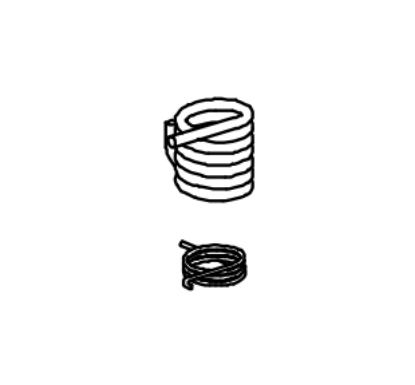
Von Duprin 050943 spring kit for 6100 and 6200 series electric strikes
A spring kit for electric strikes. Strikes have moving mechanical parts that wear, which is one practical difference in what each type needs over its life.

Which Is More Secure?

They fail in different directions, which makes a single answer misleading.

An electric strike relies on the latch and on the frame around it. Its weak points are mechanical: a worn keeper, a latch that is not fully engaging, a frame that has been attacked around the strike cutout.

A magnetic lock relies on surface contact and on continuous power. Its weak points are an armature that is not meeting the magnet flat, faces that have corroded or been painted, and anything that interrupts the supply.

Where each one is vulnerable
DeviceMain weaknessWhat mitigates it
Electric strikeLatch engagement and frame conditionCorrect alignment, frame reinforcement
Electric strikeKeeper and spring wearStocked spring kits and faceplates
Magnetic lockPartial face contactArmature float, clean faces, closer adjustment
Magnetic lockLoss of supplyBattery backup and monitoring

In practice the deciding factor is maintenance rather than design. A well aligned maglock outperforms a neglected strike, and a well maintained strike outperforms a maglock holding on half its face.

Does monitoring change the picture?

Considerably, and it applies to both. A door position switch tells the system whether the door actually closed rather than only whether it energised the lock. On a maglock that is close to essential, and on a strike it is still worth having. Our door position switch guide covers how the signals fit together.
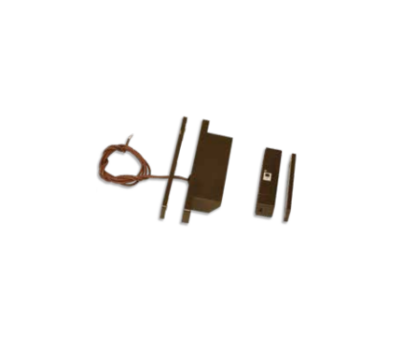
Detex MS-1059S surface mounted magnetic switch used to monitor either lock type
A surface mounted magnetic switch. Door position monitoring applies to either technology, and it is what turns a lock into something the system can actually report on.

What Does Each One Need in Maintenance?

Different things, on different intervals.

An electric strike wears mechanically. Springs lose tension, keepers develop a groove where the latch sits, and faceplates get bent by levering. Those parts are stocked individually, so service is a component swap rather than a replacement. Our electric strike parts guide lists what is available.

A magnetic lock has no moving parts, which sounds like no maintenance and is not. What it needs is clean, flat contact between two faces, and that degrades quietly. Paint, corrosion, grit and a drifting alignment all reduce holding force without producing any symptom until somebody pulls on the door.

Which one tells you when it is failing?

The strike, usually. A worn strike gets noisy, sticky or slow, and somebody reports it. A maglock holding at half strength behaves identically to one holding at full strength until the day it does not hold at all. That silent degradation is the strongest argument for scheduled checks on maglock openings.

Which One Suits Your Door?

Work through the opening in order and the answer usually appears before the end.

Choosing by the opening
SituationUsually points toReason
Door must stay locked in an outageElectric strike, fail secureMaglock has no fail secure mode
Frame cannot be cutMagnetic lockSurface mounted, no cutout
Glass or frameless doorMagnetic lockNothing to mortise into
Existing lock and latch in good conditionElectric strikeReuses what is already there
Door must release on alarmEither, specified accordinglyFail safe strike or maglock
Minimal continuous load wantedElectric strike, fail secureNo draw at rest

Can you use both on the same opening?

It happens, usually on high security doors where a maglock supplements a mechanical lock and electric strike. It doubles the power load and doubles the egress complexity, so it needs to be a deliberate decision rather than a belt and braces reflex.

Where the opening is fire rated, both options narrow. A rated assembly is tested as a set, and what can be added to it is constrained. Our fire rating guide covers that, and for the full detail on each technology see our complete electric strikes guide and electromagnetic lock parts guide.

About the Author

Security Parts has supplied repair parts for commercial door hardware since 2001, covering Von Duprin, LCN, Schlage, Falcon, Detex and Adams Rite at the component level. Our diagram based lookup exists so a technician can confirm a part before ordering it. This guide was written by the Security Parts team from supplier documentation and the questions our customers bring us.
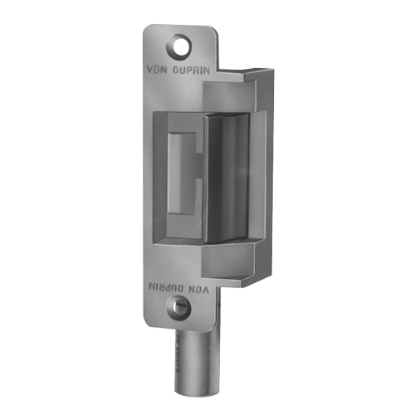
Von Duprin 6211 Electric Strike: Variants, Parts and Faults

Quick Summary

Key points

  • The 6211 is a 6200 Series heavy duty electric strike for single doors, working with mortise locks without deadbolts and with cylindrical locksets that have a 3/4 inch latchbolt throw.
  • Three variants share the same model number. The base 6211 and the 6211AL are listed for aluminium frames with a 1-11/16 inch backbox depth, and the 6211WF is built for wood frames with a 4-1/2 inch backbox depth.
  • All three carry a 4-7/8 inch by 1-1/4 inch faceplate, take 24 VDC as standard with 12 and 16 VDC options, and ship fail secure with fail safe available.
  • Mode is not soldered in. A slider sets fail safe on the WF, which is why a strike can behave differently from the one next to it on an identical opening.
  • Most faults on these strikes are mechanical rather than electronic. Springs, keepers and faceplates are stocked separately, so a tired strike rarely needs replacing whole.
The three 6211 variants at a glance
VariantFrame type listedBackbox depthRetrofit reference
6211Aluminium frame1-11/16 in.VD 3140 or FA 712
6211ALAluminium frame1-11/16 in.FA 722
6211WFWood frame4-1/2 in.FA 732

A Von Duprin 6211 electric strike enquiry almost always starts the same way. Somebody has a strike in a frame, a number stamped on it that reads 6211, and a part that has stopped doing its job. Then it turns out there are three units sharing that number, and they are not interchangeable.

This guide sets out what the 6211 actually is, how the three variants differ, which parts are supplied separately, and what to establish before ordering anything.

What Is the Von Duprin 6211 Electric Strike?

The 6211 is a heavy duty electric strike from the 6200 Series, designed for single door openings. It gives remote release of a locked door: the lock stays locked, and the strike lets the latch out of the frame when it is signalled.

That distinction matters more than it sounds. An electric strike does not unlock the lock. The lever or knob on the secure side behaves exactly as it did before, and the key still works as it did. What changes is the frame side of the opening, which can now be released from a button, a reader or an access control panel.

What locks does a 6211 accept?

Mortise locks without deadbolts, and cylindrical locksets, provided the latchbolt throw is 3/4 inch. That throw figure is the one to check first, because a latch that projects further will not sit correctly in the keeper and a shorter one may not be held at all.

If you are not certain which family of lock is on the door, our mortise locks versus cylindrical locks guide walks through the visible differences at the door edge.

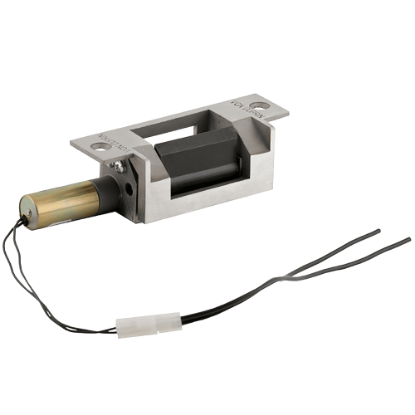
Von Duprin 6211 electric strike for 6200 Series mortise lock openings
The base 6211. The faceplate measures 4-7/8 inches by 1-1/4 inches, which is the dimension to measure before assuming a replacement will drop into the existing frame cutout.

What Is the Difference Between 6211, 6211AL and 6211WF?

The suffix carries the frame the strike was built for, and with it the depth of the hole the frame needs.

The base 6211 and the 6211AL are both listed for aluminium frames with a 1-11/16 inch backbox depth. The 6211WF is the wood frame unit, and its backbox depth is 4-1/2 inches. That is not a small difference. A WF will not go into a prep cut for an AL, and an AL dropped into a WF cutout will sit in a hole far deeper than it needs.

Von Duprin 6211AL electric strike with aluminium frame faceplate
The 6211AL. Same 3/4 inch throw and same faceplate size as the base unit, with the aluminium frame backbox depth of 1-11/16 inches.

Do the three share any parts?

Some, and that is where part numbers earn their keep. A single stocked spring kit covers both the 6211 and the 6216, for example, while faceplates are listed per variant. Shared mechanical parts are the reason a strike that has lost its spring tension does not need a new body.

Von Duprin 6211WF electric strike built for wood frame openings
The 6211WF, built for wood frames in stainless steel. The 4-1/2 inch backbox depth is the figure that decides whether this unit can go where the old one came out.

Is the 6211 Fail Safe or Fail Secure?

Fail secure as standard, with fail safe available as an option. In plain terms, remove the power from a fail secure strike and the door stays locked from outside. Remove it from a fail safe strike and the strike releases.

Neither setting affects getting out. Egress happens through the lock on the inside of the door, which is mechanical, so somebody inside can always leave whatever the strike is doing.

What each mode does when power is removed
ModeOn power lossCurrent draw in normal stateTypical reason to choose it
Fail secureStrike holds the latch, door stays locked from outsideNone until releasedStores, plant rooms, anything that must stay secure in an outage
Fail safeStrike releases, latch can leave the keeperContinuous while lockedDoors that have to open on an alarm or outage

How do you set the mode on a 6211WF?

With a slider. Von Duprin lists a fail safe slider as a separate stocked part for the 6211WF, which means the mode is set by a physical component rather than by a different model number.

Two consequences follow. A strike ordered in one mode can be moved to the other without replacing the unit, and a strike behaving unexpectedly on site may simply have been set the other way at some point in its life. Check the slider before condemning the strike.

Von Duprin 090798 fail safe slider that sets 6211WF electric strike mode
The 090798 fail safe slider for the 6211WF. A stocked part, which is the clue that mode is a field setting rather than a permanent property of the strike.

What Voltage Does a 6211 Need?

The standard listing is 24 VDC, with 12 VDC and 16 VDC available as options. The figure on the strike has to match what the power supply actually delivers at the door, not what it says on the label in the cupboard.

Voltage drop over a long run is the usual culprit when a strike buzzes but does not release. A unit that works on the bench and fails in the frame is rarely faulty. Our electric strike schematic guide covers how the supply, the release device and the strike sit together on a circuit.

Does a fail safe strike draw more current?

In its normal state, yes, because it is held locked by power. A fail secure strike sits idle until somebody releases it. On a site with a battery backed supply, that difference decides how long the supply carries the opening in an outage, so it belongs in the calculation rather than being discovered later.

Which Faceplate Does a 6211 Need?

The listed faceplate for the 6211 family is 4-7/8 inches by 1-1/4 inches. Faceplates are supplied as separate parts, which is useful in two situations: a faceplate damaged by a strike plate removal, and a change of finish on an opening being refurbished.

Faceplates are not universal across the electric strike ranges. A faceplate listed for the 5100 is a 5100 part, not a 6200 part, and the same is true of the 6100. Our Von Duprin electric strike parts guide sets out which part families sit under which series.

Von Duprin 050939 spring kit for 6211 and 6216 electric strikes
The 050939 spring kit, listed for the 6211 and the 6216. Spring kits are one of the few parts shared across two models, which is worth knowing when a strike has gone sluggish rather than dead.

What Parts Fail on a 6211 Electric Strike?

The electronics are the part people suspect first and the part that fails last.

A strike lives in a frame, takes the impact of a closing door several hundred times a day on a busy opening, and holds a latch under load whenever somebody leans on the door. The parts that give up reflect that: springs lose tension, keeper surfaces wear, faceplates get bent by levering, and fixings work loose in the frame.

Reading the symptom back to the likely part
SymptomLikely causeWhat to check
Strike clicks but the door will not push openLatch binding in the keeperDoor alignment and latch throw against the 3/4 inch figure
Keeper does not return cleanlySpring tension lostSpring kit for the 6211 and 6216
No sound and no releaseSupply, release device or wiringVoltage at the strike while the release is pressed
Releases with no signalMode set to fail safe, or supply interruptedSlider position on a WF, and the supply itself
Faceplate no longer sits flushFrame damage or bent faceplateFaceplate as a separate part before replacing the strike

How do you diagnose a 6211 that will not release?

Work from the supply outwards, and measure rather than assume.

Prove the release device is sending a signal. Then measure the voltage at the strike terminals while the release is operated, not at the panel. Then take the load off the strike by pulling the door open slightly and operating the release again, because a latch under side load can hold a keeper that is actually working.

Only when all three have been checked does the strike itself become the suspect. That sequence saves a great many strikes that were never faulty. The same logic applies across the range, and our complete electric strikes guide covers it in more depth.

What Goes Wrong at Installation?

Three things, repeatedly.

The first is backbox depth. The 4-1/2 inch depth of a WF against the 1-11/16 inch depth of an AL is the single most common reason a replacement strike will not go in. Measure the existing cavity before ordering.

The second is latch alignment. The strike is cut into the frame in a fixed position, so the door has to present its latch at the right height. A door that has dropped on its hinges will push its latch against the edge of the keeper.

The third is the mode assumption. A strike fitted fail secure on a door the building expects to release in an alarm is a specification error that will not show up until the day it matters. Our electric strike installation guide covers the sequence in full.

Does the 6211 suit every single door opening?

No. It is listed for mortise locks without deadbolts and for cylindrical locks with a 3/4 inch throw, on a 1-3/4 inch door. A mortise lock with a deadbolt, a different throw, or a pair of doors without a mullion all take the opening outside what this unit was designed for.

Where the opening falls outside those limits, another series usually covers it. Our 6100 Series parts guide and 5100 Series parts guide set out where each one applies.

What Do You Need to Confirm Before Ordering 6211 Parts?

Six things, and five of them are read off the door rather than looked up.

The ordering checklist for a 6211 electric strike
CheckWhy it decides the part
Exact variant stamped on the unit6211, 6211AL and 6211WF are different parts
Frame material and existing cavity depth1-11/16 in. against 4-1/2 in. decides what will fit
Lock type and latchbolt throw3/4 inch throw, mortise without deadbolt or cylindrical
Voltage available at the door24 VDC standard, 12 and 16 VDC options
Mode the opening requiresFail secure standard, fail safe optional
Whether the fault is mechanical or electricalDecides between a spring kit, a faceplate and a new unit

What if the number on the strike is unreadable?

Measure instead. The faceplate dimensions, the cavity depth and the frame material between them narrow the field quickly, and the latch throw on the door confirms whether the opening belongs to this family at all. A photograph of the faceplate and a tape measure reading of the cavity are usually enough for us to confirm the part.

For a broader view of which components exist across the electric strike ranges, our electric strike parts guide lists them by function rather than by model.

About the Author

Security Parts has supplied repair parts for commercial door hardware since 2001, covering Von Duprin, LCN, Schlage, Falcon, Detex and Adams Rite at the component level. Our diagram based lookup exists so a technician can confirm a part before ordering it. This guide was written by the Security Parts team from supplier documentation and the questions our customers bring us.
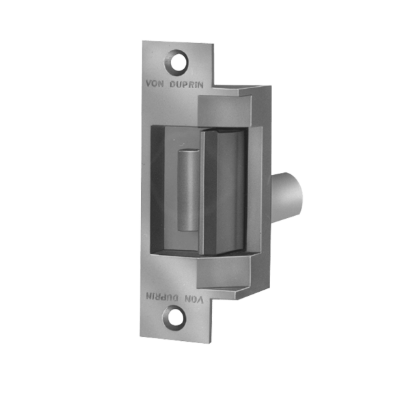
Blog|Security Parts

Blog|Security Parts

Blog|Security Parts