RSS

Blog posts tagged with 'strike'

What Is a Rim Lock? Rim Devices, Cylinders and Strikes

Quick Summary

Key points

  • Rim means surface mounted. A rim lock sits on the face of the door rather than inside a pocket cut into its edge, and that single difference drives everything else about it.
  • On commercial openings the word usually turns up in two places: rim exit devices, and rim cylinders that key them from outside.
  • A rim cylinder does not thread into the lock like a mortise cylinder. It is held by a backplate behind the door and drives the lock through a cam or tailpiece.
  • The strike is part of the specification, not an afterthought. A rim latch needs a strike positioned for a surface mounted device, which is why rim strikes are listed separately.
  • Rim hardware is easier to fit and easier to service than mortise hardware, which is a large part of why it dominates on exit doors.
Rim against the other mounting formats
FormatWhere the body sitsDoor preparation
RimOn the face of the doorThrough holes only
MortiseInside a pocket in the door edgeDeep pocket plus edge cut
CylindricalThrough a bored hole in the faceTwo bored holes
Concealed vertical rodInside the doorFull internal routing

The word rim causes more confusion in commercial door hardware than almost any other term, because it describes a mounting method rather than a product. Ask ten people what a rim lock is and you will get answers ranging from a Victorian box lock to a modern exit device.

Both are correct, and that is the problem. This guide sets out what rim actually means, where it turns up on commercial doors, and what you need to know when ordering parts for it.

What Is a Rim Lock?

A rim lock is a lock whose body is mounted on the surface of the door rather than buried inside it.

Everything else follows from that. The door needs through holes rather than a routed pocket. The lock can be seen and reached without taking anything apart. Servicing happens with the door hanging, not with the lock case pulled out of the edge. And the lock sits proud of the face, which is why rim hardware is specified where appearance matters less than access.

Is a rim lock an old fashioned thing?

The historic surface mounted box lock is where the name comes from, and it still appears on period buildings. In current commercial specification, though, rim describes a mounting method used on thoroughly modern hardware, most visibly on exit devices.

So a rim device on a fire exit in a new building and a rim lock on a church door from 1880 share a principle and nothing else.
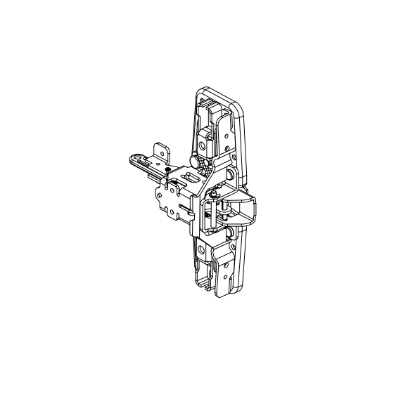
Von Duprin 050026 rim center case kit from a surface mounted rim lock device
A rim center case kit from an exit device. The mechanism sits in a case on the face of the door, which is what makes the device a rim device.

How Is a Rim Lock Different From a Mortise Lock?

A mortise lock lives inside a rectangular pocket cut into the edge of the door. A rim lock lives on the surface. That changes the preparation, the servicing, the security profile and the parts list.

Practical differences that affect the job
ConsiderationRimMortise
Door preparationThrough holesRouted pocket and edge cut
Retrofit to an existing doorUsually straightforwardNeeds the pocket to match
ServicingFrom the face, door in placeCase withdrawn from the edge
Visual intrusionVisible on the faceHidden inside the door
Cylinder fixingBackplate behind the doorThreads into the lock case

Neither format is better in the abstract. A mortise lock buys concealment and a heavier mechanism inside the door. A rim device buys access, simpler preparation and faster servicing. Our comparison of mortise and cylindrical locks covers the third format in the same terms.

Can a rim device replace a mortise lock on the same door?

Sometimes, but it is a door preparation question rather than a hardware question. The mortise pocket does not disappear when the mortise lock comes out, and a rim device fixes through the face in a completely different pattern. Expect a filler plate and new fixing positions rather than a straight swap.

Where Do You Find Rim Hardware on a Commercial Door?

Overwhelmingly on exit doors, as rim exit devices.

A rim exit device latches into a strike mounted on the frame, which makes it the simplest of the four exit device configurations. There are no rods running to the head and sill, no lock case in the door edge, and nothing concealed inside the door. For a single door with a frame to latch into, it is the default choice.

The second place the word turns up is on the cylinder. A rim cylinder is the format used to key a rim device from the secure side. Our rim exit device guide covers the devices themselves in detail.

When is a rim device not the right choice?

On a pair of doors with no mullion, where there is nothing in the middle for a rim latch to engage. On a door that has to latch top and bottom for fire performance. And where the aesthetic specification rules out surface mounted hardware. In each of those, a vertical rod or mortise configuration takes over, as our concealed vertical rod guide covers.

What Is a Rim Cylinder and How Does It Attach?

A rim cylinder is a cylinder designed to be held against the outside face of the door by a backplate fitted on the inside, rather than threaded into a lock body.

The sequence is the clue to how it works. The cylinder goes through the door from outside. The backplate goes on behind it. Screws through the backplate pull the cylinder tight against the face. A tailpiece or cam on the back of the cylinder then reaches into the device and operates it.
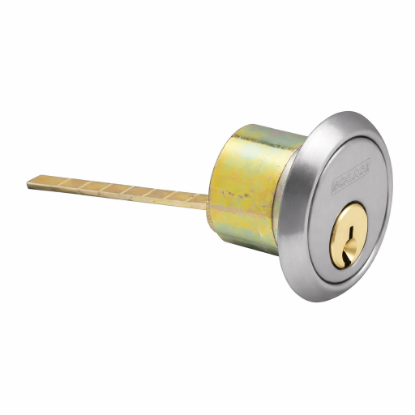
Von Duprin 3216 rim cylinder used to key a rim lock from outside
A rim cylinder. Note that there is no thread on the body for screwing into a lock case, which is the quickest way to tell a rim cylinder from a mortise cylinder.

Why does the backplate matter so much?

Because it is the only thing holding the cylinder in the door. A mortise cylinder is held by its own thread in the lock. A rim cylinder is held by a plate and two screws, and if those loosen the cylinder can turn or move in the hole.

A cylinder that spins when a key is turned is a backplate problem far more often than a cylinder problem, and the backplate is a stocked item in its own right.

Detex 100221 rim cylinder backplate that secures a rim lock cylinder
A rim cylinder backplate. Small, easily left behind during a cylinder change, and the single most common cause of a rim cylinder that will not stay put.

What Does the Cam or Tailpiece Do?

It is the link between the cylinder and the mechanism. Turning the key turns the plug, the plug turns the cam, and the cam moves whatever the device needs moved.

Cams are not universal. The shape, length and orientation have to suit the device the cylinder is driving, which is why cams are listed as separate parts rather than assumed. Fitting a cylinder with the wrong cam gives you a key that turns smoothly and achieves nothing.
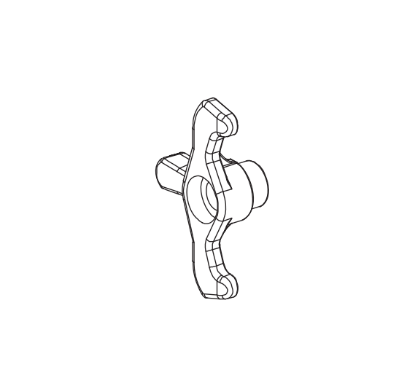
Von Duprin 050501 rim master cam that links a rim cylinder to the lock
A rim cam. The cylinder and the cam are ordered as two decisions, because the keying and the mechanism it drives are independent of each other.

Does the keyway have to match the rest of the site?

If the building runs a key system, yes, and that is a decision made at order time rather than afterwards. A rim cylinder can be supplied to the site keyway so that existing keys work, which is usually preferable to adding another key to a bunch. Our key systems guide covers how that is organised.

What Strike Does a Rim Lock Need?

One positioned for a surface mounted latch, which is not the same as a strike for a mortise or cylindrical lock.

A rim latch approaches the frame from the face of the door rather than from inside its edge, so the strike has to present its opening in a different plane and at a different depth. Rim strikes are listed as their own family for exactly that reason.

On a pair of doors the picture changes again. The inactive leaf has to present something for the active leaf to latch into, which is where double door strikes and mullions come in.
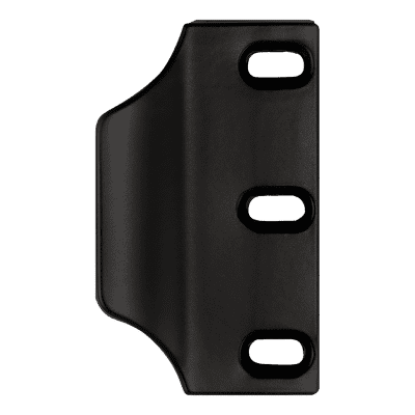
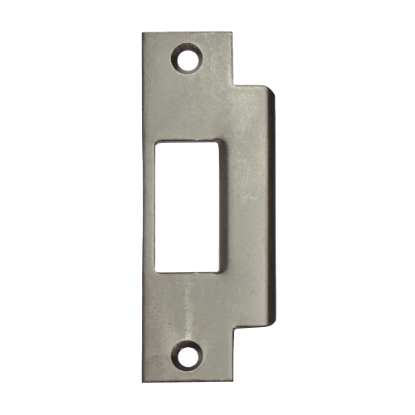
Von Duprin 1609 strike that receives a rim lock latch on a double door
A double door strike for rim and vertical rod devices. On a pair, the strike is part of how the two leaves work together rather than a frame fitting.

Can the strike be electrified?

Yes, and it is one of the most common ways to add access control to a rim device. The electric strike replaces the fixed strike in the frame, the device stays as it is, and the opening gains remote release without touching the door. Our electric strikes guide covers the selection, and our strike plate guide covers the mechanical version.

Is a Rim Lock Secure Enough for a Commercial Door?

On the right door, yes, and it is used on millions of them.

The honest answer has conditions attached. Surface mounted hardware is visible and reachable, so the fixings matter. Through bolting rather than wood screws, a sound backplate behind the cylinder, and a strike that is properly anchored in the frame are what make the difference between a rim device that resists attack and one that does not.

The other factor is that a rim exit device on an exit door is usually on the secure side of the opening with no trim outside at all. There is very little to attack, because there is nothing out there to grip.

What about the cylinder as a weak point?

It is the component most exposed on the outside face, and that is worth designing around. Cylinder guards, recessed trim and the backplate arrangement behind the door all exist to make the cylinder harder to attack. On an opening with a history of attempts, those are the parts to look at rather than the device.

What Fails on Rim Hardware?

Common rim hardware failures and what they mean
SymptomLikely partWhat to check
Cylinder turns in the holeBackplate or its screwsBehind the door, not the cylinder
Key turns, device does not releaseCam or tailpieceCam type against the device
Latch does not reach the strikeStrike position or door dropHinges first, then the strike
Device moves on the doorBaseplate fixingsThrough bolts rather than screws
Latch slow to returnSpring in the latch groupLatch assembly parts

None of those is a device replacement. The point of rim hardware is that the parts are reachable, so the repair is usually a component swap with the door still hanging. Our panic bar parts guide lists the components for the exit devices most of this applies to.

What should you confirm before ordering rim parts?

Five things. The device series, from the stamping. Whether the part is for the device or the cylinder, because they are separate orders. The cam type where a cylinder is involved. The keyway, if the site runs a key system. And the finish, because rim hardware is visible.

If the cylinder format itself is the open question, our mortise cylinder and rim cylinder comparison is the quickest way to settle it, and the exit device terminology guide covers the naming.

About the Author

Security Parts has supplied repair parts for commercial door hardware since 2001, covering Von Duprin, LCN, Schlage, Falcon, Detex and Adams Rite at the component level. Our diagram based lookup exists so a technician can confirm a part before ordering it. This guide was written by the Security Parts team from supplier documentation and the questions our customers bring us.
Mortise Lock Repair: What Fails and What You Can Replace

Quick Summary

Key points

  • Most mortise lock faults are trim, spindle or strike problems rather than faults inside the lock case, and the three are easy to tell apart once the door is open.
  • Test with the door open before anything else. A lock that works perfectly with the door open and fails when it is closed has a frame problem, not a lock problem.
  • The lock case, the trim, the cylinder and the strike are all ordered separately, so a failure in one does not force a complete lockset.
  • Rounded spindles are the single most common mechanical failure, because the spindle takes every turn of the lever and is softer than the hub it drives.
  • A case that is genuinely worn out is worth replacing rather than repairing, and the function code on the existing lock decides which case to order.
Where mortise lock faults actually sit
SymptomUsual locationCase fault?
Lever droops or spins freelySpindle or hubSometimes
Key turns but nothing movesCylinder or camRarely
Latch sluggish returningCase, or dirt in the caseOften
Will not latch when door closesStrike alignmentNo
Deadbolt throws but will not retractBinding against the strikeRarely

Mortise locks are built to be serviced. The case comes out of the door, the trim comes off the faces, the cylinder unscrews and the strike unscrews from the frame. Every one of those is a separate part, which is why a mortise lock repair is usually a component job rather than a replacement job.

What makes these calls go wrong is diagnosing from the symptom instead of from the door. This guide covers how to find the actual fault, what can be repaired, what cannot, and what to confirm before ordering.

What Usually Fails Inside a Mortise Lock?

Less than people expect. The case is a steel box full of levers and springs, and on a normal opening it will outlast several sets of trim.

What fails first is whatever is softest and most used. The spindle, because it transmits every turn of the lever. The hub, because the spindle wears into it. Springs, because they cycle constantly. And the latch bolt face, because it rubs against the strike every time the door closes.

Does a mortise lock wear out from the outside in?

Usually, yes. Damage arrives through the trim, the lever and the key, and works inwards. That is why the parts closest to the user fail first and the parts deepest in the case last the longest, and why a lock that feels rough at the lever is more often a trim job than a case job.

Schlage L283-112 mortise lock case for L9000 Series mortise lock repair
A basic mortise lock case. The case is supplied on its own, so a worn out mechanism does not drag the trim, cylinder and strike into the order with it.

How Do You Tell a Lock Fault From a Door Fault?

Open the door and work the lock in free air.

With the door open, operate the lever, throw and retract the deadbolt, and turn the key through its full travel. Everything the lock does with the door open is the lock. Anything that only goes wrong when the door is closed belongs to the frame, the strike or the door itself.

That single test resolves a large share of mortise lock calls before any tools come out, and it stops perfectly good locks being replaced because a door had dropped a few millimetres on its hinges.

The door open test and what each result means
Door openDoor closedWhere the fault is
Works correctlyFailsStrike, frame or door alignment
Rough or stickyAlso roughInside the lock, or the trim driving it
Lever free, latch stillSameSpindle or hub
Key turns looselySameCylinder or cam
Deadbolt throws freelyDeadbolt jamsStrike cutout position

What if the fault is intermittent?

Intermittent faults on an otherwise sound lock are usually environmental. A timber door that swells in humid weather, a frame that moves with temperature, or an exterior opening where debris is finding its way into the case. Note when it happens rather than only what happens, because the pattern is the diagnosis.

Can a Mortise Lock Be Repaired, or Does It Need Replacing?

Both are routine. The question is which part has failed and how much of the rest has aged alongside it.

Repair is the right route when a specific component has failed on a lock that is otherwise sound: a spindle, a spring, a trim plate, a cylinder, a strike. Replacement of the case makes sense when the mechanism itself is worn, when several parts have already been changed, or when the function needs to change.

When does the function decide the answer?

Whenever the room has changed use. A store that becomes an office, or a classroom that needs a different locking behaviour, is a function change rather than a repair. The lock case carries the function, so that is a case order, and the trim and cylinder may well carry over.

Our lock function codes guide covers how the function is expressed in the model number, which matters because two visually identical locks can behave completely differently.

Schlage L283-133 mortise lock case for L9050, L9060, L9070 and L9071 functions
A lock case listed against specific function codes. The case is where the function lives, which is why a function change is a case order rather than a trim order.

How Do You Get the Lock Case Out Without Damaging the Door?

In order, and with the door supported.

Take the trim off both faces first, then the cylinder, then the faceplate screws at the door edge. The case then withdraws from the mortise pocket. Forcing a case out before the cylinder is clear is how cams get bent and how pocket edges get torn.

On a heavy door, wedge the leaf before you start. A door that swings while you have the case half out will take the weight of the case on the pocket edge.

What should you check while the case is out?

Four things, because the pocket is only open once. The condition of the mortise pocket itself, the state of the wiring if the lock is electrified, whether the faceplate is flat and undamaged, and whether the cylinder threads are clean. Finding any of those later means taking the lock out again.

If the trim is also being changed, our trim parts guide covers what is supplied separately on the face of the door.

What Does a Worn Spindle or Hub Do to the Lock?

It produces the most recognisable fault on any mortise lock: the lever turns, and nothing happens.

The spindle is the shaped bar that carries the turn from the lever through the door into the lock hub. It is the part under the most direct load, and it rounds off at the corners over time. Once it has rounded enough, it spins inside the hub instead of driving it.

A lever that turns a few degrees and then goes slack, or one that works intermittently depending on how hard you turn, is almost always a spindle. Replacing the lock case for that symptom is a common and expensive mistake.

Von Duprin 967480 lever spindle that carries the turn into a mortise lock hub
A lever spindle. The corners carry the whole load of the turn, so this is the part to inspect before suspecting anything inside the case.

How do you check a spindle without stripping the door?

Take one lever off and look at the spindle end. Sharp, square corners mean the spindle is sound. Rounded or twisted corners mean it has been slipping, and the hub it drives needs looking at as well, because a worn spindle wears the hub it turns in.

Replacing a rounded spindle and leaving a worn hub gives you a repair that fails again quickly. If both are worn, the case goes on the order with the spindle.

Why Does the Deadbolt Throw but Not Retract?

Nearly always because it is under load from the strike rather than because the lock has failed.

When a door has dropped, or the frame has moved, the deadbolt enters its cutout at an angle and jams against the edge. The key then has to overcome that binding as well as turning the mechanism, and at some point it will not.

The test is simple. Open the door, throw the deadbolt and retract it. If it moves freely in free air, the lock is fine and the frame needs attention. Our mortise lock strike guide covers how the strike is dimensioned for the bolt it receives.

Can you force a jammed deadbolt?

You can, and it is how bolts get bent and keys snap in cylinders. Lift or push the door slightly to take the load off the bolt first, then turn the key. If it releases, you have both diagnosed and temporarily solved the problem in one movement.

Von Duprin 575 mortise lock strike for a mortise latch and deadbolt
A mortise lock strike. The strike receives both the latch and the bolt, so a strike in the wrong position creates two separate symptoms that look like two separate faults.

What Parts Are Stocked Separately for Mortise Lock Repair?

Enough that a complete lockset is rarely the answer.

Mortise lock components supplied as separate items
PartWhat it doesTypical reason to order it
Lock caseCarries the mechanism and the functionWorn mechanism or a function change
SpindleDrives the hub from the leverRounded corners, lever spinning
Trim and leverUser facing hardwareImpact damage or accessibility change
CylinderKeyingRekeying, lost keys, worn plug
StrikeReceives latch and boltAlignment, damage, frame change
Screw packRefittingWorn or missing fixings after service

Screw packs matter more than they look. Refitting a serviced lock with mixed fixings from the van is how the next technician finds a lock that has worked loose in its pocket.

Schlage 47279023 L9000 screw pack for refitting a repaired mortise lock
A screw pack listed against a specific lock series. Fixings are specified for the hardware, which is why they are stocked rather than substituted.

Is the cylinder part of the lock?

No, and that is useful. The cylinder is a separate item with its own cam, which means rekeying an opening never touches the lock case. Our mortise cylinder and rim cylinder comparison covers how the two differ and why the cam matters.

What Should You Confirm Before Ordering Repair Parts?

Six things, and they come off the door rather than out of a catalogue.

The lock series, from the stamping on the case or faceplate. The function, because it decides the case. Which component has actually failed, established by the door open test. The handing, where the part is handed. The finish, because visible parts have to match the rest of the opening. And whether the lock is electrified, because that changes both the case and the wiring arrangement.

What if the lock is unmarked?

Measure and photograph. The backset, the case dimensions, the faceplate size and the arrangement of the latch and bolt together narrow the family quickly. A photograph of the case out of the door, with a tape measure across the faceplate, is usually enough to confirm the part.

For a wider view of the range, our mortise lock parts guide lists components by function, and the commercial mortise locks guide covers how these locks are specified in the first place. If you are still establishing which family of lock is on the door, start with mortise locks versus cylindrical locks.

About the Author

Security Parts has supplied repair parts for commercial door hardware since 2001, covering Von Duprin, LCN, Schlage, Falcon, Detex and Adams Rite at the component level. Our diagram based lookup exists so a technician can confirm a part before ordering it. This guide was written by the Security Parts team from supplier documentation and the questions our customers bring us.
Blog|Security Parts

Blog|Security Parts

Blog|Security Parts