 Trusted Since 2001


Quick Summary
Key points
- A door closer not closing all the way is a force problem at the end of the swing, and the cause is usually outside the closer.
- Work from the door inwards: hinges, seals, strike and latch first, then the closer settings, then the closer itself.
- The latch speed valve is the most common adjustment, but only if the door is arriving and stalling rather than never getting there.
- A closer that no longer responds to its valves has usually lost fluid, and no amount of adjustment will recover it.
- On a fire rated opening this is a failure rather than a nuisance, because the door has to latch under its own closer every time.
| Where it stops | Likely cause | First check |
|---|---|---|
| Last inch, latch touching strike | Latch speed or friction at the strike | Strike alignment, then latch valve |
| Several inches out | Seals, carpet or a dropped leaf | Watch the gap along the frame |
| Anywhere, inconsistently | Hinge wear or frame movement | Lift test at the latch edge |
| Only in cold or wet weather | Seasonal seal and frame change | Compare against a dry day |
| Everywhere, very slowly | Closer losing fluid or wrong size | Response to the sweep valve |
In This Guide
- What Does Where the Door Stops Tell You?
- What Should You Rule Out Before Adjusting Anything?
- Which Valve Governs the End of the Swing?
- Can the Arm Be the Reason the Door Stops Short?
- Could the Closer Simply Be Too Small?
- What Changes on a Pair of Doors?
- Why Does This Matter More on a Fire Door?
- What Should You Check Before Ordering Parts?
- About the Author
A door closer not closing all the way is one of the most common faults on a commercial opening, and one of the most commonly misdiagnosed. The closer is the visible piece of equipment, so the closer gets adjusted, and the door carries on stopping short.
This guide covers how to read where the door stops, what to rule out before touching an adjuster, which valve actually governs the end of the swing, and when the closer really is the problem.
What Does Where the Door Stops Tell You?
Almost everything, if you watch it rather than the closer.
Release the door from about thirty degrees and let it close with nobody touching it. Watch the gap between the leaf and the frame all the way round as it arrives. A door stopping with an even gap is running out of energy. A door stopping with the gap closed at the top and open at the bottom is being held off by something, and that something is usually the leaf itself rather than the closer.
Repeat from ninety degrees and from full open. A door that closes from ninety but not from thirty has a latch speed or friction problem near the frame. A door that fails from every position has a force problem through the whole swing.
Why start from thirty degrees?
Because it is the hardest test. From wide open the door has momentum to carry it through small obstructions. From thirty degrees there is very little stored energy left, so anything absorbing force shows up immediately. A door that latches reliably from thirty degrees will latch from anywhere.
What Should You Rule Out Before Adjusting Anything?
Everything on the opening that absorbs energy, because the closer is the last thing in the chain.
Start with the hinges. Lift the leaf at the latch edge and watch for movement at the hinge side. A dropped door catches the frame somewhere in the last part of the swing, and no closer setting fixes geometry.
Then the seals. Compression seals and sweeps are designed to be squeezed, and when they stiffen with age or cold they absorb a surprising amount of the closing force. Then the floor covering, which can catch a leaf that used to clear it. Then the latch and strike, which is where most of these faults actually live. Our strike alignment guide covers that last one in detail.
| Check | How | What a failure looks like |
|---|---|---|
| Hinge wear | Lift the latch edge | Visible movement, door binds at the head |
| Seals | Close the door slowly by hand | Resistance before the frame is reached |
| Floor covering | Look at the bottom edge through the swing | Contact or a worn arc in the carpet |
| Latch and strike | Mark the latch and close | Mark lands on the lip, not in the cutout |
| Frame condition | Sight along the stop | Bowing or a strike that has moved |
How much difference can a seal really make?
Enough to stop a correctly set closer on a light door. The last few inches of the swing are where the closer has the least energy and the seal has the most compression, so the two work against each other at exactly the wrong moment. A door that latches in summer and not in winter is usually telling you this.
Which Valve Governs the End of the Swing?
The latch speed valve, and only the last few inches of travel.
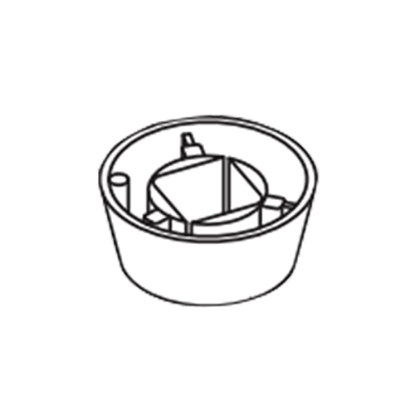
Most surface closers divide the closing cycle into a sweep and a latch region. The sweep valve controls the long middle part. The latch valve controls the final approach, where the latch has to be driven into the strike. If the door is arriving at the frame and stalling there, the latch valve is the control that matters.
Open it slightly to let the door complete the swing faster and with more authority, in small increments, testing from thirty degrees each time. If opening it fully does not get the door latched, stop. The valve is not the problem and continuing will simply produce a door that slams once the real cause is fixed. Our closer adjustment guide covers each valve in turn.
What if the valves do not change anything at all?
That is a diagnosis in itself. Valves meter fluid, so a valve that produces no change is a valve with no fluid behind it. Check for oil at the shaft, at the body joint and on the door face below the unit. Our guide to a closer leaking oil covers what follows if you find it.
Can the Arm Be the Reason the Door Stops Short?
Yes, and it is the cause most often overlooked on a door that has never worked properly.
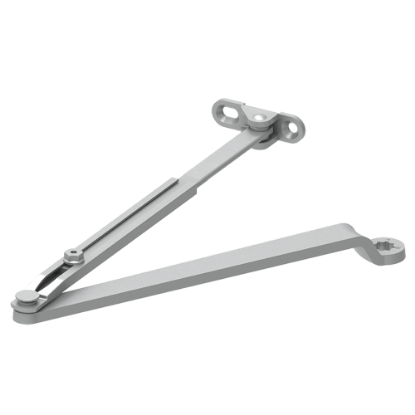
The arm converts spring force into movement at the leaf, and how much of that force arrives depends on geometry. A parallel arm on the push side delivers less closing force near the frame than a regular arm on the pull side. If a closer was moved, or fitted in a position the door was not designed for, the geometry may simply not deliver enough force at the end of the swing.
The giveaway is a door that has never latched reliably since installation, as opposed to one that used to and stopped. Wear produces gradual change; geometry produces a problem that was there on day one. Our parallel arm guide covers how the mountings compare.
Does the arm need adjusting as well as choosing?
It does. Most arms are set at installation so the forearm sits at the correct angle to the door when closed, and that preload affects how much force reaches the leaf at the end of the swing. An arm that has been refitted without resetting the preload is a common reason a door stopped latching after unrelated work.
Could the Closer Simply Be Too Small?
On a heavy or exposed door, frequently.
Closer size is matched to door width and weight, and a unit that is undersized will behave exactly like this: adequate through the middle of the swing, out of authority at the end. It is especially common where a door was replaced with a heavier leaf and the original closer was reused, or where an exterior door faces wind pressure the original specification did not account for.
An adjustable spring closer may have range left, which is the first thing to check. A fixed size closer does not, and no adjustment will create force the unit cannot produce. Our closer sizing guide covers matching the unit to the opening, and our spring tension guide covers using the range you have.
| Sign | Why it points at size |
|---|---|
| Never latched since the door was changed | Leaf got heavier, closer did not |
| Fails only on windy days | External pressure exceeds the margin |
| Spring already at maximum | No range left to use |
| Door is wide and solid | Width multiplies the force needed |
| Valves respond normally | Hydraulics are fine, force is not |
Is winding the spring up the right answer?
Only within reason, and only after friction has been dealt with. Spring tension is also what somebody feels when they open the door, so solving a latching problem by raising it can take an accessible opening outside acceptable opening force. Our door clearance guide covers those limits.
What Changes on a Pair of Doors?
Sequence, and the fact that one leaf can prevent the other from closing at all.
On a pair with an astragal, the inactive leaf has to close first. If the active leaf arrives early it lands on the astragal and stops, which looks exactly like a closer problem on the active leaf. The actual fault is that the inactive leaf is slow, or that a coordinator is not doing its job.
Test them separately. Hold the active leaf open, let the inactive one close, then release the active one. If each leaf latches properly on its own, the closers are fine and the sequence is the fault.
Does a mullion change this?
It removes the problem, because each leaf closes against the mullion rather than against the other leaf. That is one reason pairs with removable mullions are simpler to maintain. Our mullion guide covers how those openings are arranged.
Why Does This Matter More on a Fire Door?
Because latching is the function, not a convenience.
A fire rated assembly depends on the leaf closing from any position and latching positively under its own closer with nobody helping. A door that stops an inch short looks closed and is not. In a fire that gap is the difference between a barrier and an opening.
It is also the reason the thirty degree test matters on rated openings specifically. A door that only latches when pushed, or when released from wide open, has not met the requirement. Our fire rating guide covers what else depends on the same listing.
What should be recorded after the repair?
That the door was released from thirty, ninety and full open and latched unaided from each, along with what was changed to achieve it. On a rated opening that record is as much a part of the job as the repair.
What Should You Check Before Ordering Parts?
Whether you are buying a closer, an arm, or neither.
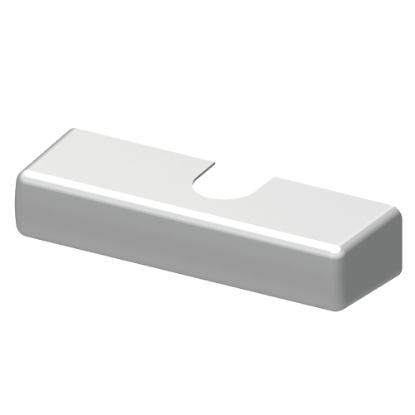
Confirm the closer model from the body or cover, the arm type and mounting, the door width, weight and whether it is exterior, the condition of hinges and seals, and whether the valves still respond. That last point separates a worn out unit from a healthy one on a difficult door.
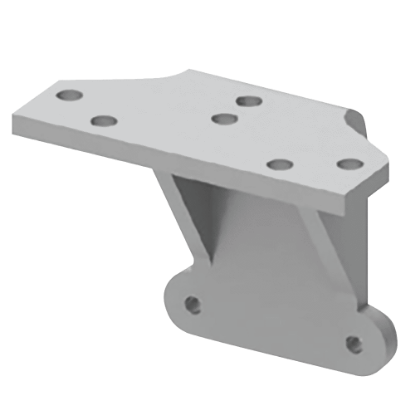
If friction turned out to be the cause, the order is likely seals, hinges or a strike rather than anything from the closer. Fixing the closer in that situation leaves the original problem in place with a new unit attached to it. Our LCN closer parts guide covers how arms, shoes and brackets are listed.
How do you avoid the same callout in six months?
Fix the cause rather than the symptom, and note what you found. A door that stops short because of a stiff seal will do it again next winter if the seal is left in place and the closer is simply wound up to overcome it. Our maintenance checklist covers catching these before they become callouts.
About the Author
Security Parts has supplied repair parts for commercial door hardware since 2001, covering Von Duprin, LCN, Schlage, Falcon, Detex and Adams Rite at the component level. Our diagram based lookup exists so a technician can confirm a part before ordering it. This guide was written by the Security Parts team from supplier documentation and the questions our customers bring us.