 Trusted Since 2001


Quick Summary
Key points
- Door handing is read from the outside of the door, which is the street side, the corridor side or the side a key is used from. Stand there, note which side the hinges are on and whether the door swings away from you or toward you.
- Hinges on the left and the door swings away is left hand (LH). Hinges on the right and it swings away is right hand (RH). If the door swings toward you, add the word reverse: LHR or RHR.
- Most doors with an exit device swing out in the direction of travel, so seen from the outside they are almost always LHR or RHR. That is why exit device parts are so often listed in those two hands.
- Plenty of commercial hardware is non-handed or field reversible, including many rim exit devices and some closers and mortise locks. Lever trim, some center cases and some lock chassis are handed and must be ordered in the right hand.
- Handing mistakes are one of the most common reasons a correct part number still arrives wrong. Confirm the hand from the outside, write it down with a photo, and check it against the part listing before you order.
| Hinges are on the | Door swings | Handing | Abbreviation |
|---|---|---|---|
| Left | Away from you | Left hand | LH |
| Right | Away from you | Right hand | RH |
| Left | Toward you | Left hand reverse | LHR |
| Right | Toward you | Right hand reverse | RHR |
In This Guide
- What Is Door Handing?
- How Do You Determine Door Handing?
- What Is the Difference Between a Left Hand and a Right Hand Door?
- What Do LHR and RHR Mean on Commercial Doors?
- How Do You Hand a Pair of Doors?
- Which Commercial Door Hardware Is Handed?
- What Goes Wrong When Door Handing Is Misread?
- What Should You Confirm Before Ordering Handed Parts?
- About the Author
A technician orders a replacement lever for an exit device, the part number matches the device, and the lever still arrives pointing the wrong way. Nothing was wrong with the catalog. The door was read from the wrong side.
Door handing is one of the simplest ideas in door hardware and one of the most expensive to get wrong. This guide explains how to read it the way the hardware industry does, why the outside of the door is the reference point, which commercial parts actually care about handing, and what to check before you place an order.
What Is Door Handing?
Door handing describes which side a door is hinged on and which way it swings, named from one agreed viewpoint. It turns a physical arrangement into a short code, LH, RH, LHR or RHR, that a supplier and an installer can both understand without seeing the door.
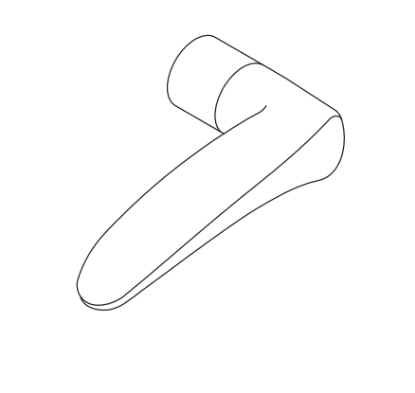
The code matters because many parts are built in mirror image versions. Levers are made so their free end returns toward the hinge side, so a lever made for a right hand reverse door would point the wrong way, toward the door edge, on a left hand reverse door. A lock case built for one hand can put its latch bevel facing the wrong way on the other. Handing is how you tell a supplier which mirror image you need.
Is door handing the same as door swing?
Not quite. Swing only tells you whether the door opens in or out. Handing combines the swing with the hinge side and fixes the viewpoint, so the same door always gets the same answer no matter who reads it. Two people standing on opposite sides of a door will agree on its handing only if both of them use the outside as the reference.
How Do You Determine Door Handing?
Use the same four steps every time, and do them standing on the outside of the door.
- Find the outside. On an exterior door it is the street side. On a room door it is the corridor side. On a door between two rooms it is the side a key would normally be used from, which is usually the more public side.
- Face the door from the outside. Stand square to it so the hinges are clearly on your left or your right.
- Note the hinge side. Hinges on your left start the code with L. Hinges on your right start it with R.
- Watch the swing. If the door opens away from you, the hand is LH or RH. If it opens toward you, it is a reverse hand: LHR or RHR.
You will also hear the term reverse bevel. The lock edge of a commercial door is usually beveled slightly so it clears the frame as it swings, and on a door that swings toward the outside that bevel faces the opposite way. In practice, reverse bevel and reverse hand describe the same situation.
Why is the outside the reference point?
Because it is the secure side, and most handed hardware is defined by what happens on that side: where the key goes, which lever is locked and which way a latch bevel has to face to close against the strike. Reading from the inside flips the answer. An RHR door read from the inside looks like a left hand door, which is exactly how the wrong lever gets ordered.
What if you cannot tell which side is the outside?
Look at the hardware that is already there. The side with the keyed cylinder or the locked lever is the outside. On a door with an exit device, the push bar is on the inside, so the outside is the pull side. If the door has no lock at all, use the corridor or the more public space and note your assumption on the order.
What Is the Difference Between a Left Hand and a Right Hand Door?
Only the hinge side. A left hand door, seen from the outside, has its hinges on the left and swings away from you. A right hand door has its hinges on the right and swings away from you. Both open into the room or building.
The same rule extends to the reverse hands. A left hand reverse door has its hinges on the left and swings toward you, so it opens out of the room or building. A right hand reverse door has its hinges on the right and swings toward you.
| Hand | Opens | Where you usually see it | Hardware that commonly needs the hand |
|---|---|---|---|
| LH | Inward, away from the outside | Office and classroom doors off a corridor | Some lock chassis, closer arms on the pull side |
| RH | Inward, away from the outside | Office and classroom doors off a corridor | Some lock chassis, closer arms on the pull side |
| LHR | Outward, toward the outside | Exit doors, stair doors, exterior egress doors | Exit device lever trim, some center cases |
| RHR | Outward, toward the outside | Exit doors, stair doors, exterior egress doors | Exit device lever trim, some center cases |
What Do LHR and RHR Mean on Commercial Doors?
LHR means left hand reverse and RHR means right hand reverse. Both describe a door that swings toward you when you stand on the outside. On commercial buildings those are the doors people leave through, because exit doors generally swing in the direction of egress.
That one fact explains a lot of catalog listings. A door fitted with an exit device has the push bar on the inside and opens outward, so from the outside it is always a reverse hand. When you see exit device trim, levers and kits offered only as LHR and RHR, that is not a gap in the range. It is because exit devices almost never sit on LH or RH doors.
Is a reverse bevel door always an outswing door?
Yes, when read from the outside. Reverse bevel describes the lock edge bevel on a door that swings toward the person standing on the outside. On most commercial buildings that means an outswing door, although the same rule applies to any door whose outside happens to be on the side it opens toward.
How Do You Hand a Pair of Doors?
A pair is named by its active leaf, the door that carries the lock or the latching exit device and opens first. Stand on the outside, pick out the active leaf and read it exactly as you would a single door. The inactive leaf is the opposite hand by definition.
Pairs add two practical checks. First, confirm which leaf is active, because on some pairs both leaves carry exit devices and both are active. Second, note whether there is a mullion between the leaves, since a removable mullion turns the pair into two single openings for hardware purposes, each with its own hand.
Which Commercial Door Hardware Is Handed?
Less than people expect. Manufacturers have spent years making hardware non-handed or field reversible so that one part covers both hands. The trouble is that the exceptions are scattered across every product family, so you cannot assume either way.
Exit devices
Many rim exit devices are non-handed. The Von Duprin 98/99 rim device ships non-handed from the factory in most configurations and becomes handed when options such as SD, -2 or SS are specified. On the Von Duprin 88 rim device the EO, TP and NL trim functions are field reversible, while the K and L outside trim functions are not, so their center case kits are listed by hand.
Exit device trim
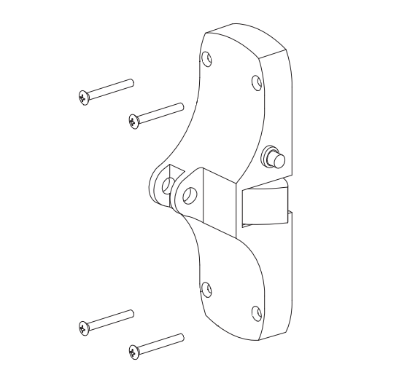
Lever trim on an exit device is handed. Handing has to be specified as RHR or LHR unless you are ordering an exit only configuration with no outside trim. If you need a refresher on how lever trim works and which functions exist, see our guide to Von Duprin 996L lever trim.
Mortise locks
Most modern Grade 1 mortise locks are field reversible, but not all of them and not for every function. Schlage L Series locks are non-handed for most standard functions, and the handing is changed with a handing screw. Falcon MA Series locks need the hand specified for most keyed functions because the chassis itself is handed. Some institutional locks also require handing at the time of order.
Cylindrical locks
Most cylindrical locksets are field reversible, and where a lock is handed the label inside the chassis shows it alongside the series, function and finish. When ordering a chassis, armor front, latchbolt, spindle or cylinder cam, the function code, the door handing and the manufacture date are all worth confirming.
Door closers
Many modern closer bodies are non-handed. The LCN 4040XP is a good example: one non-handed, non-sized body covers sizes 1 through 6. What changes with handing is the arm and the mounting position, regular arm on the pull side, parallel arm on the push side, so always confirm the hand and the mounting side when ordering an arm assembly. Our guide to parallel arm door closers covers the mounting side in more detail.
Electric strikes, alarms and operators
Many electric strikes are designed to be field reversible, but faceplates and some models are not, so check the listing for the specific strike. Some door alarms handle the problem electronically: the Detex EAX-300 door prop alarm senses where the door magnet is and sets the correct handing itself. Automatic operator arms, by contrast, need both the hand and the push or pull side confirmed.
| Hardware | Usually handed? | What to confirm |
|---|---|---|
| Rim exit device, standard configuration | Often non-handed | Options such as SD, -2 or SS can make it handed |
| Exit device lever trim | Yes | LHR or RHR, plus the trim function |
| Exit device center case with K or L trim | Often yes | Hand and the device series |
| Mortise lock case | Usually field reversible | Function, and whether the chassis is handed for that function |
| Cylindrical lock chassis | Usually field reversible | Label on the chassis, function and manufacture date |
| Door closer body | Often non-handed | Arm type, mounting side and size |
| Closer or operator arm assembly | Often yes | Hand plus push or pull side mounting |
What Goes Wrong When Door Handing Is Misread?
The same few mistakes account for most returns.
- Reading from the inside. An RHR exit door read from the inside looks like a left hand door. The fix is simple: always stand on the outside.
- Treating swing as handing. Knowing the door opens out tells you it is a reverse hand, but not whether it is LHR or RHR.
- Assuming the old part was right. A lever that has been forced onto the wrong hand, or a closer arm fitted on the wrong side, can make the existing hardware a poor guide.
- Forgetting the inactive leaf. On a pair, the inactive leaf is the opposite hand to the active leaf, which matters for flush bolts, coordinators and any second exit device.
- Ignoring options that change the hand. A device that is normally non-handed can become handed once an option is added, so check the full model string, not only the series.
If the hardware is already on the door, a clear photograph from the outside showing the hinges and the swing removes almost all of this risk. Our exit device installation guide also shows how the hand affects the way a device is fitted.
What Should You Confirm Before Ordering Handed Parts?
Five things settle almost every order. The hand, read from the outside. The full model string of the device, lock or closer, including option letters. The function, because it can decide whether a part is handed at all. The finish. And for anything on a pair, which leaf the part is for.
If you are replacing parts on an exit device, start from the exit device parts section and use the diagram for your series. For locks, the mortise lock parts and cylindrical lock parts sections list handed components separately, and the door closer parts section covers arms by mounting type.
About the Author
Security Parts has supplied repair parts for commercial door hardware since 2001, covering Von Duprin, LCN, Schlage, Falcon, Detex and Adams Rite at the component level. Our diagram based lookup exists so a technician can confirm a part before ordering it. This guide was written by the Security Parts team from supplier documentation and the questions our customers bring us.
If you are not sure which hand a door is, contact us with a photograph taken from the outside that shows the hinges and the direction of swing, and we will help you match it to the right part.