 Trusted Since 2001





Quick Answer
In everyday commercial door hardware practice, "exit device," "panic bar," and "panic hardware" are commonly used to refer to the same category of hardware. These are door-mounted assemblies with a horizontal push element that releases a latch when pressed, allowing fast single-motion egress. The terms originate from different codes and professional contexts, which is why buyers encounter all three in specifications, purchase orders, and field conversations.
That said, terminology matters in two specific situations: when comparing standard panic hardware to fire exit hardware on a fire-rated door assembly, and when reading code requirements that use one term but not another. This guide explains how the terms are used in practice, where the important distinctions lie, and how to confirm which device type applies to your opening.
Where the Terms Come From
The three terms most buyers encounter are "panic hardware," "exit device," and "panic bar." Each comes from a different context.
"Panic hardware" is the term used in NFPA 101, the Life Safety Code. NFPA 101 defines panic hardware as a latching device that allows the door to open from the egress side by applying force to a bar or panel extending at least half the door width, not requiring the use of a key, special knowledge, or effort to operate.
"Exit device" is the term used in the International Building Code (IBC). The IBC references exit devices in its egress requirements, describing devices that allow doors to be opened from the egress side without a key, special tool, or prior knowledge.
"Panic bar" is an informal industry shorthand that refers to the horizontal push bar or crossbar that is the most visible component of the device. In field use, "panic bar" is widely used to refer to the complete exit device assembly, not just the bar component. You will encounter all three terms used interchangeably in specifications, purchase orders, and product catalogs.
For most commercial door hardware decisions, the key understanding is this: whether the project documents say "panic hardware" or "exit device," they are generally describing the same product category. The applicable code for your jurisdiction and the fire rating status of the door determine the specific device requirements.
What Is an Exit Device
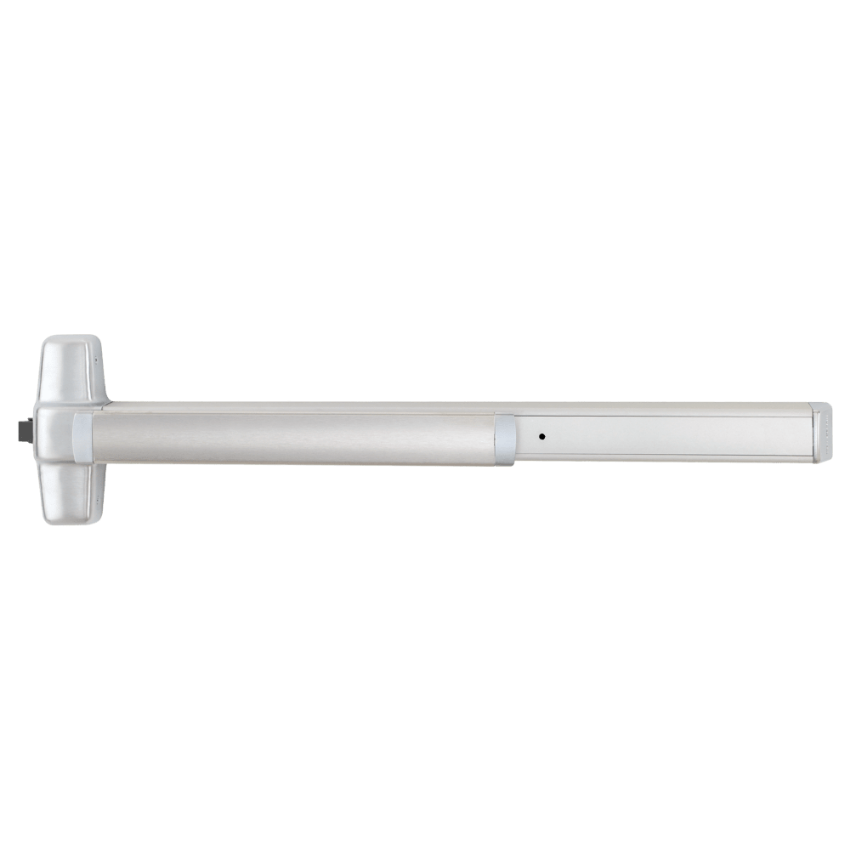
Von Duprin 98/99EO Rim Exit Device, Exit Only. A standard panic hardware device for non-fire-rated commercial egress doors. View product page.
An exit device is a complete door hardware assembly designed to allow fast, one-motion egress from a building or area. The device is mounted on the door and consists of a push element (bar, crossbar, or touch pad), an internal latch mechanism, and a chassis that transmits the push motion to the latch. When a person presses the bar, the latch retracts and the door opens. No key, prior knowledge, or special effort is required.
Exit devices are used on commercial egress doors in office buildings, schools, healthcare facilities, retail spaces, government buildings, and any other occupancy type where egress hardware is required to meet life safety codes. The device category includes rim exit devices, surface vertical rod (SVR) devices, concealed vertical rod (CVR) devices, and mortise exit devices. Each type suits different door construction and frame conditions.
For a full explanation of exit device parts and component categories, see the exit devices parts guide and the commercial exit device parts guide.
What Is a Panic Bar
A panic bar is a common informal name for the horizontal bar or crossbar element that extends across the door on an exit device. When someone says "panic bar," they may mean the complete exit device assembly, or they may specifically mean the push bar component that the occupant presses to open the door.
In product catalogs, the push bar is listed as a component: for example, a push bar assembly for a narrow stile exit device is a separate orderable part that replaces the bar element while keeping the existing chassis and mechanism in place. In field conversation and specifications, "panic bar" almost always refers to the complete exit device assembly.
The push element of an exit device is not always a bar. Some devices use a touchpad or push pad rather than a full crossbar. Regardless of push element style, the device functions on the same principle: one-motion egress without a key.
Exit Device Types by Mounting Configuration
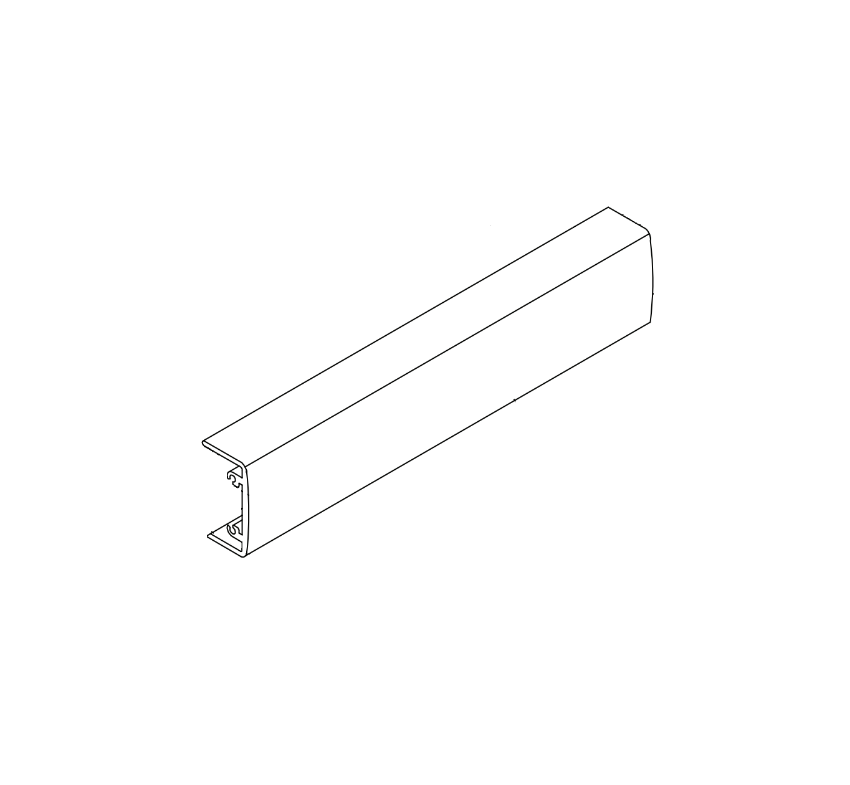
Adams Rite 8099 Push Bar Assembly for narrow stile door applications. View product page.
Exit devices are grouped by how they mount to the door and frame and how many latch points they engage. Choosing the right type depends on the door construction, frame material, and project requirements.
Rim Exit Device
A rim exit device mounts on the surface of the door and engages a frame-mounted strike through a single latch point. The chassis attaches to the door face and the latch projects into the strike on the door frame. Rim devices are the most common type and suit most standard commercial steel door and frame applications. They are available in standard panic hardware and fire exit hardware configurations.
Surface Vertical Rod (SVR) Exit Device
An SVR exit device uses external rods that run vertically on the door surface from the device chassis to top and bottom latches. When the bar is pressed, all latch points retract simultaneously. SVR devices suit wide or heavy doors where additional latch points improve security and door stability. The external rods are visible on the door surface.
Concealed Vertical Rod (CVR) Exit Device
A CVR exit device uses internal rods concealed within the door itself, running from the device chassis to top and bottom latches in the door edge. CVR devices require a door prepared with internal rod pockets. They provide a cleaner appearance than SVR devices because the hardware is not visible on the door surface. CVR devices are common in high-end or aesthetic applications where surface hardware is undesirable.
Mortise Exit Device
A mortise exit device integrates with a mortise lock body that is recessed into the door stile. The panic bar retracts the mortise latch when pressed. Mortise exit devices are used on thicker doors and in applications where the additional trim and function options of a mortise lock body are required. They are less common than rim or vertical rod devices in standard commercial applications.
| Device Type | Latch Points | Rods Visible | Typical Application |
|---|---|---|---|
| Rim | 1 (frame strike) | No | Standard commercial steel doors and frames |
| SVR | 3 (top, bottom, latch) | Yes -- external rods | Wide or heavy doors, higher security requirements |
| CVR | 3 (top, bottom, latch) | No -- concealed in door | Aesthetic applications, doors prepared for concealed rods |
| Mortise | 1 (mortise latch) | No | Thick doors, applications requiring mortise lock functions |
For guidance on how to install an exit device in rim, SVR, or CVR configuration, see the exit device installation guide.
Panic Hardware vs Fire Exit Hardware: An Important Distinction
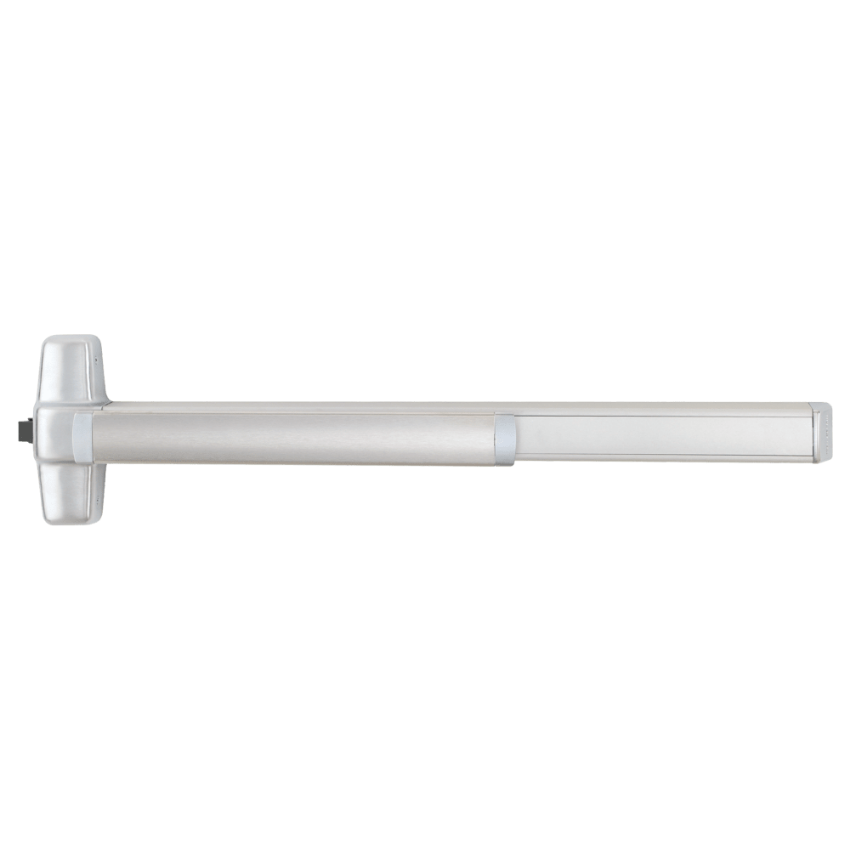
Von Duprin 98/99EO-F Rim Fire Exit Device. Fire exit hardware listed for fire-rated door assemblies. Note the fire label on the device. View product page.
One area where the terminology matters more precisely is the distinction between standard panic hardware and fire exit hardware. These two device types look similar and operate on the same push-to-exit principle, but they serve different applications and carry different code and listing requirements.
Standard Panic Hardware
Standard panic hardware meets the egress hardware requirements of NFPA 101 and the IBC for non-fire-rated doors. It allows single-motion egress without a key and meets the grade and force requirements of ANSI/BHMA A156.3. Standard panic hardware may include a dogging feature that holds the latch retracted, allowing the door to operate as a push-pull door without pressing the bar each time.
Fire Exit Hardware
Fire exit hardware is required on fire-rated door assemblies. A fire-rated door assembly is a door, frame, and hardware combination that has been tested and listed for a specific fire rating (such as 20-minute, 45-minute, 90-minute, or 3-hour). When a fire-rated door requires egress hardware, the hardware must be listed as fire exit hardware to maintain the door's fire rating.
Fire exit hardware carries a fire label issued by a nationally recognized testing laboratory. The device itself must not allow dogging (holding the latch open), because a fire door must be self-latching to contain fire and smoke. This is one of the most important field distinctions: a standard panic hardware device with a dogging feature should not be installed on a fire-rated door in most jurisdictions.
Visually, the device types look nearly identical. The fire label on the device and the order model suffix (typically an "F" designation, such as "EO-F" rather than "EO") are the distinguishing identifiers. If you are replacing hardware on a fire-rated door, confirm that the replacement device carries the correct fire listing.
For a full explanation of fire door ratings and hardware requirements, see the commercial door fire rating guide.
Summary Comparison
| Feature | Standard Panic Hardware | Fire Exit Hardware |
|---|---|---|
| Operating principle | Push bar releases latch | Push bar releases latch |
| Fire rating label | Not required (non-fire-rated doors) | Required -- fire label affixed to device |
| Dogging feature | May be included | Not permitted -- door must be self-latching |
| Door application | Non-fire-rated egress doors | Fire-rated door assemblies only |
| Code term (NFPA 101) | "Panic hardware" | "Fire exit hardware" |
| Code term (IBC) | "Exit device" | "Fire exit hardware" |
| Visible identifier | No fire label on device | Fire label affixed to device body |
When Is Panic Hardware Required by Code
Both the IBC and NFPA 101 define conditions under which panic hardware or exit devices are required on egress doors. The specific thresholds and occupancy types vary between code editions and are subject to local adoption and amendment. The following is a general summary for context, not a substitute for verifying the applicable code edition and authority having jurisdiction (AHJ) for a specific project.
Under both codes, panic hardware is generally required when an egress door serves an assembly occupancy or an educational occupancy with an occupant load of 50 or more persons. High-hazard occupancies typically require panic hardware regardless of occupant load. The applicable code for your jurisdiction determines the exact threshold and occupancy classifications.
When panic hardware is not code-required, exit devices are still often used on commercial egress doors because they provide convenient, fast egress and are well-suited for high-traffic openings. Code requirement and product choice are two separate decisions: the code determines whether panic hardware is mandatory; the opening conditions determine the best device type when hardware selection is otherwise discretionary.
| Occupancy Type | General Code Trigger | Device Type Required | Note |
|---|---|---|---|
| Assembly (theaters, arenas, auditoriums) | Occupant load 50+ | Panic hardware or fire exit hardware | Fire-rated doors need fire exit hardware |
| Educational (K-12, universities) | Occupant load 50+ | Panic hardware or fire exit hardware | Verify local amendments |
| High-hazard (certain industrial/storage) | Typically any occupant load | Panic hardware or fire exit hardware | Check applicable code edition |
| Business, retail, healthcare, government | Not typically mandated; discretionary | Exit device at specifier discretion | Fire-rated doors still need fire exit hardware |
For a more detailed breakdown of panic hardware code requirements and installation conditions, see the panic hardware for commercial doors guide. For ANSI/BHMA grading and standards that govern exit device performance requirements, see the ANSI BHMA hardware standards guide.
Exit Device Mounting Configurations and Strike Hardware
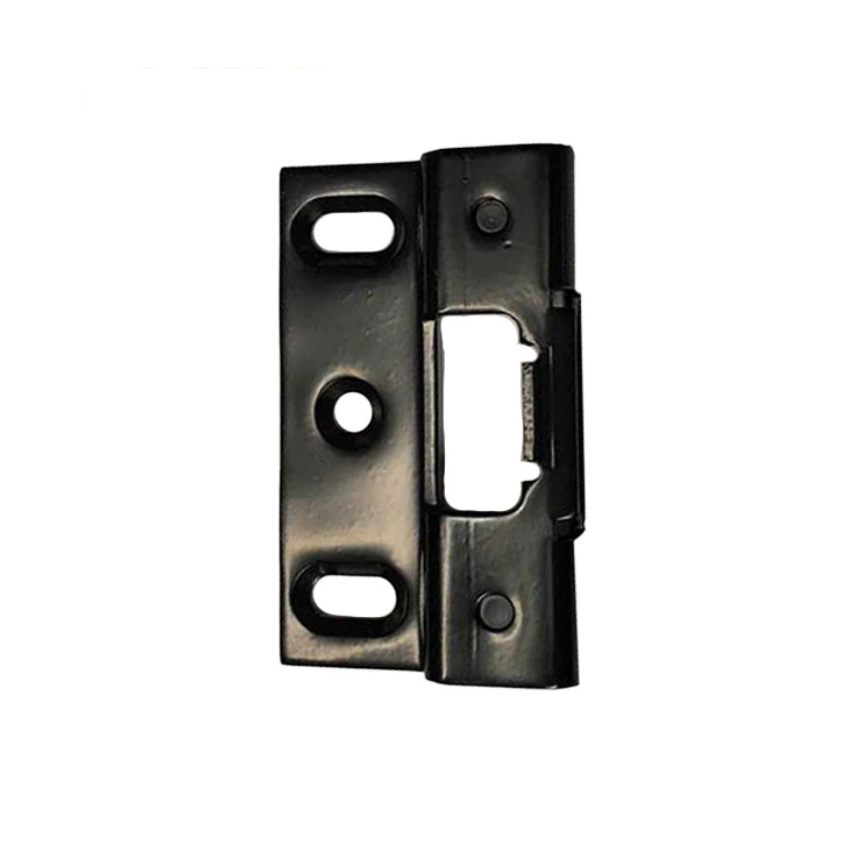
Adams Rite 22-0430 Strike for Rim Exit Device. The strike mounts on the door frame and receives the rim exit device latch when the door closes. View product page.
An exit device does not operate alone. The device mounted on the door requires a corresponding component on the door frame to complete the latch engagement. For rim devices, this is a rim strike mounted on the frame or mullion. For vertical rod devices, the top and bottom latches engage in floor and head frame strikes. Matching the correct strike to the device series and configuration is part of the parts ordering process.
Strikes are series-specific. A rim strike for one manufacturer's exit device series may not be compatible with a different series, even if the dimensions appear similar. Always verify the strike model against the device series when ordering replacement hardware.
For access control integration, exit devices can be electrified through electric latch retraction (EL) or connected to an electric strike. The choice between electrifying the device itself versus using an electric strike depends on the security requirements and the control logic of the access control system. For a full explanation of these options, see the access control and commercial door hardware integration guide.
Push Element Options: Bar, Touchbar, and Push Pad
Exit devices do not all use the same style of push element. The horizontal bar is the most common and widely recognized, but buyers will also encounter touchbar and push pad configurations.
Crossbar or Push Bar
The traditional crossbar extends across the full width of the door or at least half the door width as required by code. The bar is the most recognizable style and is used across nearly all device types. Push bars are replaceable components: the bar can be ordered separately to replace a damaged or worn push element without replacing the full device.
Touchbar
A touchbar is a slimmer, low-profile push element that is activated by a lighter touch. Touchbars are used where a sleeker appearance is preferred or where the reduced protrusion into the opening is an advantage. Some exit devices are designed specifically for touchbar configurations.
Push Pad
A push pad is a wider, flat panel that replaces the crossbar. Push pads are used on narrow stile aluminum doors and glass storefront applications where the door stile width does not accommodate a traditional crossbar assembly. The Adams Rite 8099 series is a common example of a narrow stile exit device that uses a push bar assembly sized for aluminum door stiles.
How to Identify Which Device Type You Have
Before ordering any replacement parts or a replacement device, confirm the model number of the installed unit. The model number is printed on a label affixed to the device chassis, typically on the side or back of the housing where it is visible when the door is open. The frame strike or the door edge may also carry a label.
Once you have the model number, confirm:
- Whether the device is standard panic hardware or fire exit hardware (check for the fire label)
- The mounting configuration (rim, SVR, CVR, or mortise)
- The push element style (crossbar, touchbar, or push pad)
- The outside trim configuration, if any (keylock, cylinder, thumbturn, or exit only)
- The electrification option, if applicable (EL, QEL, MEL, or standard non-electrified)
These five data points determine the exact parts needed for any repair or replacement. Security Parts stocks exit device parts across multiple series and configurations. For part identification guidance organized by component category, see the exit devices parts guide.
Exit Devices by Building Type
Exit device type and configuration vary by building type, door construction, and code requirements. The following table summarizes common applications.
| Building Type | Common Device Configuration | Fire Rating Consideration |
|---|---|---|
| Schools and universities | Rim or SVR, panic hardware or fire exit hardware | Corridor and stairwell doors often fire-rated -- fire exit hardware required |
| Healthcare facilities | Rim or CVR, fire exit hardware common | High proportion of fire-rated doors -- verify each opening |
| Government buildings | Rim or SVR; may include electrified options | Stairwell and rated corridor doors require fire exit hardware |
| High-rise office buildings | Rim or mortise; stairwell re-entry doors need careful specification | Most stairwell doors are fire-rated -- fire exit hardware required |
| Retail and commercial | Rim, standard panic hardware; storefront may use narrow stile devices | Varies; verify each opening against door rating |
| Controlled access and delayed egress | Delayed egress exit control lock or electrified exit device | Fire alarm release required; see delayed egress requirements |
For application-specific guidance, see the healthcare door hardware guide, the K-12 school door hardware guide, and the government buildings door hardware guide. For delayed egress exit control lock requirements, see what is delayed egress.
Sourcing Exit Device Parts
Security Parts stocks exit device parts across Von Duprin, Falcon, Adams Rite, and Detex product lines. Replacement parts include push bar assemblies, latch assemblies, chassis components, outside trim kits, strike kits, glass bead kits, electrification modules, and dogging hardware.
Parts are series-specific. A Von Duprin 98/99 series push bar assembly is not interchangeable with a Falcon series push bar, even if the devices appear similar from the front. Confirm the device series and model number before ordering. Call 845-935-0301 for pre-order compatibility support if you are uncertain which parts match your installed device.
For the full Von Duprin 98/99 series parts catalog, see the Von Duprin 98/99 series exit device parts guide. For Detex exit control lock parts, see the Detex ECL parts guide. For troubleshooting a device that is not latching, binding, or operating correctly, see the commercial door hardware troubleshooting guide.
About the Author
This guide was written by the Security Parts team, a commercial door hardware specialist serving locksmiths, facilities managers, general contractors, and security integrators since 2001. Security Parts stocks exit device parts across Von Duprin, Falcon, Adams Rite, and Detex product lines, with same-day shipping on stocked components. For related guidance, see the panic hardware for commercial doors guide and the commercial door fire rating guide.