 Trusted Since 2001


Quick Summary
Key points
- A small format interchangeable core (SFIC) is a removable figure eight shaped key core. A special control key releases it from its housing, so a lock can be rekeyed in seconds without taking the lock off the door.
- The core and the housing are separate parts. The housing stays in the lever, knob, deadbolt or cylinder. Only the core moves, which is what makes SFIC so useful for facilities that rekey often.
- SFIC cores come in 6-pin and 7-pin versions, and uncombinated cores ship without keys, pins or springs so they can be pinned to your key system.
- SFIC is not the same as FSIC or LFIC. Full size and large format interchangeable cores are bigger, and they are generally specific to one manufacturer. SFIC is the format shared across the widest range of hardware.
- Most ordering problems come from the parts around the core: the wrong pin count, a missing spacer or driver, or the wrong tailpiece on electronic locks. Confirm those before you order.
| Term | What it means | Why it matters when ordering |
|---|---|---|
| Core | The removable part that holds the pins and takes the key | Pin count and keyway must match your system |
| Housing | The fixed part in the lock that the core slides into | Must be an SFIC housing, not a conventional cylinder |
| Control key | A separate key that releases the core from the housing | Needed to remove or install any core in the system |
| Operating key | The everyday key that locks and unlocks | Cut to the combination pinned into the core |
| Uncombinated | A core supplied without keys, pins or springs | Has to be pinned before it will work |
In This Guide
- What Is a Small Format Interchangeable Core?
- How Does an SFIC Core Work?
- What Is the Difference Between SFIC, FSIC and LFIC?
- Should You Use a 6-Pin or 7-Pin SFIC Core?
- Which Parts Do You Need Besides the Core?
- When Does an Interchangeable Core Make Sense?
- What Goes Wrong With SFIC Cores?
- What Should You Confirm Before Ordering SFIC Parts?
- About the Author
A tenant moves out, a key goes missing, or a master key walks off a job site. On a building with conventional cylinders, each of those means pulling locks apart or calling a locksmith door by door. On a building with interchangeable cores, someone with a control key swaps the core and the door is rekeyed before the coffee goes cold.
That is the whole case for the small format interchangeable core. This guide explains what an SFIC core is, how the control key works, how SFIC differs from full size and large format cores, and which parts you need to confirm so the core actually works in your lock.
What Is a Small Format Interchangeable Core?
A small format interchangeable core is a self contained key core shaped like a figure eight when you look at its face. It holds the pin stacks and the key plug, and it slides into a matching housing in the lock. A retaining lug holds it in place until a control key releases it.
Because everything that defines the keying lives in the core, the core can move between doors, locks and even product types. The same SFIC core can sit in a lever lock today and a padlock tomorrow, provided both have SFIC housings.
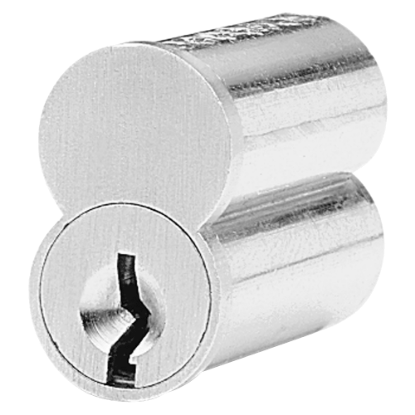
Why is it called interchangeable?
Because the core is interchangeable between housings, not because every key fits every lock. The keying is still controlled. What changes is how quickly a door can move from one key to another: you replace the core instead of the lock.
How Does an SFIC Core Work?
Every SFIC core has two shear lines. The operating shear line works like any pin tumbler cylinder: insert the right key, the pins line up and the plug turns to operate the lock. The control shear line is separate. When the control key lifts the pins to that second line, it can rotate a control sleeve that withdraws the retaining lug, and the whole core slides out.
That design is why a core can be removed without touching the lock body. It is also why the control key needs to be treated as one of the most sensitive keys in the building. Anyone holding it can remove any core in the system.
How do you remove an SFIC core?
- Insert the control key fully into the core.
- Turn it the short distance it allows until it stops. That rotates the control sleeve and retracts the retaining lug.
- Pull gently on the key. The core slides out of the housing with the key still in it.
- To install, reverse the steps: with the control key turned, push the core fully into the housing, return the key to its starting position and remove it.
If a core will not come out, the usual causes are a key that is not a true control key for that system, a damaged core face, or a housing that has been forced. Do not force it, because a bent housing can end up costing more than the core. Our Schlage lock cylinder replacement guide covers removal problems in more detail.
What Is the Difference Between SFIC, FSIC and LFIC?
All three are interchangeable cores, but they are not interchangeable with each other. The main difference is physical size and how widely the format is shared.
| Format | Size and shape | Compatibility | Typical use |
|---|---|---|---|
| SFIC, small format | Compact figure eight core | Shared across a wide range of manufacturers that make SFIC housings | Campuses, offices and facilities that want one core across many products |
| FSIC, full size | Larger core that fits a full size cylinder housing | Generally specific to one manufacturer and its keyways | Sites standardized on one lock brand that want IC convenience |
| LFIC, large format | Larger core in each manufacturer's own design | Generally specific to the manufacturer | Sites with an existing large format system |
SFIC is the most portable of the three because so many products accept it. Full size and large format cores are tied to a manufacturer's own housings and keyways, so they tend to be chosen when a site is already committed to one brand.
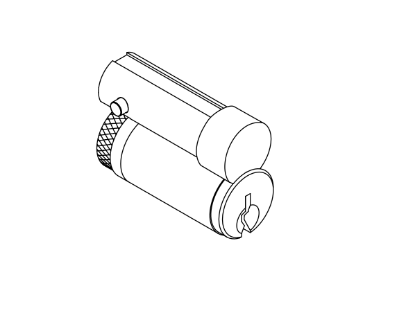
Can you put an SFIC core in an FSIC lock?
No. The housings are different sizes. If you want to move a door from full size to small format, or the other way, the housing has to change too. On many lever locks that means a lever or cylinder configured for the other format, rather than just a new core.
Should You Use a 6-Pin or 7-Pin SFIC Core?
Both are common. A 7-pin core offers more possible key combinations, which helps on large master key systems with many levels. A 6-pin core is common on smaller systems and existing installations. The practical rule is to match what the system already uses, because a 6-pin key will not operate a 7-pin core.
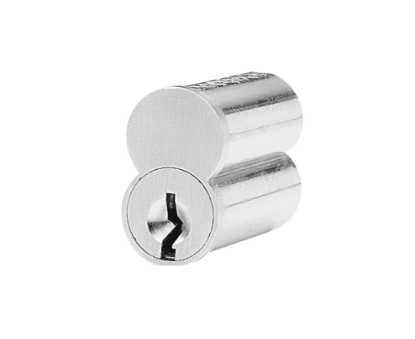
Pin count can also affect the parts behind the core. Some locks need a spacer to position a 6-pin core correctly so the driver engages, which is covered in the next section.
Which Parts Do You Need Besides the Core?
This is where most SFIC orders go wrong. The core is only one part of a working cylinder.
Housing
The housing is the part that accepts and retains the core. It might be built into a lever, a knob, a deadbolt, a padlock or a mortise or rim cylinder shell. Many levers and cylinders are sold less core or less cylinder so the core can be supplied separately to suit the key system, such as the Schlage K103-680 exterior levers configured for SFIC.
Spacers and drivers
Some locks need a spacer behind the core so the core sits at the right depth and the driver engages it. The Schlage D500-000 spacer, for example, provides the spacing needed for compatible 6-pin SFIC installations so the SFIC driver can engage the cylinder correctly.
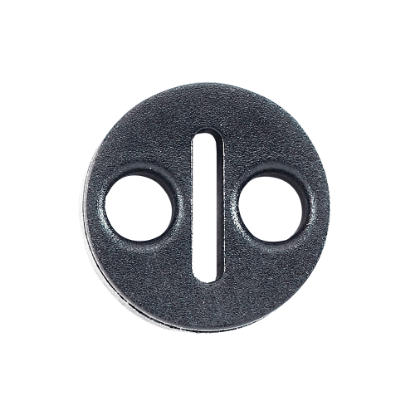
Tailpieces on electronic locks
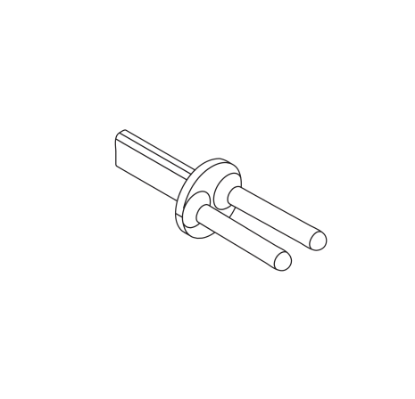
Electronic locks with a mechanical key override need a tailpiece that transfers the core's rotation to the lock mechanism. The Schlage 47258187 universal SFIC tailpiece, for example, is used on AD and CO Series electronic cylindrical, mortise and exit trim locks with SFIC style cores. Getting this part wrong means the key turns and nothing happens.
| Part | When you need it | What to confirm |
|---|---|---|
| SFIC core | Every installation | Pin count, keyway and whether it is pinned or uncombinated |
| SFIC housing or less core lever | Converting a door to SFIC, or replacing damaged trim | Lock series, function and finish |
| Spacer | Some locks with 6-pin cores | Lock series and core pin count |
| Driver | Some cylindrical and electronic locks | Lock series and whether the lock is electronic |
| Tailpiece | Electronic locks with key override, some mortise and exit trim | Exact lock series and cylinder application |
| Control key | Removing or installing any core | That it belongs to your key system |
When Does an Interchangeable Core Make Sense?
Interchangeable cores pay off wherever keys change often or a lost key has to be dealt with quickly.
- Campuses and schools, where staff and student turnover means regular rekeying.
- Multi tenant buildings, where a unit can be rekeyed between tenants in minutes.
- Construction, where temporary construction cores are used during the build and swapped for permanent cores at handover, so contractors' keys stop working on day one.
- Large master key systems, where one control key and a stock of spare cores replace a lot of locksmith visits. Our master key system design guide explains how the levels are planned.
They make less sense on a small building with a handful of doors that are rarely rekeyed. There, a conventional cylinder and the occasional rekey can be simpler. If you only need several doors to share one key, our guide to keyed alike locks may be the better starting point.
What Goes Wrong With SFIC Cores?
- The key turns but the lock does not operate. Usually a missing spacer, the wrong driver or the wrong tailpiece rather than a faulty core.
- The core will not release. The key may not be a true control key for the system, or the core face or housing may be damaged.
- The core falls out or feels loose. The retaining lug may not have returned fully, often because the core was installed without turning the control key back to its start position.
- Lost control key. Treat it as a security event. Every core in the system can be removed by whoever has it, so the system may need recombinating.
- Mixed pin counts. A 6-pin core in a 7-pin system, or the reverse, will not take the system keys.
What Should You Confirm Before Ordering SFIC Parts?
Six things: the core format, SFIC, FSIC or LFIC. The pin count. Whether you need the core pinned to an existing system or supplied uncombinated. The lock series and function the core goes into. Any spacer, driver or tailpiece that lock needs. And the finish of any lever or trim you are replacing at the same time.
For Schlage locks, start in the Schlage parts section and use the diagram for your lock series. For lever locks generally, the cylindrical lock parts section lists less core and less cylinder trim, and our mortise cylinder vs rim cylinder guide helps if the core is going into a cylinder shell on a mortise lock or exit device.
About the Author
Security Parts has supplied repair parts for commercial door hardware since 2001, covering Von Duprin, LCN, Schlage, Falcon, Detex and Adams Rite at the component level. Our diagram based lookup exists so a technician can confirm a part before ordering it. This guide was written by the Security Parts team from supplier documentation and the questions our customers bring us.
If you are not sure which core format or pin count your doors use, contact us with a photograph of the core face and the lock model, and we will help you match the parts.